
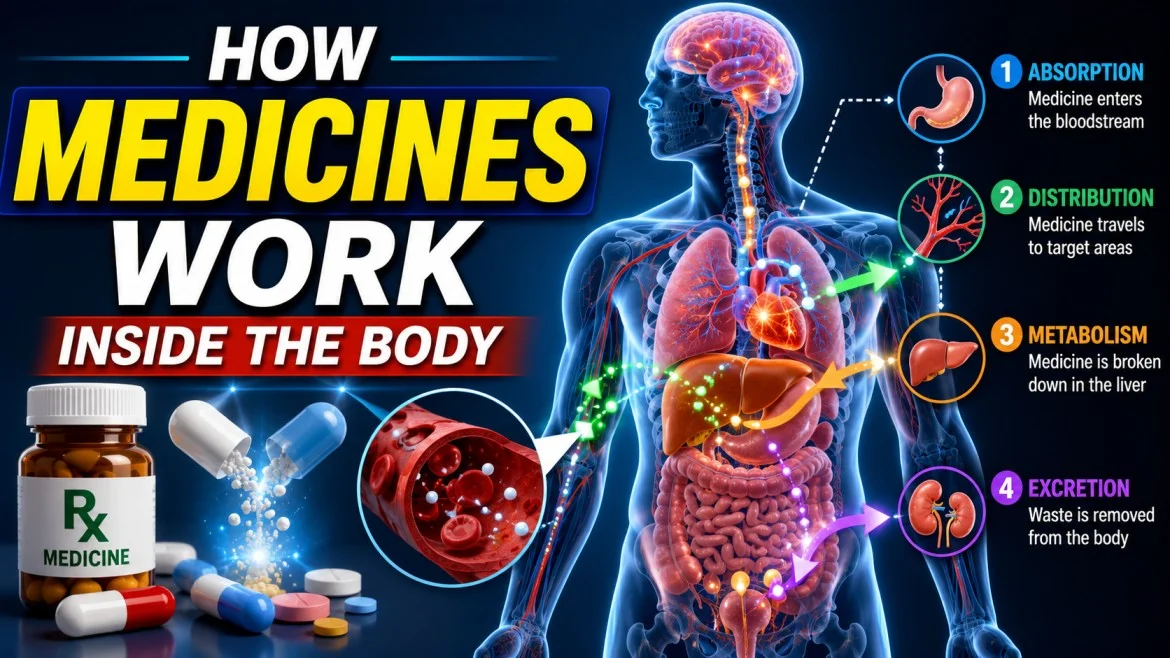

Medicines play a major role in modern healthcare. From relieving pain and fighting infections to controlling chronic diseases, medicines help millions of people live healthier lives every day.
But have you ever wondered:
How do medicines actually work inside the body?
In this blog, we’ll explain in simple language how medicines travel through the body, how they affect organs and cells, and why different medicines work in different ways.
What Is Medicine?
Medicine is a substance used to:
- Prevent disease
- Treat illness
- Relieve symptoms
- Improve body functions
Medicines can come in many forms:
- Tablets
- Capsules
- Syrups
- Injections
- Creams
- Inhalers
Each medicine contains active ingredients that produce specific effects inside the body.
The Journey of Medicine Inside the Body
When you take a medicine, it goes through several important steps before showing its effect.
These steps are known as:
- Absorption
- Distribution
- Metabolism
- Excretion
Together, this process is called pharmacokinetics.
1. Absorption – Entering the Bloodstream
Absorption is the process by which medicine enters the bloodstream.
Example:
When you swallow a tablet:
- It reaches the stomach
- Dissolves in digestive fluids
- Moves into the small intestine
- Gets absorbed into the blood
Some medicines absorb quickly, while others take time.

Factors Affecting Absorption
Medicine absorption depends on:
- Food intake
- Age
- Stomach acidity
- Type of medicine
- Dosage form
For example:
- Syrups usually act faster than tablets
- Injections work faster because they directly enter the bloodstream
2. Distribution – Traveling Through the Body
After entering the bloodstream, medicine travels throughout the body.
The blood carries medicine to:
- Brain
- Heart
- Lungs
- Liver
- Muscles
- Infected or injured areas
Different medicines target different organs.
How Medicines Know Where to Work
Medicines work by interacting with specific cells or receptors.
Receptors Are Like Locks
Body cells contain receptors that act like locks.
Medicines act like keys that fit into those locks and create effects.
Example:
- Painkillers block pain signals
- Allergy medicines block histamine receptors
- Asthma inhalers relax airway muscles
3. Metabolism – Breaking Down Medicine
The body cannot keep medicines forever.
Most medicines are broken down in the liver through metabolism.
The liver changes medicines into forms that are easier to remove from the body.
Why Metabolism Is Important
Metabolism helps:
- Prevent medicine buildup
- Reduce toxicity
- Control medicine duration
Some medicines are broken down quickly, while others stay in the body longer.
That’s why dosage timing matters.
4. Excretion – Removing Medicine
After metabolism, medicines leave the body through:
- Urine (kidneys)
- Stool
- Sweat
- Breath
The kidneys play a major role in removing medicine waste.
Different Types of Medicines and How They Work
1. Painkillers
Painkillers reduce pain signals or inflammation.
Example:
- Paracetamol reduces fever and pain
- Ibuprofen reduces inflammation
2. Antibiotics
Antibiotics kill bacteria or stop them from growing.
They do NOT work against viruses like the common cold.
3. Antacids
Antacids reduce excess stomach acid and relieve acidity or heartburn.
4. Antihistamines
These medicines block histamine chemicals responsible for allergies.
5. Vaccines
Vaccines train the immune system to recognize and fight diseases.
They help prevent infections before they happen.
Why Medicines Affect People Differently
Not every medicine works the same for everyone.
Effects depend on:
- Age
- Weight
- Genetics
- Health condition
- Diet
- Other medicines
That’s why doctors prescribe medicines carefully.
Side Effects: Why They Happen
Medicines may sometimes affect healthy cells along with target cells.
This can cause side effects.
Common Side Effects
- Drowsiness
- Nausea
- Headache
- Dizziness
- Stomach upset
Most side effects are mild, but some may require medical attention.
Importance of Correct Dosage
Taking the right dose is extremely important.
Too Little Dose
- Medicine may not work properly
Too Much Dose
- Can cause toxicity or overdose
Always follow:
- Doctor’s advice
- Prescription instructions
- Recommended timing
Why Some Medicines Must Be Taken After Food
Some medicines irritate the stomach lining.
Food helps:
- Protect the stomach
- Improve absorption
- Reduce side effects
Others work better on an empty stomach.
That’s why medicine instructions matter.
Fast-Acting vs Slow-Release Medicines
Fast-Acting Medicines
Provide quick relief.
Example:
- Pain relief tablets
Slow-Release Medicines
Release medicine gradually over time.
Example:
- BP or diabetes medicines
What Happens If You Skip Medicines?
Skipping doses may:
- Reduce treatment effectiveness
- Worsen disease
- Cause antibiotic resistance
- Delay recovery
Consistency is important for many treatments.
Role of Pharmacists in Medicine Use
Pharmacists help patients by:
- Explaining medicine usage
- Preventing drug interactions
- Guiding proper dosage
- Educating about side effects
They are important healthcare professionals in safe medicine management.
Fun Facts About Medicines
- Some medicines start working within minutes
- The liver processes most drugs
- Capsules often dissolve faster than tablets
- Medicines can interact with food and drinks
- Water helps medicines dissolve and absorb properly
Final Thoughts
Medicines work through a fascinating scientific process inside the body. From absorption to excretion, every medicine follows a journey to help treat illness and improve health.
Understanding how medicines work helps people:
- Use medicines safely
- Follow prescriptions correctly
- Avoid misuse
- Appreciate the role of healthcare professionals
Always remember:
Medicines should only be taken under proper medical guidance.
FAQs
How long does medicine take to work?
It depends on the medicine type, dosage, and body condition. Some work in minutes while others take days.
Which organ breaks down medicines?
The liver is the main organ responsible for medicine metabolism.
Why do medicines have side effects?
Because medicines may affect healthy cells along with target cells.
Why should antibiotics be completed?
Stopping early may allow bacteria to survive and become resistant.
Can food affect medicines?
Yes, food can increase or decrease medicine absorption depending on the drug.
Recommended Products