

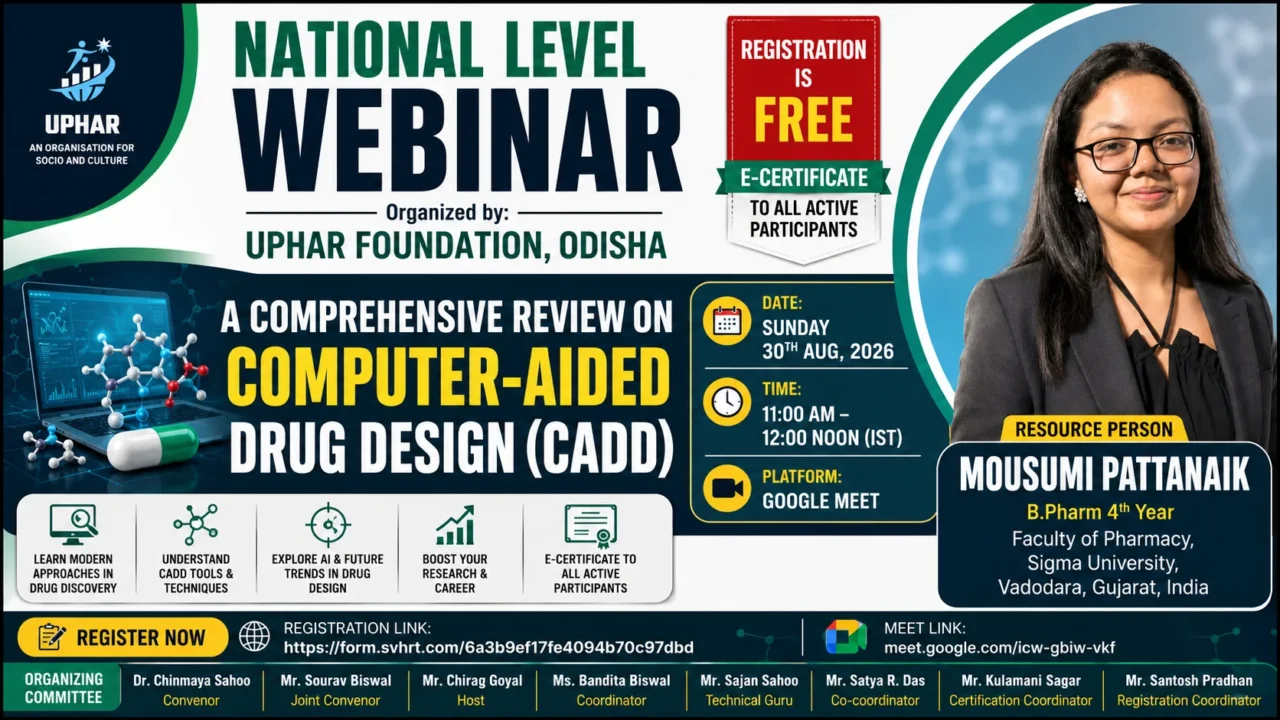

The field of pharmaceutical research is evolving rapidly with the integration of advanced computational technologies. To promote awareness and knowledge among students, researchers, and healthcare professionals, UPHAR Foundation, Odisha is organizing a National Level Webinar on the highly relevant topic “A Comprehensive Review on Computer-Aided Drug Design (CADD).”
This webinar offers an excellent opportunity to understand how computational tools are transforming the drug discovery and development process.
About the Webinar
Computer-Aided Drug Design (CADD) has become one of the most powerful tools in modern pharmaceutical research. It enables scientists to identify potential drug candidates, optimize molecular structures, and predict biological activity while significantly reducing time and cost involved in traditional drug discovery.
The webinar aims to provide participants with a comprehensive overview of CADD, its applications, methodologies, advantages, and future prospects in pharmaceutical sciences.

Resource Person
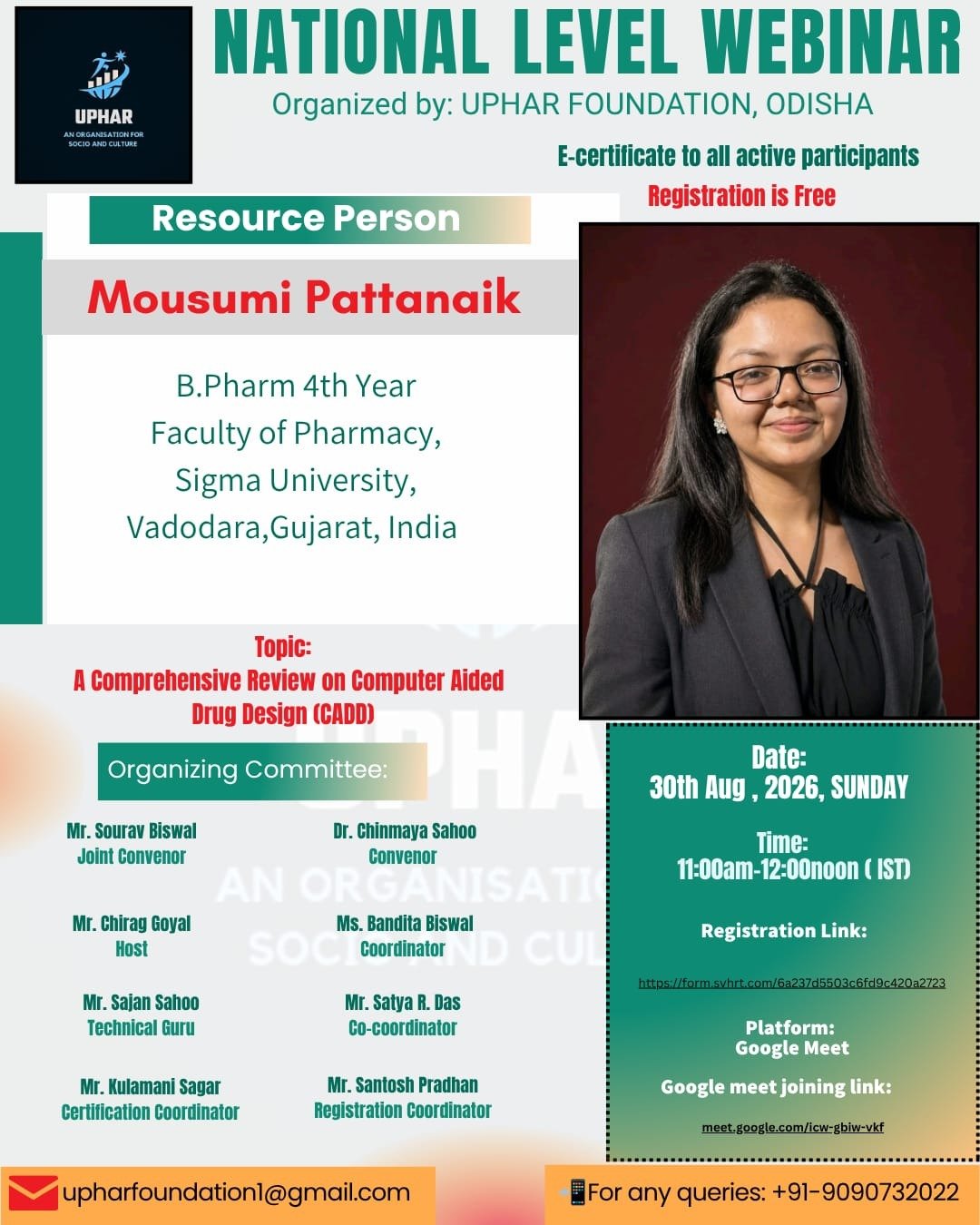
Mousumi Pattanaik
B.Pharm 4th Year
Faculty of Pharmacy
Sigma University, Vadodara, Gujarat, India
Mousumi Pattanaik is a dedicated pharmacy scholar with a keen interest in pharmaceutical research and emerging technologies in drug development. During the session, she will discuss the fundamentals and practical applications of Computer-Aided Drug Design, making the topic accessible for students and young researchers.
Webinar Topic
A Comprehensive Review on Computer-Aided Drug Design (CADD)
Key Highlights:
- Introduction to Drug Discovery Process
- Fundamentals of Computer-Aided Drug Design
- Structure-Based Drug Design (SBDD)
- Ligand-Based Drug Design (LBDD)
- Molecular Docking and Virtual Screening
- Pharmacophore Modeling
- QSAR Studies
- Role of Artificial Intelligence in Drug Discovery
- Applications of CADD in Modern Pharmaceutical Research
- Future Scope and Career Opportunities
Why Attend This Webinar?
Participants will gain valuable insights into:
✅ Modern approaches in drug discovery
✅ Computational tools used in pharmaceutical research
✅ Industry and academic applications of CADD
✅ Emerging trends in AI-driven drug design
✅ Career opportunities in computational pharmacy and research
Additionally, e-certificates will be provided to all active participants, making this event beneficial for students looking to enhance their academic profiles.
Event Details
📅 Date: Sunday, 30th August 2026
🕚 Time: 11:00 AM – 12:00 Noon (IST)
💻 Platform: Google Meet
🎓 Registration: Free
Registration Information
Interested participants can register through the official registration form provided by the organizers.
Early registration is recommended to secure participation and receive webinar updates.
Organizing Committee
Convenor
Dr. Chinmaya Sahoo
Joint Convenor
Mr. Sourav Biswal
Host
Mr. Chirag Goyal
Coordinator
Miss Bandita Biswal
Technical Guru
Mr. Sajan Sahoo
Co-Coordinator
Mr. Satya R. Dash
Certification Coordinator
Mr. Kulamani Sagar
Registration Coordinator
Mr. Santosh Pradhan
About UPHAR Foundation, Odisha
UPHAR Foundation, Odisha is committed to promoting education, scientific awareness, and professional development through various academic and social initiatives. By organizing webinars, workshops, and educational programs, the foundation provides a platform for knowledge exchange among students, academicians, and professionals across India.
Conclusion
As pharmaceutical research increasingly embraces digital technologies, understanding Computer-Aided Drug Design has become essential for aspiring pharmacists and researchers. This webinar presents an excellent opportunity to learn from an emerging scholar and gain practical insights into one of the most impactful areas of modern drug discovery.
Students, researchers, academicians, and healthcare professionals are encouraged to participate in this informative session and explore the future of pharmaceutical innovation through CADD.
Join the webinar and be part of the next generation of drug discovery!
Registration link – Click here
Platform: Google Meet: Click here
Recommended Products