


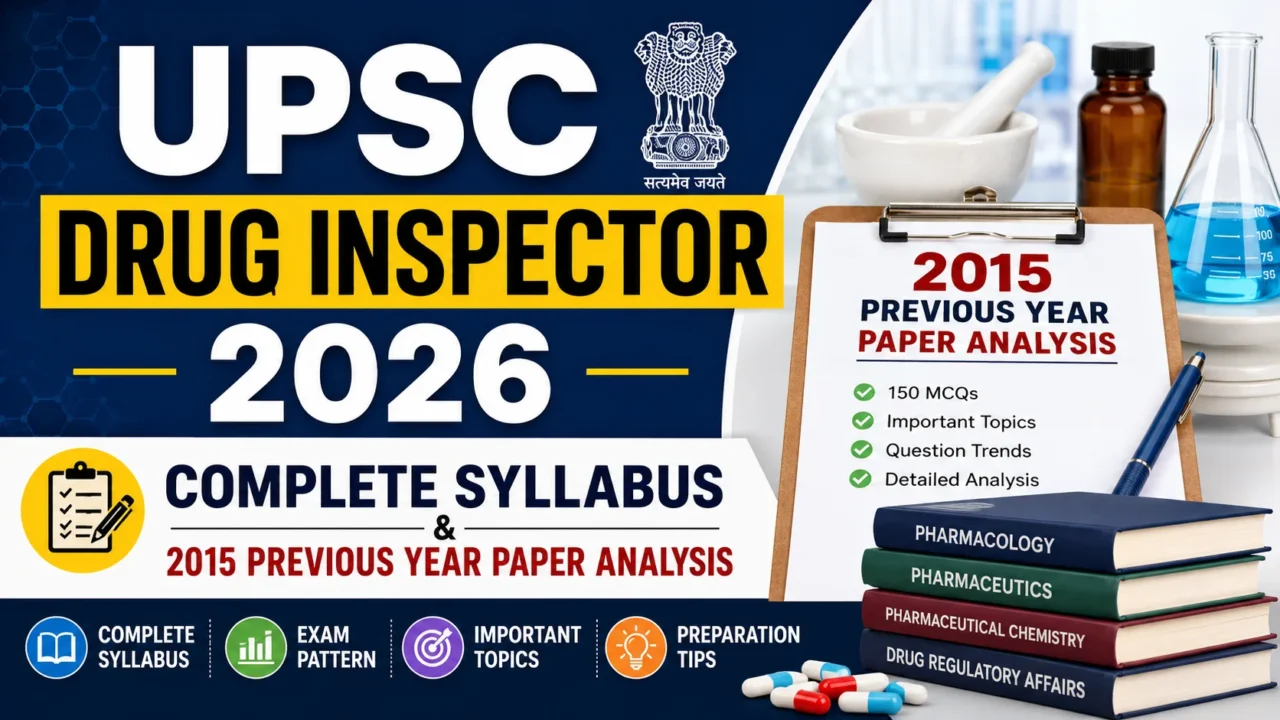

The UPSC Drug Inspector Examination is one of the most prestigious recruitment exams for pharmacy graduates in India. Every year, thousands of B.Pharm, M.Pharm, and Pharm.D graduates prepare for this highly competitive examination to secure a respected position in the Central Government.
One of the smartest ways to prepare is by analyzing previous year question papers. The UPSC Drug Inspector 2015 paper provides valuable insights into the difficulty level, important subjects, and question trends. Combined with the latest syllabus prepared after analyzing the 2015, 2018, 2019, and 2023 examinations, candidates can build an effective preparation strategy.
UPSC Drug Inspector Exam Pattern
The examination is conducted in two papers on the same day.
Paper I
Paper I mainly focuses on Pharmacy and Allied Subjects. It evaluates a candidate’s technical knowledge in pharmaceutical sciences and regulatory affairs.
Paper II
Paper II tests General Studies, Current Affairs, English Language, Quantitative Aptitude, Computer Knowledge, and General Awareness.
Latest UPSC Drug Inspector Syllabus
The latest syllabus has been prepared after analyzing the previous four UPSC Drug Inspector examinations (2015, 2018, 2019, and 2023).
Major Pharmacy Subjects
Pharmaceutics
- Tablets
- Capsules
- Liquid Dosage Forms
- Suspensions & Emulsions
- Semisolids
- Sterilization
- Ophthalmic Preparations
- Parenterals
- Packaging Materials
- Novel Drug Delivery Systems
- Biopharmaceutics
- Drug Regulatory Affairs
- Quality Assurance & Quality Control
Physical Pharmacy
- Solubility
- Buffer Solutions
- Surface Phenomena
- Rheology
- Micromeritics
- Drug Stability
- Dispersion Systems
Pharmaceutical Engineering
- Heat Transfer
- Drying
- Distillation
- Filtration
- Mixing
- Size Reduction
- Extraction
- Crystallization
Pharmacology
- General Pharmacology
- CNS Drugs
- ANS Drugs
- Cardiovascular Drugs
- Chemotherapy
- Endocrine Pharmacology
- Toxicology
- Immunopharmacology
Pharmaceutical Chemistry
- Medicinal Chemistry
- Pharmaceutical Analysis
- Spectroscopy
- Chromatography
- Titrations
- Inorganic Chemistry
Pharmacognosy
- Herbal Drug Technology
- Alkaloids
- Glycosides
- Volatile Oils
- Plant Tissue Culture
- Phytochemistry
- Nutraceuticals
- Quality Control of Herbal Drugs
Hospital & Clinical Pharmacy
- ADR Monitoring
- Drug Information Services
- Hospital Formulary
- Clinical Pharmacy
- Therapeutic Drug Monitoring
- Medication Adherence
Forensic Pharmacy
- Drugs & Cosmetics Act
- Pharmacy Act
- NDPS Act
- Drug Price Control Order
- Consumer Protection Act
- Indian Patent Act
- CDSCO
- WHO
- USFDA
- ICH Guidelines

What We Learned from the UPSC Drug Inspector 2015 Paper
The 2015 examination consisted of 150 multiple-choice questions, covering almost every important pharmacy subject.
Major areas included:
- Pharmacology
- Pharmaceutics
- Pharmaceutical Chemistry
- Pharmaceutical Analysis
- Pharmacokinetics
- Biopharmaceutics
- Regulatory Affairs
- Pharmaceutical Jurisprudence
- Hospital Pharmacy
- Biotechnology
- Microbiology
- General English
- Computer Awareness
The paper also contained numerical questions from pharmacokinetics, formulation-based MCQs, clinical pharmacy questions, analytical chemistry, and regulatory affairs.
Most Important Topics Based on Previous Year Papers
Candidates should prioritize the following topics:
- Pharmacokinetics (Half-life, Clearance, Volume of Distribution)
- Bioavailability & Bioequivalence
- Clinical Trials
- Schedule Y
- Drugs & Cosmetics Act
- NDPS Act
- Tablet Manufacturing
- Sterilization Methods
- Chromatography
- Spectroscopy
- Vaccines
- Drug Regulatory Affairs
- Quality Assurance
- Pharmaceutical Calculations
- Medicinal Chemistry
- Pharmacology of CNS & CVS Drugs
Paper II Preparation Strategy
Many candidates focus only on pharmacy subjects and ignore Paper II, which can significantly affect the final merit.
Important sections include:
- General Knowledge
- Current Affairs
- English Grammar
- Computer Fundamentals
- Quantitative Aptitude
- Logical Reasoning
Daily newspaper reading and monthly current affairs revision are highly recommended.
Preparation Tips for UPSC Drug Inspector 2026
1. Complete the Entire Syllabus
Do not skip smaller subjects like Hospital Pharmacy, Cosmetics, Biotechnology, or Pharmaceutical Management.
2. Solve Previous Year Papers
Practice previous papers from 2015, 2018, 2019, and 2023 to understand UPSC’s question pattern.
3. Strengthen Regulatory Knowledge
Acts, Rules, Schedules, CDSCO guidelines, and Good Manufacturing Practices are frequently tested.
4. Revise Pharmacology Daily
Pharmacology contributes a significant number of questions every year.
5. Practice Numerical Problems
Focus on Pharmacokinetics, Pharmaceutical Calculations, and Physical Pharmacy numericals.
6. Improve Paper II
Dedicate at least one hour daily to General Studies and Current Affairs.
Final Thoughts
The UPSC Drug Inspector examination demands a balanced preparation strategy that combines conceptual understanding with extensive MCQ practice. The latest syllabus, prepared after analyzing the 2015, 2018, 2019, and 2023 examinations, clearly highlights the subjects that deserve maximum attention.
Candidates who thoroughly revise Pharmacy core subjects, master Drug Regulatory Affairs, and regularly solve previous year question papers will have a significant advantage in the examination. Consistent revision, smart study planning, and regular mock tests remain the key to success.
If you are preparing for UPSC Drug Inspector 2026, start by completing the syllabus systematically, revise important topics multiple times, and make previous year papers an essential part of your preparation strategy.
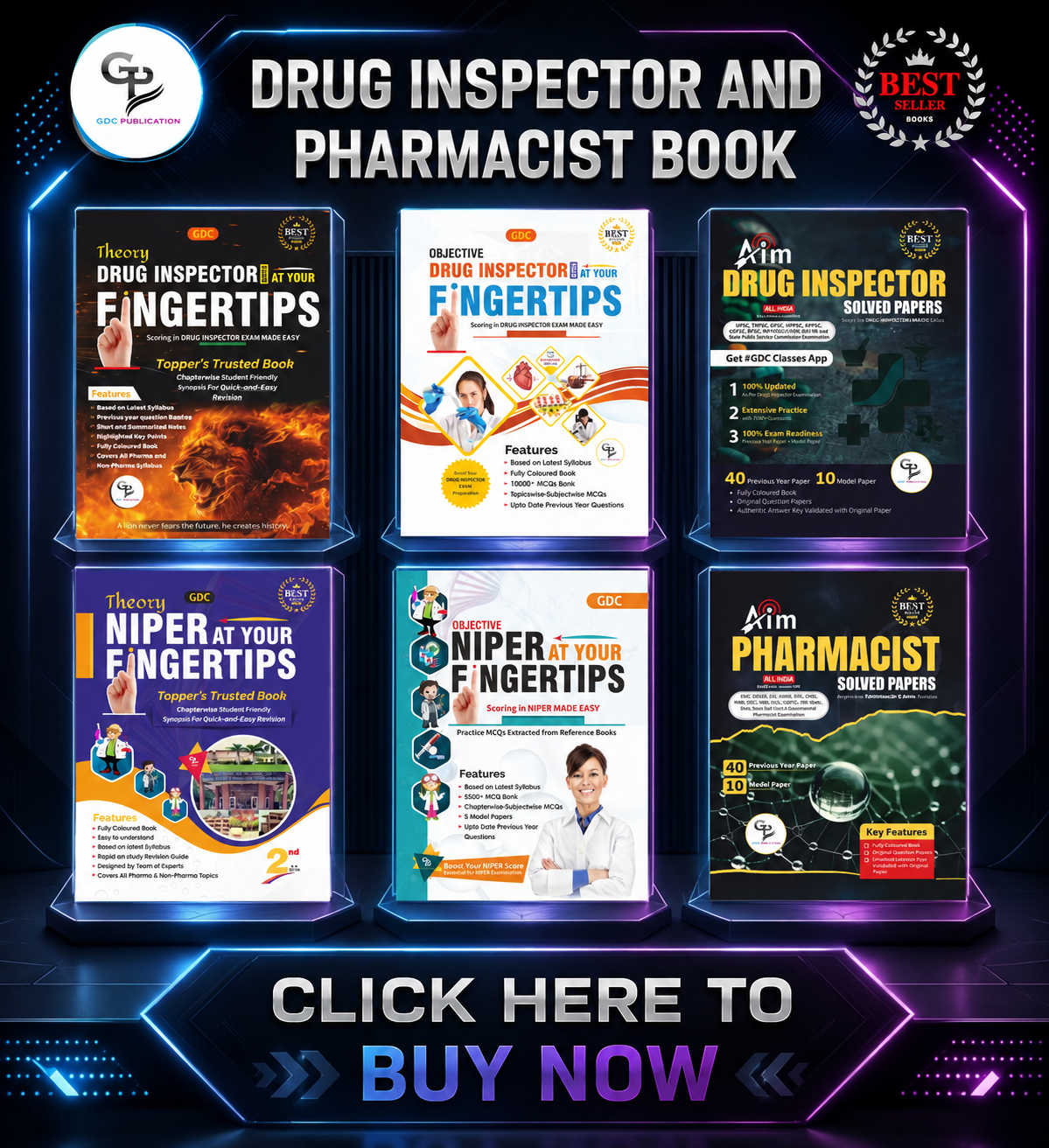
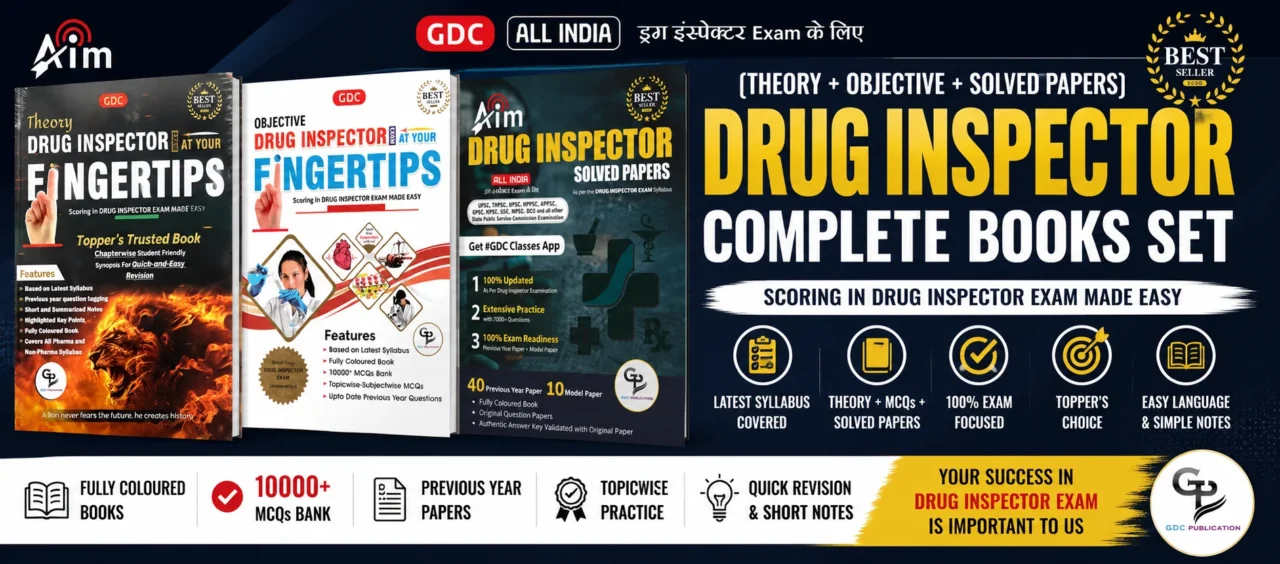
Recommended Products