



Gut Microbiome Linked to Colorectal Cancer Through DNA Damage and Immune Suppression
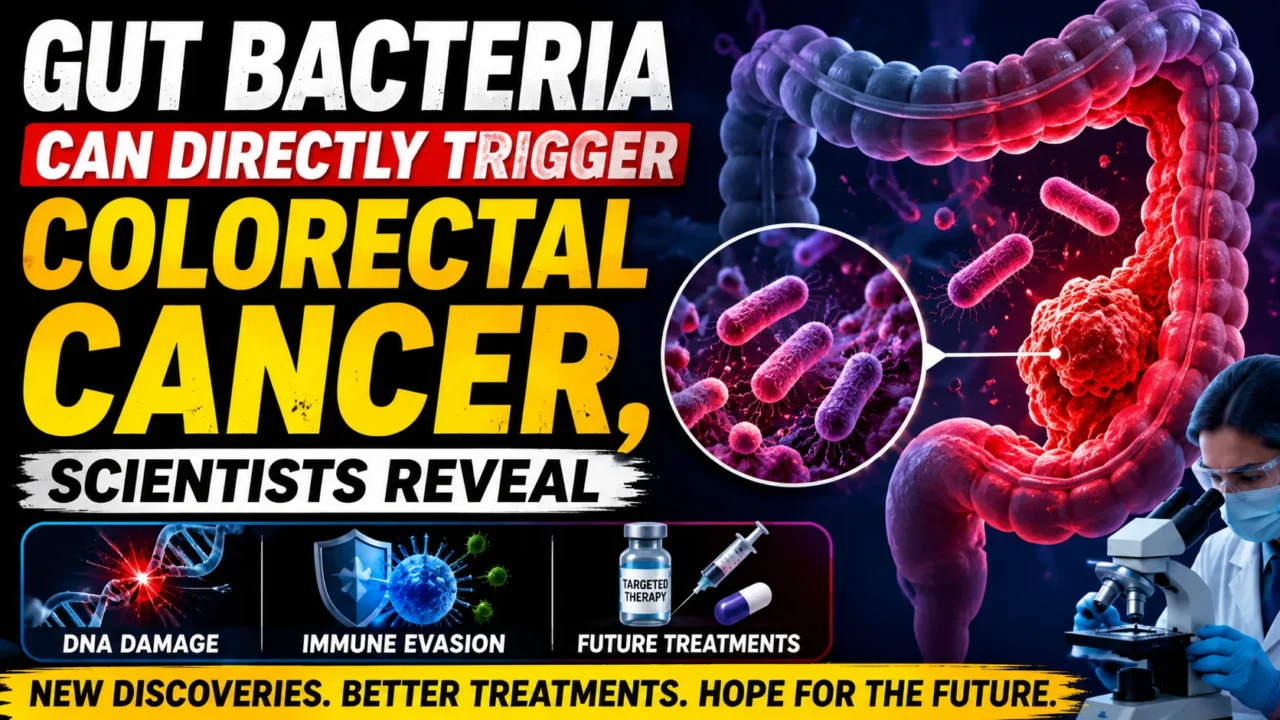
Groundbreaking new research has revealed that certain gut bacteria do far more than simply coexist with colorectal cancer (CRC)—they may actively initiate and promote its development. A comprehensive scientific review published in Cancer Biology & Medicine (2025) explains how specific microbes can damage DNA, alter gene expression, suppress the immune system, and create an environment where colorectal tumors can grow and spread.
The findings mark a significant step forward in understanding the relationship between the gut microbiome and colorectal cancer, opening new possibilities for early diagnosis, personalized medicine, and microbiome-based cancer therapies.
What Is the Gut Microbiome?
The human gut contains trillions of microorganisms, collectively known as the gut microbiome. These bacteria, viruses, fungi, and other microbes play essential roles in:
- Digestion
- Nutrient absorption
- Vitamin production
- Immune system regulation
- Protection against harmful pathogens
While many gut bacteria are beneficial, researchers now know that certain harmful bacterial species can contribute to chronic inflammation and even cancer development.
Gut Bacteria That Promote Colorectal Cancer
The review identifies several bacterial species that directly influence colorectal cancer progression.
1. Escherichia coli and DNA Damage
Some strains of Escherichia coli (E. coli) carry a special genetic region called the pks genomic island, which produces a toxin known as colibactin.
Researchers found that colibactin:
- Damages DNA inside intestinal cells
- Causes permanent genetic mutations
- Triggers mutations associated with colorectal cancer
Remarkably, the characteristic DNA mutation signature caused by colibactin has been identified in more than 12% of colorectal cancer cases, providing strong evidence that bacterial toxins can directly initiate cancer.

2. Fusobacterium nucleatum Accelerates Tumor Growth
Another major cancer-promoting bacterium is Fusobacterium nucleatum.
This bacterium produces a protein called FadA, which binds to intestinal cells through the E-cadherin receptor.
Once attached, it activates the Wnt/β-catenin signaling pathway, one of the most important pathways responsible for:
- Uncontrolled cell division
- Tumor formation
- Cancer progression
Because this signaling pathway is frequently activated in colorectal cancer, researchers believe Fusobacterium nucleatum plays a major role in accelerating tumor growth.
Harmful Microbial Metabolites Also Fuel Cancer
Cancer-promoting effects are not limited to bacteria themselves.
Certain gut microbes produce secondary bile acids, especially Deoxycholic Acid (DCA).
The review explains that DCA can:
- Suppress CD8⁺ T cells
- Reduce anti-tumor immune responses
- Help tumors escape immune surveillance
- Promote continued cancer growth
This demonstrates that microbial chemicals can significantly influence cancer development even without directly damaging DNA.
Why Previous Microbiome Studies Were Limited
Many earlier microbiome studies simply compared which bacterial species were present in healthy and cancer patients.
However, this approach often produced misleading results because microbiome datasets are extremely complex.
Challenges include:
- Thousands of microbial species
- Large biological variability
- Sparse datasets
- Correlation without proof of causation
Researchers now emphasize studying what bacteria actually do, rather than just identifying which bacteria are present.
Artificial Intelligence Is Transforming Microbiome Research
To better understand the relationship between microbes and cancer, scientists are increasingly using Artificial Intelligence (AI).
Machine-learning methods such as:
- Random Forest algorithms
- Deep-learning models like MetaNN
help researchers:
- Detect meaningful microbial patterns
- Identify disease-causing bacteria
- Reduce statistical errors
- Predict cancer-associated microbial signatures
AI is helping scientists move from simple observations toward establishing genuine cause-and-effect relationships.
New Technologies Are Revolutionizing Cancer Research
Several advanced technologies are improving microbiome research, including:
- Long-read DNA sequencing
- PacBio SMRT sequencing
- Oxford Nanopore sequencing
- Single-cell spatial transcriptomics
- Multi-omics analysis
These tools allow researchers to determine:
- Which bacteria live inside tumors
- How microbes communicate with human cells
- Which bacterial genes become active during cancer progression
Such detailed analysis was impossible just a few years ago.
Future Treatment Possibilities
The review highlights several exciting future applications.
Early Cancer Detection
Gut microbiome signatures could become non-invasive biomarkers for detecting colorectal cancer before symptoms appear.
Personalized Immunotherapy
Doctors may eventually predict which patients are most likely to respond to immunotherapy based on their gut microbiome composition.
Targeted Removal of Harmful Bacteria
Instead of broad-spectrum antibiotics, researchers are investigating:
- Bacteriophage therapy
- Precision antimicrobial treatments
These methods could eliminate harmful bacteria while preserving beneficial microbes.
Engineered Beneficial Bacteria
Scientists also envision genetically engineered probiotics capable of:
- Delivering anti-cancer drugs directly inside the intestine
- Restoring intestinal barrier function
- Reducing inflammation
- Supporting immune responses
Digital Twin Technology
One of the most exciting future concepts is the creation of patient-specific digital twins.
These virtual models would combine:
- Genomics
- Microbiome profiles
- Metabolomics
- Clinical information
Doctors could then simulate how:
- Diet
- Probiotics
- Prebiotics
- Live biotherapeutic products
might alter an individual’s gut microbiome and reduce cancer risk.
Why This Research Matters
This review changes how scientists understand colorectal cancer.
Instead of viewing gut bacteria as passive bystanders, researchers now have strong evidence that certain microbes actively:
- Damage DNA
- Trigger cancer-causing mutations
- Promote uncontrolled cell growth
- Suppress immune defenses
- Help tumors evade immune surveillance
This shift from association to causation represents a major milestone in cancer biology.
Conclusion
The latest review published in Cancer Biology & Medicine provides compelling evidence that specific gut bacteria play a direct role in colorectal cancer development. Through DNA damage, immune suppression, and activation of cancer-promoting signaling pathways, harmful microbes contribute significantly to tumor formation and progression.
As multi-omics technologies, artificial intelligence, and advanced sequencing techniques continue to evolve, researchers are moving closer to precision microbiome-based therapies that could transform colorectal cancer prevention, diagnosis, and treatment. In the future, personalized microbiome medicine may become a routine part of cancer care, offering patients more effective and targeted therapeutic options.
Reference
Lu Y, Yu J, et al. Cancer Biology & Medicine. 2025.
DOI: 10.20892/j.issn.2095-3941.2025.0762
Recommended Products