



The Ministry of Health and Family Welfare, Government of India, has released a draft proposal that could significantly change the regulations governing the import of pharmaceutical products into the country.
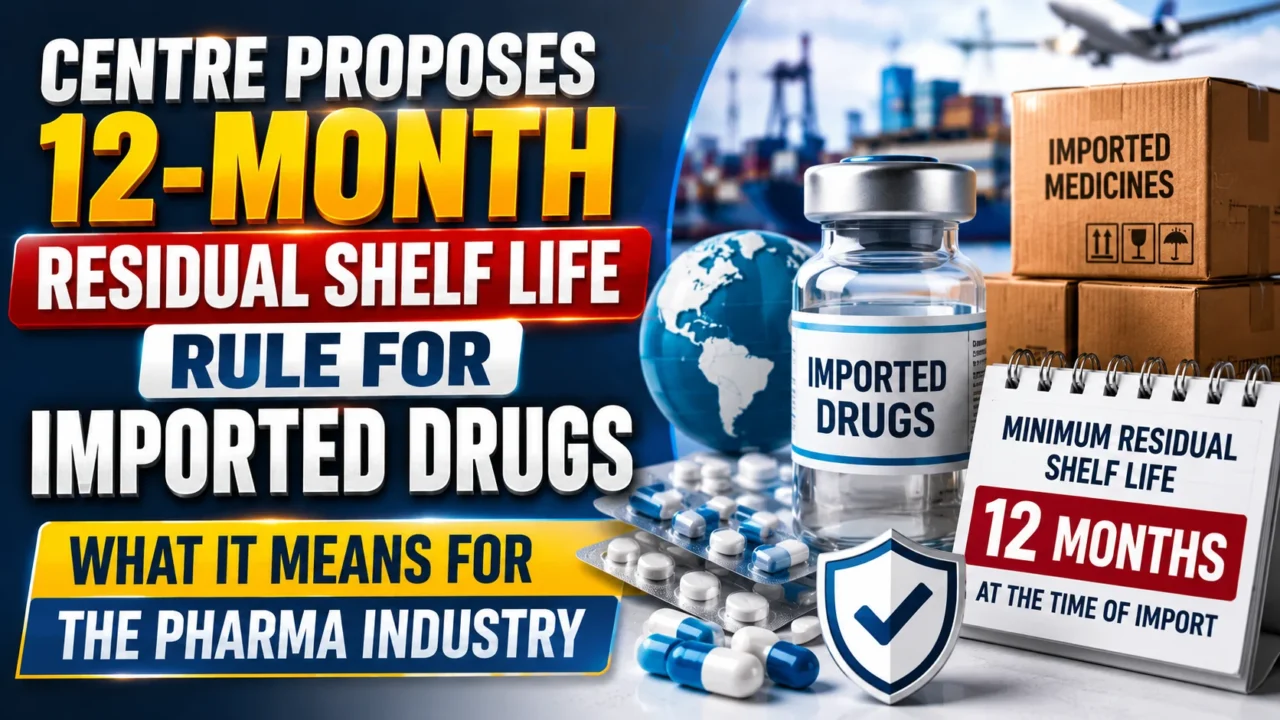
The proposal recommends replacing the existing minimum residual shelf-life requirement of more than 60% with a minimum remaining shelf life of 12 months at the time of import. The move is expected to simplify import procedures while ensuring that medicines reaching Indian patients continue to meet quality and safety standards.

What Is the Current Rule?
At present, imported drugs can only be brought into India if they have more than 60% of their original shelf life remaining at the time of import.
For example:
- A medicine with a total shelf life of 24 months must have more than 14.4 months remaining.
- A medicine with a shelf life of 36 months must have more than 21.6 months remaining.
This percentage-based requirement often creates challenges for importers and manufacturers.
What Is the Proposed Change?
The Health Ministry has proposed a new rule that would require imported medicines to have at least 12 months of residual shelf life, regardless of their original total shelf life.
Proposed Requirement
- Minimum residual shelf life: 12 months
- Applicable at the time of import
- Intended to replace the current 60% residual shelf-life requirement.
Why Is This Change Important?
The proposed amendment aims to make drug imports more practical and efficient while maintaining medicine quality.
Potential benefits include:
- Simplified regulatory compliance
- Easier import of medicines with longer original shelf lives
- Improved availability of imported medicines
- Reduced wastage of pharmaceutical products
- Greater flexibility for pharmaceutical companies in inventory management
Impact on the Pharmaceutical Industry
If implemented, the revised regulation could have several positive implications:
For Importers
- Easier planning for international shipments
- Lower risk of shipment rejection due to shelf-life calculations
- Reduced inventory losses
For Patients
- Better availability of essential imported medicines
- Potential reduction in supply disruptions
For Regulators
- A simpler and more uniform compliance standard
- Continued focus on ensuring drug quality and safety
Comparison: Current Rule vs Proposed Rule
| Current Rule | Proposed Rule |
|---|---|
| More than 60% residual shelf life | Minimum 12 months residual shelf life |
| Percentage-based calculation | Fixed time-based requirement |
| More complex compliance | Easier and more predictable compliance |
Why Was This Proposal Introduced?
Industry stakeholders have long argued that percentage-based shelf-life requirements can lead to unnecessary product rejection and wastage, particularly for medicines with long overall shelf lives. A fixed 12-month requirement could provide a more practical regulatory framework while maintaining adequate remaining shelf life for safe use.
What Happens Next?
The proposal is currently in the draft stage. After reviewing stakeholder feedback and public comments, the Ministry may finalize the amendment and notify the revised regulation.
Until then, the existing rules remain applicable.
Conclusion
The Health Ministry’s proposal to require a minimum residual shelf life of 12 months for imported drugs represents a significant shift from the existing 60% shelf-life rule. If approved, the change could simplify imports, reduce wastage, improve medicine availability, and provide greater regulatory clarity for the pharmaceutical industry while continuing to safeguard public health.
Recommended Products