

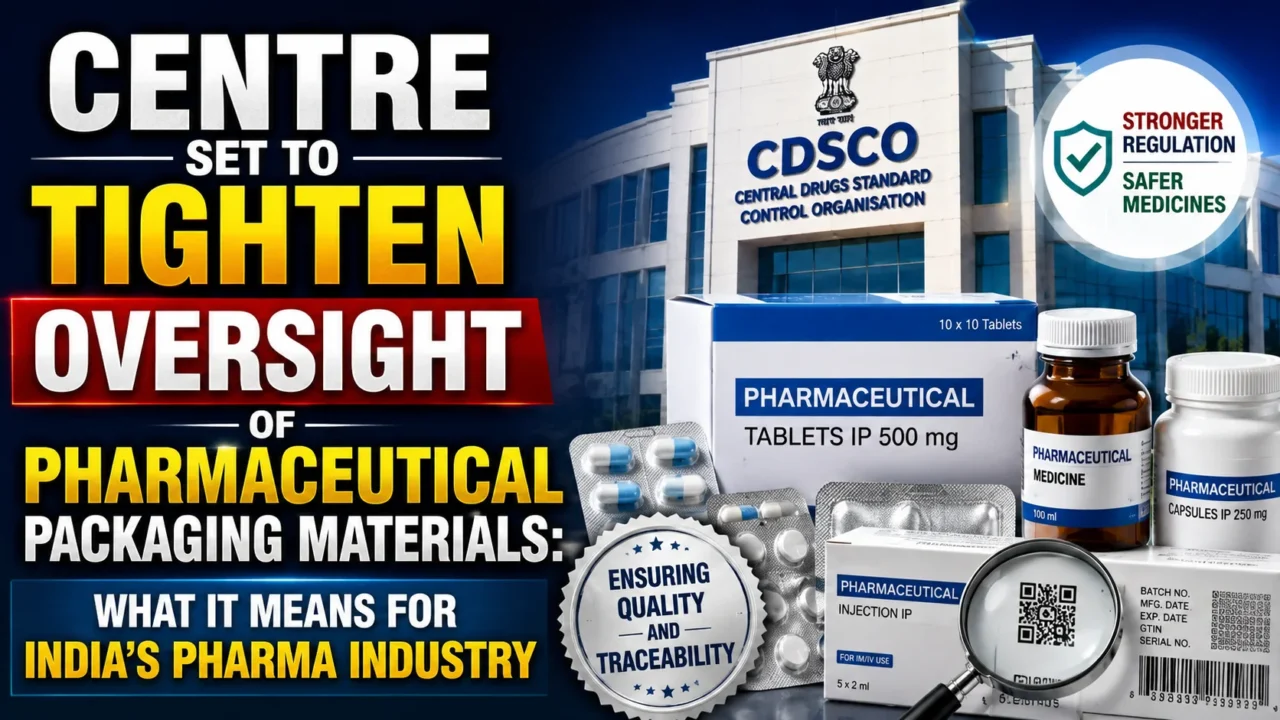

The Central Drugs Standard Control Organisation (CDSCO) is planning to strengthen regulatory oversight of printed pharmaceutical packaging materials by introducing a formal registration framework for manufacturers and suppliers. The move aims to improve the traceability of medicines and curb the circulation of counterfeit drugs in the pharmaceutical supply chain.
The proposal has gained urgency following the seizure of counterfeit batches of Semaglutide and rabies vaccines, as well as earlier complaints from international authorities regarding fake products falsely presented as medicines of Indian origin.

Why Is CDSCO Introducing This Measure?
Counterfeit medicines remain a significant challenge for public health and the pharmaceutical industry. While drug manufacturers are regulated under existing laws, suppliers of printed packaging materials have largely remained outside a dedicated registration system.
Since counterfeit medicines often use fake labels, cartons, blister foils, and packaging that closely resemble genuine products, authorities believe tighter control over packaging suppliers will help identify and prevent illegal activities.
What Is the Proposed Registration Framework?
Under the proposed system, manufacturers and suppliers of printed pharmaceutical packaging materials may be required to register with the regulatory authorities.
The framework is expected to:
- Improve traceability across the pharmaceutical supply chain.
- Create accountability for packaging material suppliers.
- Help identify the origin of counterfeit packaging.
- Strengthen regulatory monitoring and inspections.
- Support faster investigations into counterfeit medicine cases.
Why Is Packaging So Important?
Pharmaceutical packaging serves several critical purposes beyond product presentation.
It helps to:
- Protect medicines from contamination.
- Preserve product stability.
- Display essential information such as batch number, manufacturing date, expiry date, dosage, and storage instructions.
- Enable authentication of genuine medicines.
Because counterfeit medicines frequently imitate original packaging, stronger oversight of packaging materials is considered an important step in combating fake drugs.
Background: Counterfeit Drug Incidents
The government’s decision follows several incidents involving counterfeit medicines.
Recent developments include:
- Seizure of counterfeit batches of the weight-loss drug Semaglutide.
- Detection of fake rabies vaccine batches.
- Previous complaints from international regulators regarding counterfeit medicines falsely claiming Indian origin.
These incidents highlighted the need for improved monitoring of every stage of the pharmaceutical supply chain, including packaging production.
Expected Benefits of the New Framework
If implemented, the proposed registration system could provide several advantages.
Improved Drug Traceability
Authorities would be able to trace pharmaceutical packaging back to registered manufacturers, making investigations more efficient.
Stronger Protection Against Counterfeit Medicines
Registered packaging suppliers would be subject to greater regulatory oversight, reducing opportunities for counterfeit packaging production.
Increased Public Confidence
Patients and healthcare professionals may have greater confidence in the authenticity of medicines available in the market.
Better International Reputation
Improved regulatory controls can strengthen India’s reputation as a reliable global supplier of quality pharmaceutical products.
Impact on the Pharmaceutical Industry
The proposed framework may affect several stakeholders, including:
- Pharmaceutical manufacturers
- Packaging material manufacturers
- Printing companies
- Packaging suppliers
- Exporters
- Drug distributors
- Regulatory authorities
Companies involved in pharmaceutical packaging may need to comply with additional registration and documentation requirements once the framework is finalized.
Challenges Ahead
Although the initiative is expected to strengthen medicine safety, implementation may present certain challenges.
These may include:
- Registration compliance for small packaging suppliers.
- Additional documentation requirements.
- Regulatory inspections and audits.
- Supply chain adjustments during implementation.
However, industry experts believe that stronger traceability will ultimately benefit both manufacturers and consumers.
Why This Matters for Patients
Counterfeit medicines pose serious health risks because they may contain:
- Incorrect ingredients
- Wrong dosage
- Poor-quality materials
- No active pharmaceutical ingredient
Improving oversight of pharmaceutical packaging helps ensure that patients receive genuine, safe, and effective medicines.
Conclusion
The CDSCO’s proposal to bring printed pharmaceutical packaging material manufacturers and suppliers under a formal registration framework marks an important step toward strengthening India’s pharmaceutical regulatory system. By improving medicine traceability and tightening control over packaging materials, the government aims to reduce counterfeit medicines, protect public health, and reinforce confidence in India’s pharmaceutical industry. While the proposal may introduce new compliance requirements for packaging suppliers, it has the potential to significantly enhance the integrity and transparency of the medicine supply chain.
Recommended Products