




Introduction
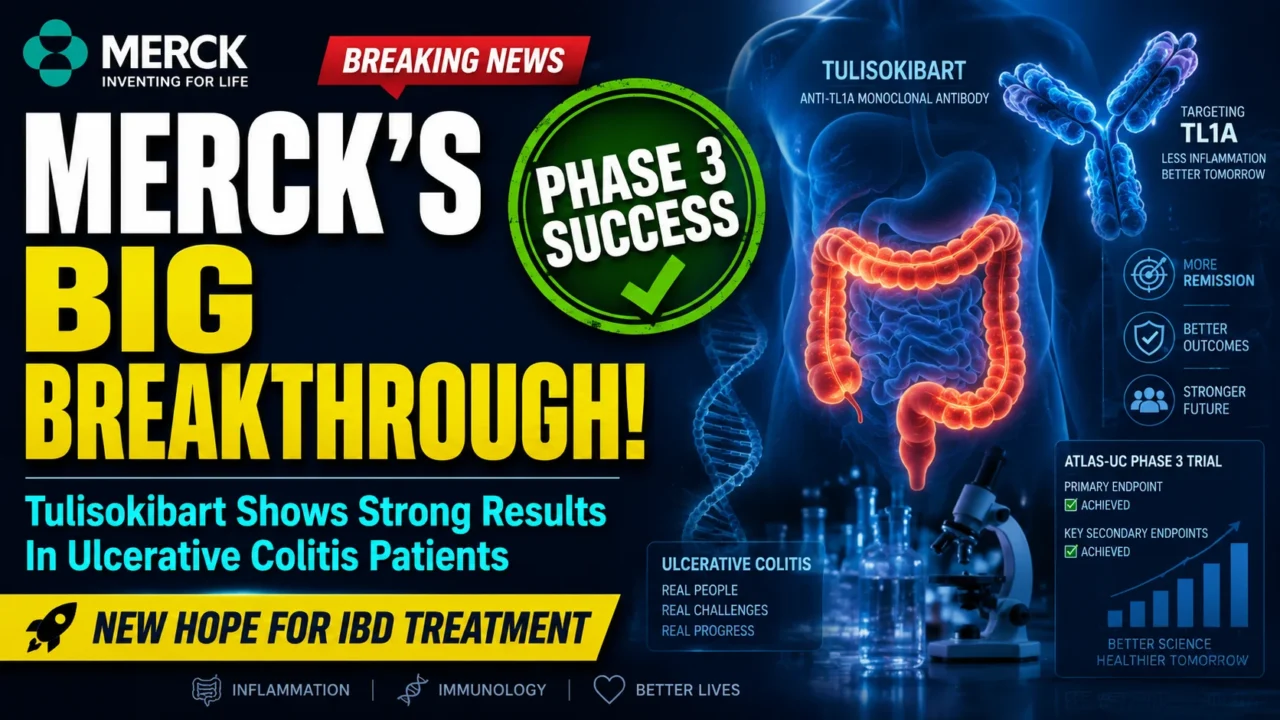
Global pharmaceutical leader Merck & Co. has announced positive topline results from its Phase 3 ATLAS-UC induction-only clinical trial evaluating tulisokibart, an investigational anti-TL1A monoclonal antibody, in patients with moderately to severely active ulcerative colitis (UC). The study successfully met its primary endpoint and key secondary endpoints, bringing the company one step closer to introducing a novel treatment option for patients struggling with this chronic inflammatory bowel disease.
The results represent a major milestone not only for Merck but also for the emerging anti-TL1A class of therapies, which is gaining significant attention in the field of immunology and gastroenterology.
What is Tulisokibart?
Tulisokibart is an investigational monoclonal antibody designed to target TL1A (Tumor Necrosis Factor-Like Cytokine 1A), a protein that plays a key role in driving intestinal inflammation and tissue damage in inflammatory bowel diseases (IBD).
By blocking the TL1A pathway, tulisokibart aims to:
- Reduce intestinal inflammation
- Promote mucosal healing
- Improve clinical remission rates
- Potentially address fibrosis associated with chronic disease
- Provide a more targeted treatment approach compared to traditional therapies
This mechanism has positioned anti-TL1A therapies among the most promising new developments in IBD treatment.

About the ATLAS-UC Phase 3 Study
The ATLAS-UC program is designed to assess the efficacy and safety of tulisokibart in patients with moderate-to-severe ulcerative colitis.
Key Highlights
| Parameter | Details |
|---|---|
| Study Name | ATLAS-UC |
| Phase | Phase 3 |
| Drug | Tulisokibart |
| Target | TL1A |
| Disease | Ulcerative Colitis |
| Patient Population | Moderate-to-Severe Active UC |
| Outcome | Primary and Key Secondary Endpoints Achieved |
According to Merck, the trial demonstrated encouraging clinical outcomes, supporting the therapeutic potential of tulisokibart in inducing disease remission.
Understanding Ulcerative Colitis
Ulcerative colitis is a chronic inflammatory disease affecting the lining of the colon and rectum. It is one of the two major forms of inflammatory bowel disease (IBD), alongside Crohn’s disease.
Common Symptoms
- Persistent diarrhea
- Abdominal pain and cramping
- Rectal bleeding
- Urgent bowel movements
- Fatigue
- Weight loss
- Reduced quality of life
Although several biologics and advanced therapies are available, many patients fail to achieve long-term disease control, creating an ongoing need for innovative treatment options.
Why Are These Results Important?
The positive Phase 3 findings suggest that tulisokibart could become a valuable addition to the ulcerative colitis treatment landscape.
Potential Benefits
✅ Novel mechanism of action
✅ Targeted immune modulation
✅ Potential improvement in remission rates
✅ Opportunity for patients with inadequate response to existing therapies
✅ Expansion of treatment choices in inflammatory bowel disease
These results also strengthen Merck’s growing immunology portfolio and demonstrate the company’s commitment to addressing unmet needs in chronic inflammatory diseases.
Growing Interest in Anti-TL1A Therapies
The anti-TL1A pathway has emerged as one of the most exciting targets in gastroenterology.
Researchers believe TL1A contributes to:
- Chronic intestinal inflammation
- Tissue remodeling
- Fibrosis development
- Disease progression in IBD
Because of this dual impact on inflammation and fibrosis, anti-TL1A therapies are being viewed as potential next-generation treatments that may offer advantages beyond current biologic options.
Industry experts consider the positive ATLAS-UC outcome a significant validation of the anti-TL1A therapeutic approach.
Beyond Ulcerative Colitis: Crohn’s Disease Development
Merck is also investigating tulisokibart in Crohn’s disease, another major form of inflammatory bowel disease.
The ongoing ARES-CD Phase 3 clinical program is evaluating the therapy’s effectiveness in patients with moderate-to-severe Crohn’s disease.
Success in both ulcerative colitis and Crohn’s disease could significantly expand the therapeutic impact of tulisokibart across the broader IBD population.
Regulatory Pathway and Next Steps
Following the successful topline results:
- Detailed efficacy and safety analyses will be completed.
- Data will be presented at upcoming international scientific conferences.
- Findings will be shared with regulatory authorities.
- Potential regulatory submissions may follow based on the complete dataset.
These steps are crucial before tulisokibart can become available for clinical use.
Conclusion
The positive Phase 3 ATLAS-UC results mark a major advancement in the development of tulisokibart, Merck’s investigational anti-TL1A monoclonal antibody for ulcerative colitis. By successfully achieving its primary and key secondary endpoints, the therapy has demonstrated promising potential to address unmet medical needs in patients with moderate-to-severe ulcerative colitis.
As the anti-TL1A class continues to gain momentum, tulisokibart could emerge as an important new treatment option capable of transforming the management of inflammatory bowel diseases. With further data presentations and regulatory discussions expected in the coming months, the gastroenterology community will be closely watching the next phase of its development.
Recommended Products