



Ministry of Health Prohibits 16 Irrational Fixed Dose Combinations to Strengthen Drug Safety
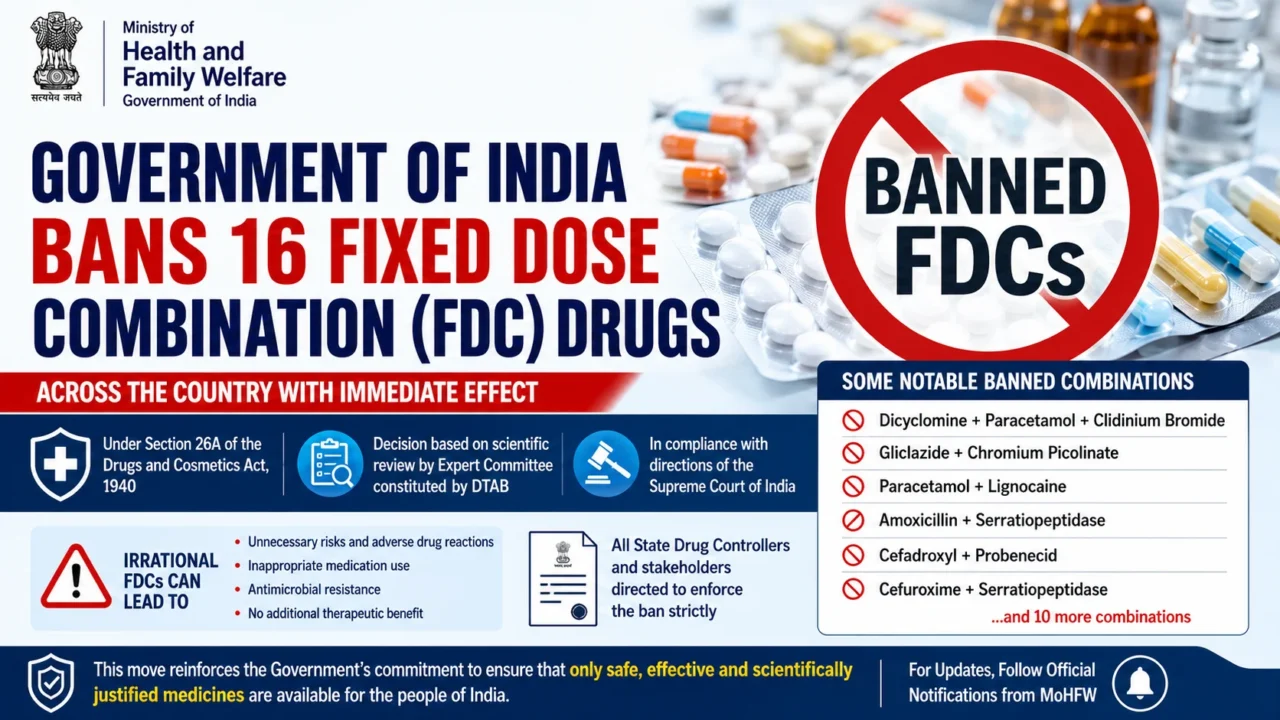
In a major regulatory move aimed at improving patient safety and promoting rational use of medicines, the Ministry of Health and Family Welfare (MoHFW), Government of India, has prohibited the manufacture, sale, and distribution of 16 Fixed Dose Combinations (FDCs) for human use with immediate effect.
The decision has been taken under Section 26A of the Drugs and Cosmetics Act, 1940, following a comprehensive scientific review of various drug combinations available in the Indian pharmaceutical market.
Why Were These FDCs Banned?
The action follows directions issued by the Supreme Court of India, which had instructed authorities to undertake a detailed examination of Fixed Dose Combinations being marketed across the country.
In response, the Drugs Technical Advisory Board (DTAB) constituted an Expert Committee to evaluate the safety, efficacy, and therapeutic justification of various FDCs.
After an extensive scientific assessment, the committee concluded that 16 drug combinations lacked adequate therapeutic rationale and, in some cases, posed potential health risks that outweighed their claimed benefits.
Based on these findings, the Ministry issued notifications banning their manufacture, sale, and distribution throughout India.
What Are Fixed Dose Combinations (FDCs)?
Fixed Dose Combinations are pharmaceutical products that contain two or more active ingredients combined in a fixed ratio within a single dosage form.
While scientifically justified FDCs can improve patient compliance and treatment outcomes, irrational combinations may:
- Increase the risk of adverse drug reactions
- Cause unnecessary drug exposure
- Lead to inappropriate medication use
- Increase treatment costs
- Contribute to antimicrobial resistance
Therefore, every FDC must demonstrate clear therapeutic benefits and scientific validity before being approved for use.

List of Notable Drug Combinations Banned
The prohibited formulations belong to several therapeutic categories, including pain management, antibiotics, antidiabetic medicines, gastrointestinal drugs, and dermatological products.
Some of the notable banned combinations include:
| S.No. | Fixed Dose Combination |
|---|---|
| 1 | Dicyclomine + Paracetamol + Clidinium Bromide |
| 2 | Gliclazide + Chromium Picolinate |
| 3 | Paracetamol + Lignocaine |
| 4 | Amoxicillin + Serratiopeptidase |
| 5 | Cefadroxyl + Probenecid |
| 6 | Cefuroxime + Serratiopeptidase |
Several other combinations involving aloe vera extracts, vitamins, analgesics, gastrointestinal medicines, and antibiotics have also been prohibited.
Impact on Patients and Healthcare Providers
The Ministry emphasized that irrational Fixed Dose Combinations can expose patients to avoidable health risks and may not provide any additional therapeutic advantage.
Healthcare professionals are advised to:
- Review ongoing prescriptions containing the banned combinations
- Shift patients to safer and evidence-based alternatives
- Educate patients regarding the regulatory action
- Follow updated prescribing guidelines
Patients currently using any of the affected medicines should consult their healthcare provider before making any changes to treatment.
Instructions to Manufacturers and Regulatory Authorities
The Ministry has directed:
- State Drug Controllers
- Licensing Authorities
- Drug Inspectors
- Pharmaceutical Manufacturers
- Distributors and Importers
to immediately implement the ban and ensure complete compliance with the issued notifications.
Manufacturers must stop production and distribution of the prohibited formulations with immediate effect.
India’s Continued Crackdown on Irrational Medicines
This is not the first instance where the Government of India has taken action against irrational Fixed Dose Combinations.
Over the past decade, several FDCs have been withdrawn from the market after scientific reviews revealed concerns regarding safety, efficacy, or therapeutic relevance.
These measures reflect India’s commitment to:
- Patient safety
- Evidence-based medicine
- Rational prescribing practices
- Stronger pharmaceutical regulation
- Improved healthcare quality
Conclusion
The prohibition of 16 Fixed Dose Combinations marks another significant step in strengthening India’s drug regulatory framework. By removing medicines that lack adequate scientific justification, regulators aim to protect patients from unnecessary risks and ensure that only safe, effective, and clinically validated therapies remain available in the market.
The move reinforces the government’s commitment to maintaining high standards of drug safety and promoting the rational use of medicines across the healthcare system.
Recommended Products