



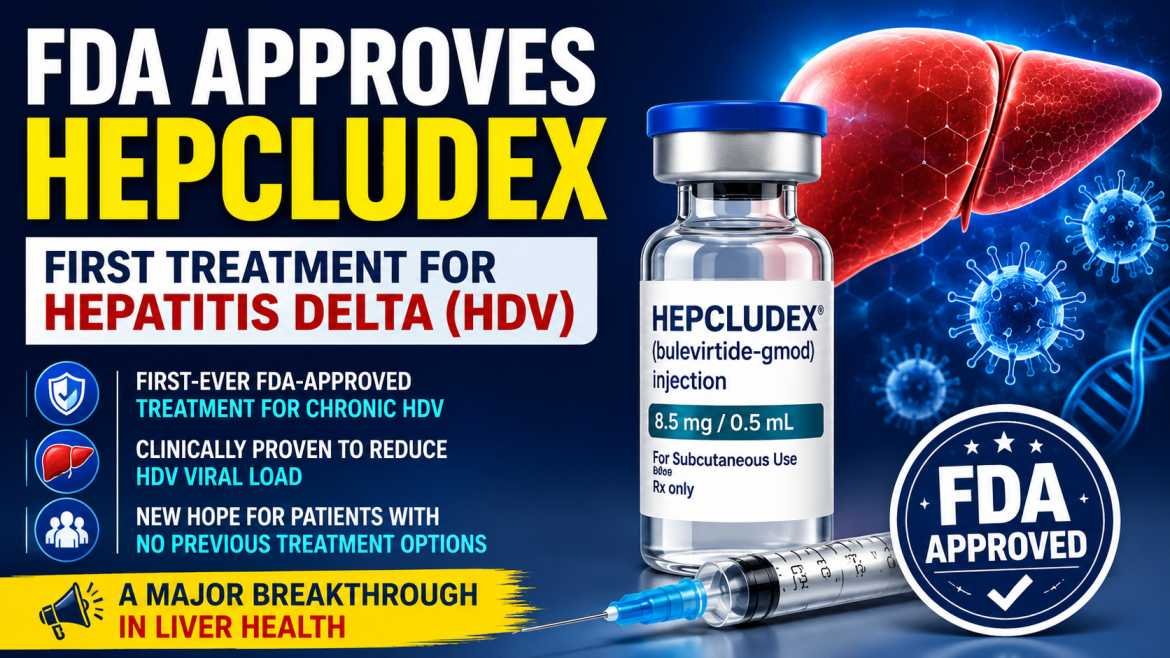

For the first time in history, patients suffering from chronic hepatitis delta virus (HDV) infection finally have an FDA-approved treatment option. The U.S. Food and Drug Administration has approved Hepcludex (bulevirtide-gmod) injection, marking a significant milestone in the fight against one of the deadliest forms of viral hepatitis.
The approval is being celebrated across the medical community as a long-overdue advancement for patients who previously had little hope beyond supportive care and limited off-label treatments.
Why This Approval Matters
Hepatitis delta is considered the most severe and aggressive form of viral hepatitis. Unlike other hepatitis viruses, HDV cannot survive on its own—it only infects people who already carry the hepatitis B virus (HBV).
Once infected, patients face a much higher risk of:
- Rapid liver scarring (fibrosis)
- Cirrhosis
- Liver failure
- Liver cancer
- Early death
Until now, there had been no FDA-approved therapies specifically designed to treat chronic HDV infection.
The FDA called the approval a “critical gap in care” finally being addressed.
A New Hope for Patients
Hepcludex works by blocking the virus from entering healthy liver cells, slowing the spread of infection inside the liver. The treatment is approved for adults living with chronic HDV who either:
- Do not have cirrhosis, or
- Have compensated cirrhosis, where the liver still maintains basic function
Experts believe the drug could dramatically improve long-term outcomes for patients at risk of severe liver complications.

Clinical Trial Results Show Strong Promise
The FDA’s decision was based on results from the Phase 3 MYR301 clinical trial, which evaluated patients receiving Hepcludex over an extended period.
The findings were highly encouraging.
At 48 weeks:
- Nearly half of the treated patients achieved a significant treatment response
- Only 2% of patients in the untreated comparison group showed similar improvement
Researchers also observed that viral suppression improved steadily over time:
- 20% of patients achieved undetectable HDV levels at Week 48
- 36% by Week 96
- 50% by Week 144
These results suggest long-term therapy may continue delivering stronger benefits as treatment progresses.
Important Safety Information
Like many injectable antiviral treatments, Hepcludex may cause side effects. The most commonly reported include:
- Headache
- Fatigue
- Injection site reactions
- Abdominal pain
- Itching
The drug label also carries a boxed warning stating that abruptly stopping treatment could trigger severe flare-ups of both hepatitis delta and hepatitis B infections.
Doctors will likely monitor patients carefully during and after therapy.
FDA Fast-Tracked the Drug
Because of the urgent unmet medical need, the FDA granted Hepcludex several special review designations, including:
- Breakthrough Therapy Designation
- Orphan Drug Designation
- Priority Review
- Accelerated Approval
These programs are designed to speed up access to potentially life-saving treatments for serious diseases with limited options.
The Bigger Picture
The approval of Hepcludex represents more than just a new medication—it reflects years of progress in antiviral research and renewed attention toward neglected liver diseases.
For patients living with chronic HDV, this breakthrough offers something many have waited decades for: a treatment specifically developed for their condition.
While challenges remain, including access, long-term monitoring, and continued research, Hepcludex marks the beginning of a new era in hepatitis delta care.
Final Thoughts
FDA approval of Hepcludex is a landmark moment in liver disease treatment. As the first therapy approved specifically for chronic hepatitis delta, it provides long-awaited hope for patients facing one of the most dangerous viral infections affecting the liver.
For the medical community, this is not just another drug approval—it’s a reminder that innovation continues to transform even the most difficult areas of healthcare.
Recommended Products