


Quick Summary
The Government of India has amended the Drugs Rules, 1945 to stop the over-the-counter (OTC) sale of oral medicines containing more than 12% v/v ethyl alcohol in pack sizes above 30 mL. These medicines are now classified under Schedule H1 and require a valid doctor’s prescription. The move aims to prevent misuse while ensuring genuine patients continue to receive treatment safely.

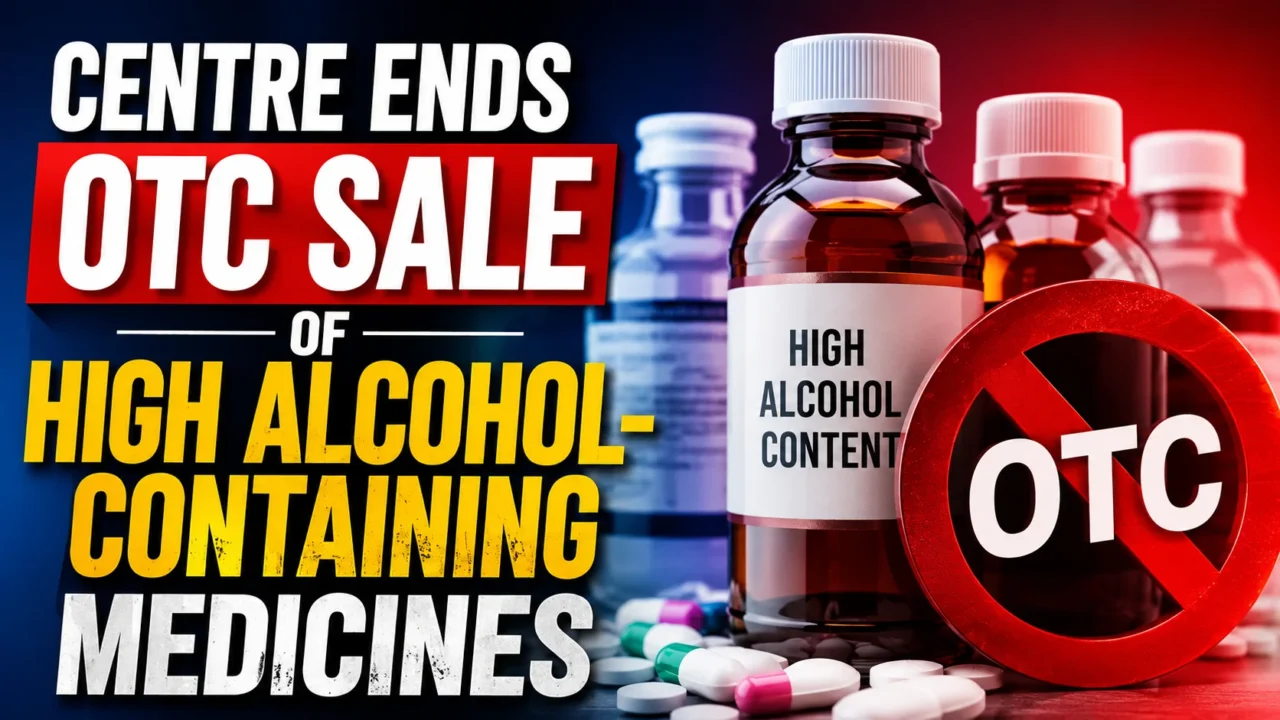
Centre Ends OTC Sale of High Alcohol-Containing Medicines: What the New Rule Means
The Centre Ends OTC Sale of High Alcohol-Containing Medicines through an important amendment to the Drugs Rules, 1945. Under the revised regulation, oral medicines containing more than 12% v/v ethyl alcohol in pack sizes greater than 30 mL can no longer be sold without a prescription.
These medicines have now been brought under Schedule H1, making it mandatory for patients to present a valid prescription from a Registered Medical Practitioner (RMP) before purchase.
The amendment aims to prevent misuse of alcohol-containing medicinal formulations while ensuring uninterrupted access for genuine medical needs.
Overview
| Particular | Details |
|---|---|
| Amendment | Drugs Rules, 1945 |
| Issued By | Ministry of Health and Family Welfare (MoHFW) |
| Applies To | Oral medicines containing more than 12% v/v ethyl alcohol |
| Pack Size | More than 30 mL |
| Previous Status | Schedule K Exemption |
| New Status | Schedule H1 |
| Prescription Required | Yes |
| Objective | Prevent misuse of alcohol-containing medicines |
Why Did the Government Introduce This Rule?
Previously, several medicinal formulations containing high concentrations of ethyl alcohol were exempt under Schedule K of the Drugs Rules.
However, reports from multiple states revealed that these medicines were increasingly being purchased for non-medical consumption because of their high alcohol content.
To curb misuse while protecting legitimate medical use, the government introduced stricter regulations.
What Has Changed?
The amendment introduces the following major changes:
| Previous Rule | New Rule |
|---|---|
| Certain alcohol-containing medicines exempt under Schedule K | Schedule K exemption removed |
| OTC sale permitted | Prescription mandatory |
| No Schedule H1 monitoring | Shifted to Schedule H1 |
| Limited record keeping | Schedule H1 registers mandatory |
| Easier retail sale | Sale only through licensed pharmacies |
Which Medicines Could Be Affected?
The amendment primarily affects oral medicinal formulations containing high levels of ethyl alcohol, including:
- Herbal tinctures
- Cardamom tincture
- Ginger tincture
- Aromatic medicinal preparations
- Other alcohol-rich oral formulations previously covered under Schedule K
Note: The regulation depends on alcohol concentration (>12% v/v) and pack size (>30 mL), not merely the product name.
Impact on Patients
Patients requiring these medicines can continue receiving treatment without interruption.
The only change is that they must:
- Consult a Registered Medical Practitioner (RMP)
- Obtain a valid prescription
- Purchase the medicine from a licensed pharmacy
The amendment promotes safe and responsible use without limiting genuine access.

Impact on Pharmacists
Community pharmacists will now have additional regulatory responsibilities.
Pharmacists must:
- Verify valid prescriptions before dispensing.
- Maintain Schedule H1 dispensing records.
- Preserve prescription details as required by law.
- Ensure compliance during drug inspections.
- Educate patients about the new prescription requirement.
Failure to comply may invite regulatory action under the Drugs and Cosmetics Act, 1940.
Impact on Pharmaceutical Companies
Manufacturers of affected formulations will need to:
- Obtain appropriate manufacturing and sale licences.
- Update regulatory documentation.
- Comply with Schedule H1 requirements.
- Strengthen supply chain monitoring.
- Prevent diversion and misuse of products.
The amendment strengthens regulatory oversight while ensuring uninterrupted availability for genuine patients.
Why Were These Medicines Shifted to Schedule H1?
Schedule H1 provides stricter regulatory control compared to OTC medicines.
Under Schedule H1:
- Sale is allowed only with a valid prescription.
- Pharmacies must maintain dispensing records.
- Drug authorities can trace medicine distribution.
- Misuse and diversion become more difficult.
- Regulatory monitoring becomes stronger.
Key Highlights
- OTC sale of high alcohol-containing medicines has ended.
- Oral medicines containing more than 12% v/v ethyl alcohol in bottles above 30 mL now require a prescription.
- Products shifted from Schedule K to Schedule H1.
- Pharmacies must maintain Schedule H1 records.
- Manufacturers must comply with stricter licensing requirements.
- The objective is to reduce misuse while ensuring patient access.
What This Means for Pharmacy Students and Professionals
This amendment is important for:
- B.Pharm students
- D.Pharm students
- M.Pharm students
- Drug Inspector aspirants
- GPAT aspirants
- Pharmacists
- Pharma regulatory professionals
Understanding Schedule H1 regulations is essential for competitive exams as well as professional pharmacy practice.
Important Regulatory Changes at a Glance
| Regulation | New Requirement |
|---|---|
| OTC Sale | Not Allowed |
| Prescription | Mandatory |
| Schedule | H1 |
| Pharmacy Records | Mandatory |
| Manufacturing Licence | Required |
| Sale Through Licensed Pharmacy | Yes |
Conclusion
The amendment to the Drugs Rules, 1945 marks an important step in strengthening India’s pharmaceutical regulatory framework. By bringing high alcohol-containing oral medicines under Schedule H1, the government seeks to prevent misuse, improve accountability across the pharmaceutical supply chain, and protect public health without affecting access for patients who genuinely require these medicines.
For pharmacists, manufacturers, and pharmacy students, understanding this regulatory update is essential for ensuring compliance, safe dispensing practices, and staying informed about evolving pharmaceutical laws in India.
Frequently Asked Questions (FAQs)
Q1. Which medicines are affected by the new rule?
Oral medicines containing more than 12% v/v ethyl alcohol in pack sizes above 30 mL.
Q2. Can these medicines still be purchased?
Yes. They can only be purchased with a valid prescription from a Registered Medical Practitioner.
Q3. Why has the government made this change?
To prevent misuse of alcohol-containing medicinal products while ensuring genuine patients continue receiving treatment.
Q4. Under which schedule are these medicines now classified?
They are now regulated under Schedule H1.
Q5. What records must pharmacists maintain?
Pharmacists must maintain prescription and dispensing records as required under Schedule H1.
Q6. Are all alcohol-containing medicines affected?
No. The amendment applies only to oral medicines containing more than 12% v/v ethyl alcohol in pack sizes exceeding 30 mL.
Q7. Will patients lose access to these medicines?
No. Genuine patients can continue obtaining them with a valid doctor’s prescription.
Q8. Why is this update important for pharmacy students?
It is a significant regulatory update frequently relevant for GPAT, NIPER, Drug Inspector, Pharmacist recruitment exams, and pharmacy practice.
Recommended Products