


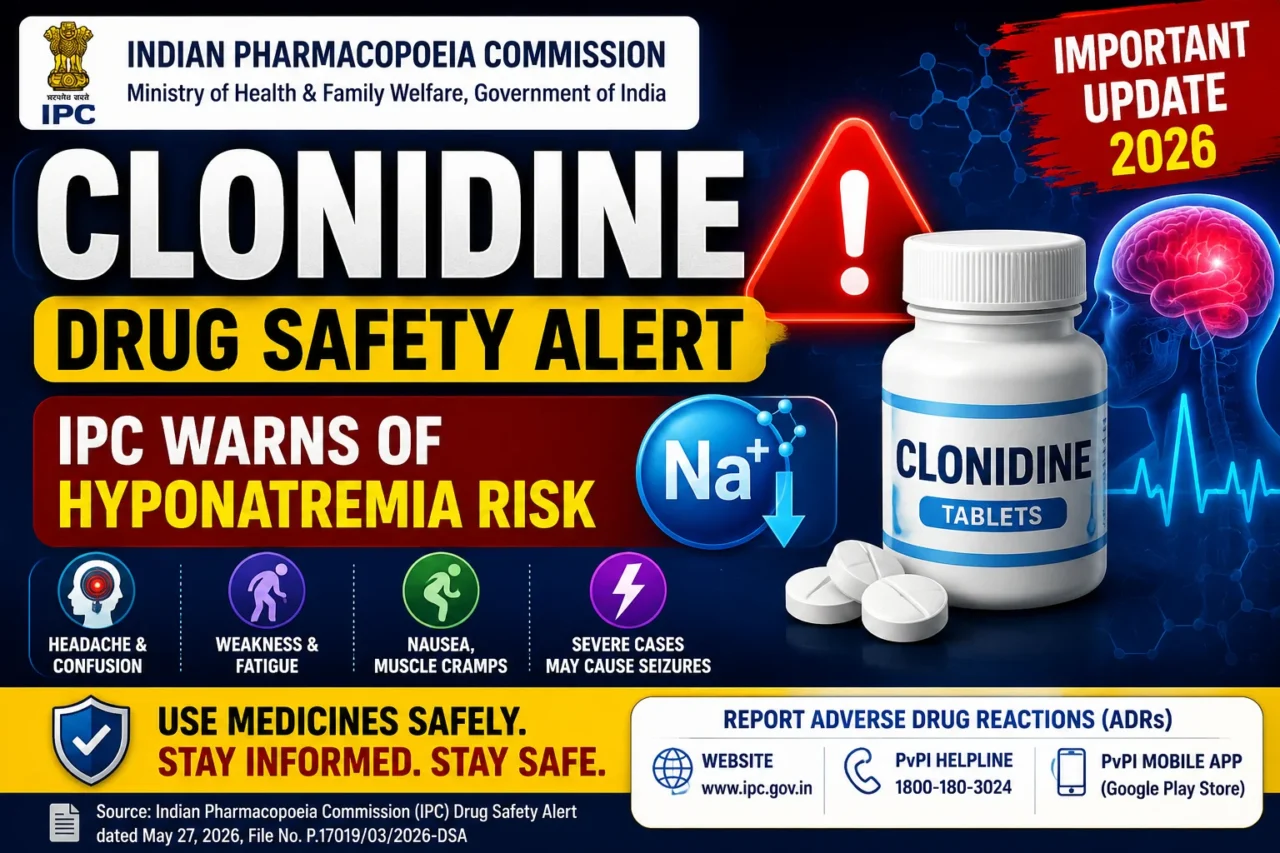

The Clonidine Drug Safety Alert 2026 issued by the Indian Pharmacopoeia Commission (IPC) highlights a possible association between Clonidine and Hyponatremia (low blood sodium levels). Patients should not stop the medicine without medical advice, remain alert for symptoms such as confusion, weakness, nausea, and muscle cramps, and report suspected adverse drug reactions (ADRs) through the Pharmacovigilance Programme of India (PvPI).
Clonidine Drug Safety Alert 2026
The Indian Pharmacopoeia Commission (IPC), functioning under the Ministry of Health & Family Welfare, Government of India, has released an important Clonidine Drug Safety Alert 2026. The alert is based on the analysis of adverse drug reaction (ADR) reports collected through the Pharmacovigilance Programme of India (PvPI).
According to IPC, Clonidine may be associated with Hyponatremia, a condition where sodium levels in the blood become lower than normal. Although this reaction is uncommon, early identification and timely medical attention are important to prevent serious complications.
Healthcare professionals, pharmacists, and patients should remain vigilant and report any suspected adverse drug reactions through the PvPI reporting system.
Clonidine Drug Safety Alert 2026 Overview
| Particular | Details |
|---|---|
| Drug Name | Clonidine |
| Alert Issued By | Indian Pharmacopoeia Commission (IPC) |
| Programme | Pharmacovigilance Programme of India (PvPI) |
| Safety Concern | Hyponatremia (Low Blood Sodium) |
| Drug Category | Antihypertensive (Alpha-2 Adrenergic Agonist) |
| Recommendation | Monitor symptoms and report ADRs |
What is Clonidine?
Clonidine is a prescription medicine mainly used to:
- Treat hypertension (high blood pressure)
- Manage certain neurological disorders
- Control withdrawal symptoms
- Treat ADHD in selected patients
- Manage chronic pain in specific clinical situations
Clonidine lowers blood pressure by stimulating alpha-2 adrenergic receptors in the brain, reducing sympathetic nervous system activity.
Why Has IPC Issued This Drug Safety Alert?
The IPC reviewed adverse drug reaction reports available under the Pharmacovigilance Programme of India (PvPI) and identified a possible association between Clonidine use and Hyponatremia.
The purpose of this alert is to improve awareness among healthcare professionals and patients so that suspected reactions can be identified and reported promptly.
Important: The alert does not mean that Clonidine is unsafe or banned. It is intended to promote safe medicine use through pharmacovigilance.
What is Hyponatremia?
Hyponatremia is a condition in which the sodium concentration in the blood falls below the normal range.
Sodium is essential for:
- Maintaining fluid balance
- Proper nerve function
- Muscle contraction
- Brain function
- Blood pressure regulation
If left untreated, severe hyponatremia can become a medical emergency.

Symptoms of Hyponatremia
Patients taking Clonidine should seek medical advice immediately if they experience:
| Common Symptoms |
|---|
| Headache |
| Confusion |
| Weakness |
| Excessive Fatigue |
| Nausea |
| Vomiting |
| Muscle Cramps |
| Dizziness |
| Difficulty Concentrating |
| Seizures (Severe Cases) |
Early recognition can help prevent serious complications.
Who is at Higher Risk?
Extra caution is advised for:
- Elderly patients
- Patients taking diuretics
- Individuals with kidney disease
- Patients with heart failure
- Patients with electrolyte imbalance
- Patients taking multiple blood pressure medicines
What Should Patients Do?
Continue Regular Follow-ups
Visit your healthcare provider regularly and follow the prescribed treatment plan.
Do Not Stop Clonidine Without Medical Advice
Never discontinue or change the dose on your own.
Monitor Symptoms
Watch for signs of hyponatremia and seek immediate medical attention if symptoms develop.
Inform Your Doctor
Tell your healthcare provider about all prescription medicines, over-the-counter drugs, and supplements you are taking.

Advice for Healthcare Professionals
Healthcare professionals should:
- Counsel patients regarding symptoms of hyponatremia.
- Monitor high-risk patients carefully.
- Consider electrolyte monitoring when clinically appropriate.
- Encourage reporting of suspected ADRs to PvPI.
- Educate patients not to stop Clonidine without medical advice.
How to Report an Adverse Drug Reaction (ADR)
Suspected adverse drug reactions can be reported through the Pharmacovigilance Programme of India (PvPI).
ADR Reporting Options
| Method | Details |
|---|---|
| Official Website | IPC Official Website |
| Helpline | 1800-180-3024 |
| Mobile App | PvPI Mobile App (Google Play Store) |
Timely ADR reporting helps improve medicine safety and protects public health.
Key Highlights
- IPC has issued a Drug Safety Alert for Clonidine.
- Potential risk identified: Hyponatremia.
- Patients should not stop Clonidine without medical advice.
- Monitor for headache, confusion, weakness, nausea, muscle cramps, and seizures.
- Healthcare professionals should encourage ADR reporting.
- Suspected ADRs should be reported through PvPI.
Why Should Pharmacy Students and Pharmacists Know About This Alert?
Understanding IPC Drug Safety Alerts helps pharmacy professionals:
- Improve patient counselling.
- Strengthen pharmacovigilance knowledge.
- Recognize rare adverse drug reactions.
- Promote rational medicine use.
- Prepare for GPAT, Drug Inspector, Pharmacist, and other competitive examinations.
Frequently Asked Questions (FAQs)
1. Why has IPC issued a Drug Safety Alert for Clonidine?
IPC identified a possible association between Clonidine use and Hyponatremia based on adverse drug reaction reports received under the Pharmacovigilance Programme of India (PvPI).
2. What is Hyponatremia?
Hyponatremia is a condition in which sodium levels in the blood become abnormally low.
3. What are the symptoms of Hyponatremia?
Symptoms include headache, confusion, weakness, fatigue, nausea, vomiting, muscle cramps, dizziness, and seizures in severe cases.
4. Should patients stop taking Clonidine after this alert?
No. Patients should continue taking Clonidine exactly as prescribed and consult their doctor before making any changes.
5. How can adverse drug reactions be reported?
Suspected ADRs can be reported through the IPC website, the PvPI helpline (1800-180-3024), or the PvPI Mobile App.
6. Is Clonidine banned in India?
No. Clonidine remains an approved medicine. The IPC alert is intended to increase awareness and encourage early identification and reporting of rare adverse reactions.
7. Who should be more cautious while taking Clonidine?
Older adults, patients with kidney disease, heart failure, electrolyte imbalance, those taking diuretics, and patients using multiple antihypertensive medicines.
8. Why is ADR reporting important?
Reporting ADRs helps regulatory authorities continuously monitor medicine safety and improve patient care.
Internal Linking Suggestions (GDC Classes)
Link this article with related content such as:
- Pharmacovigilance Programme of India (PvPI)
- Important Drug Safety Alerts
- Drug Inspector Preparation
- Pharmacology Notes
- GPAT Pharmacology
- ADR Monitoring and Pharmacovigilance
- Pharmacy Current Affairs
- Government Pharmacist Exam Preparation
External Linking Suggestions
Use only official sources:
- Indian Pharmacopoeia Commission (IPC)
- Pharmacovigilance Programme of India (PvPI)
- Ministry of Health & Family Welfare
Conclusion
The Clonidine Drug Safety Alert 2026 issued by the Indian Pharmacopoeia Commission (IPC) reinforces the importance of pharmacovigilance in ensuring patient safety. While Clonidine remains an approved and effective medicine for hypertension and other clinical conditions, healthcare professionals and patients should remain alert for possible signs of Hyponatremia.
Regular follow-up, awareness of symptoms, and timely reporting of suspected adverse drug reactions through the Pharmacovigilance Programme of India (PvPI) play a vital role in improving medicine safety. Patients should continue taking Clonidine only as prescribed and consult their healthcare provider before making any changes to treatment.
Recommended Products