




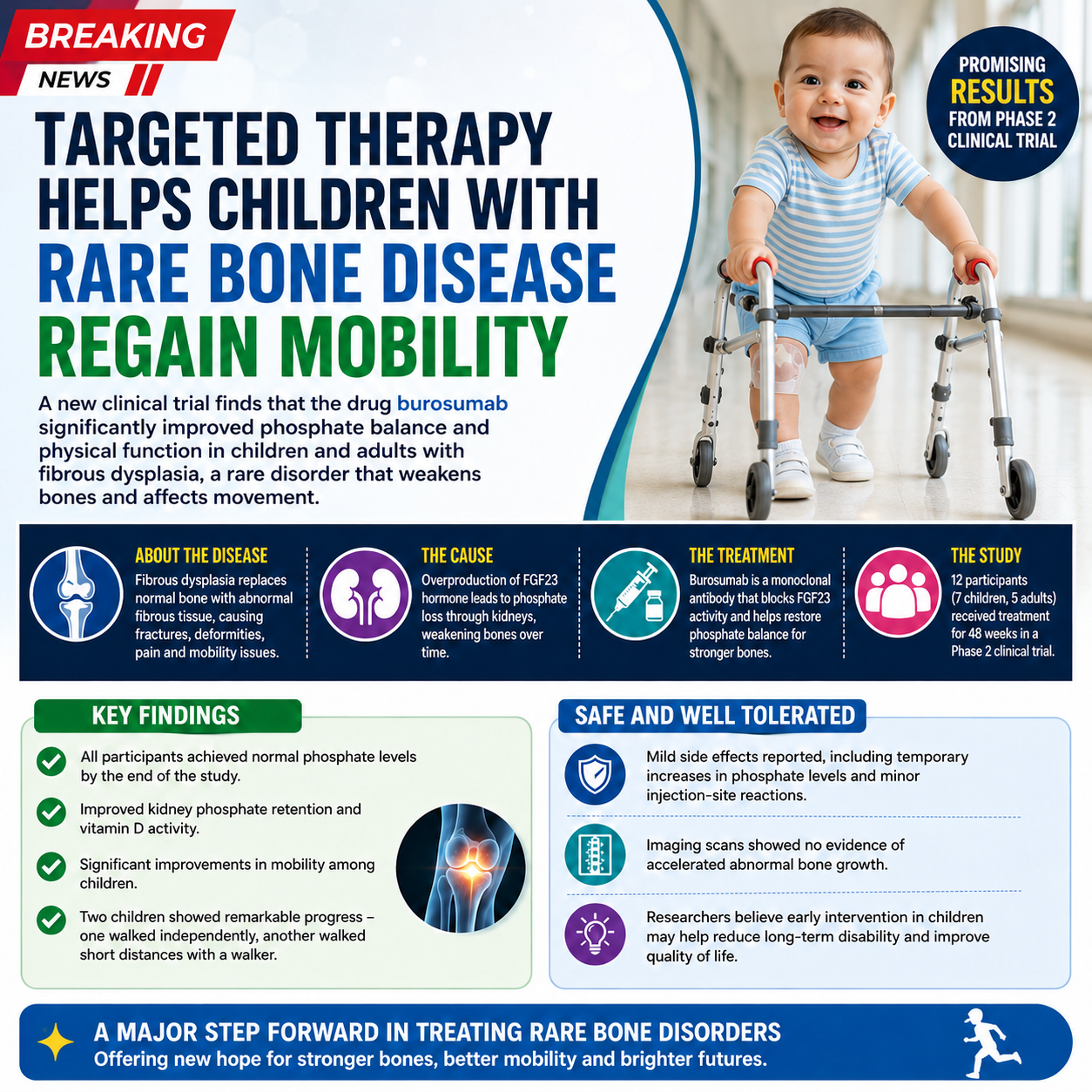
A groundbreaking targeted therapy is bringing renewed hope to patients living with fibrous dysplasia — a rare and debilitating bone disorder that can severely impact mobility, independence, and quality of life. Recent clinical research suggests that burosumab, a therapy designed to correct phosphate imbalance in the body, may significantly improve bone health and physical function in both children and adults affected by the disease.
Understanding Fibrous Dysplasia
Fibrous dysplasia is a rare skeletal condition in which normal bone is replaced by abnormal fibrous tissue. This weakens the bones, making them more vulnerable to fractures, deformities, chronic pain, and mobility problems.
In severe cases, patients may struggle with everyday activities such as walking, standing, or climbing stairs. Children affected by the condition often face developmental challenges due to impaired bone growth and reduced physical activity.
A key factor in many cases of fibrous dysplasia is the overproduction of a hormone called fibroblast growth factor-23 (FGF23). Excess FGF23 causes the kidneys to remove too much phosphate from the body.
Since phosphate is essential for proper bone mineralization and strength, low phosphate levels can further worsen bone damage and disability over time.

The Promise of Burosumab
Researchers led by Alison M. Boyce conducted a Phase 2 clinical trial to evaluate the effectiveness of burosumab, a monoclonal antibody therapy that blocks the harmful effects of FGF23.
The study included:
- 12 participants total
- 7 children
- 5 adults
- All participants had severe fibrous dysplasia and low phosphate levels
Patients received burosumab treatment for 48 weeks while researchers monitored:
- Phosphate balance
- Bone health
- Mobility and physical function
- Imaging results
- Patient-reported symptoms and quality of life
The findings were published in the journal Bone Research.
Significant Improvements in Bone Health and Mobility
The results of the study were highly encouraging.
By the end of the trial, all participants achieved phosphate levels within the normal range. Researchers also observed improvements in:
- Kidney phosphate retention
- Vitamin D activity
- Bone mineralization support
However, the most remarkable improvements were seen in mobility among pediatric patients.
Several children reported:
- Reduced fatigue
- Less pain
- Improved physical endurance
Two cases demonstrated especially dramatic progress:
- One child who had previously relied on a wheelchair became able to walk independently.
- Another child who had never walked alone was able to walk short distances using a walker.
These outcomes highlight the therapy’s potential to restore mobility and independence in children with severe skeletal disease.
Safety and Tolerability
Researchers reported that burosumab was generally well tolerated throughout the study.
Most side effects were mild and included:
- Temporary increases in phosphate levels
- Minor injection-site reactions
Importantly, imaging scans showed no evidence that the therapy accelerated abnormal bone growth — a major concern for treatments targeting FGF23 signaling pathways.
Why This Research Matters
The success of burosumab could represent a major advancement in the treatment of rare bone disorders associated with phosphate imbalance.
Researchers believe the therapy may not only help manage symptoms but also reduce long-term disability if introduced earlier in childhood. Early intervention could potentially preserve mobility, improve skeletal development, and enhance overall quality of life for patients living with fibrous dysplasia.
In addition, these findings may open doors for treating other rare metabolic bone diseases linked to phosphate regulation.
Looking Ahead
While larger studies are still needed, the early results from this trial offer hope to families affected by fibrous dysplasia. For many patients, improved mobility means more than physical progress — it means greater independence, confidence, and participation in daily life.
As targeted therapies continue to evolve, personalized treatments like burosumab may transform the future of rare disease care and provide new opportunities for patients once considered untreatable.
Conclusion
The development of burosumab marks an important step forward in rare bone disease treatment. By correcting phosphate imbalance and improving mobility, the therapy has demonstrated the potential to significantly change lives — especially for children facing severe physical limitations.
With continued research and early diagnosis, targeted therapies may soon become a powerful tool in improving long-term outcomes for patients living with fibrous dysplasia and related skeletal disorders.
Recommended Products