



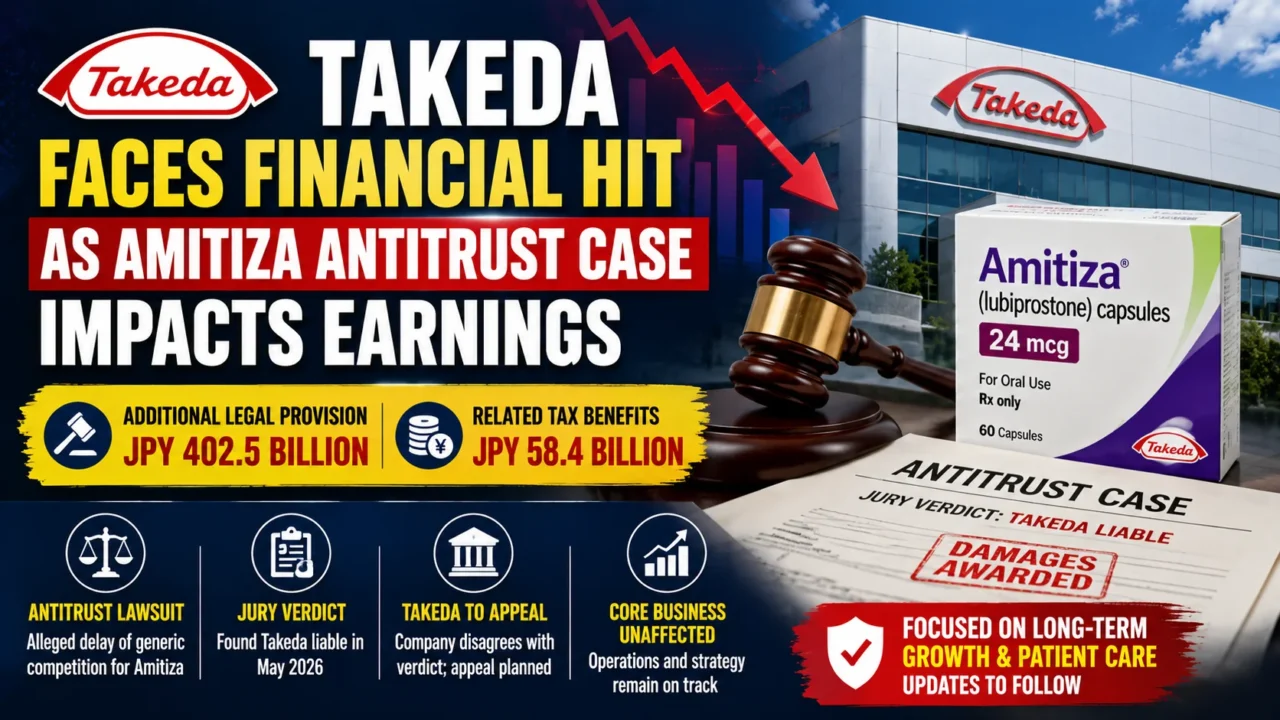

Japanese pharmaceutical giant Takeda Pharmaceutical Company Limited has revised its fiscal year 2025 financial results after recording a substantial legal provision related to ongoing antitrust litigation involving its constipation treatment Amitiza (lubiprostone). The adjustment follows a recent U.S. jury verdict that found the company liable for allegedly delaying the entry of lower-cost generic competitors into the market.
The development represents one of the most significant legal-related financial impacts for Takeda in recent years, although the company maintains that its core business operations and long-term growth strategy remain intact.
Takeda Records Massive Legal Provision
In its revised FY2025 earnings report, Takeda disclosed that it has recognized an additional legal provision of approximately JPY 402.5 billion to reflect the estimated financial consequences of the ongoing litigation.
At the same time, the company reported related tax benefits totaling JPY 58.4 billion, partially offsetting the overall financial burden.
Financial Impact Overview
| Item | Amount |
|---|---|
| Additional Legal Provision | JPY 402.5 Billion |
| Related Tax Benefits | JPY 58.4 Billion |
| Affected Product | Amitiza (Lubiprostone) |
| Reporting Period | Fiscal Year 2025 |
Background of the Amitiza Antitrust Case
The lawsuit centers on allegations that Takeda engaged in anticompetitive practices designed to delay the market entry of generic versions of Amitiza, a prescription medication used to treat chronic constipation and other gastrointestinal disorders.
Plaintiffs, including wholesalers and retailers, argued that agreements involving the drug unlawfully postponed generic competition, resulting in higher prices and reduced market access for consumers.
In May 2026, a U.S. jury ruled against Takeda and awarded substantial damages to the plaintiffs, creating the basis for the company’s latest financial adjustment.
Key Allegations in the Case
| Issue | Description |
|---|---|
| Drug Involved | Amitiza (Lubiprostone) |
| Allegation | Delayed Generic Competition |
| Plaintiffs | U.S. Wholesalers and Retailers |
| Verdict | Jury Found Takeda Liable |
| Current Status | Post-Trial Motions and Appeal Planned |
Takeda Disagrees with Verdict
Despite the jury’s decision, Takeda has made it clear that it strongly disagrees with the outcome.
The company stated that it intends to pursue post-trial motions and file an appeal, seeking to challenge the verdict through the U.S. legal system.
Management emphasized that the recorded provision reflects accounting requirements based on current circumstances and should not be interpreted as an acceptance of the court’s findings.
Core Business Performance Remains Unaffected
While the legal provision significantly impacts reported earnings, Takeda stressed that its underlying operating performance remains unchanged.
The company noted that the adjustment is a one-time legal charge and does not reflect deterioration in its commercial operations, research activities, or product portfolio.
What Remains Unchanged
- Core operating performance
- Ongoing product development programs
- Global commercial operations
- Long-term strategic objectives
- Patient-focused healthcare initiatives
This distinction is important for investors, as legal settlements and provisions can affect reported profits without impacting day-to-day business performance.

Impact on Investors and Market Outlook
Large litigation-related charges can create short-term pressure on earnings and investor sentiment. However, analysts often differentiate between operational performance and extraordinary legal expenses when evaluating pharmaceutical companies.
Takeda remains one of the world’s leading pharmaceutical manufacturers, with a diverse portfolio spanning:
- Oncology
- Gastroenterology
- Rare diseases
- Plasma-derived therapies
- Neuroscience
- Vaccines
The company continues to invest heavily in innovation and global healthcare initiatives despite the ongoing legal challenge.
Why Antitrust Cases Matter in Pharmaceuticals
Antitrust litigation has become increasingly common within the pharmaceutical industry, particularly in cases involving branded drugs and generic competition.
Regulators and courts closely examine agreements that may potentially delay lower-cost alternatives from entering the market because such delays can affect drug affordability and healthcare spending.
For pharmaceutical companies, these cases can result in:
| Potential Impact | Effect |
|---|---|
| Financial Penalties | Significant legal costs |
| Reputation Risk | Increased public scrutiny |
| Regulatory Oversight | Enhanced compliance requirements |
| Investor Concerns | Earnings volatility |
Looking Ahead
Takeda has indicated that it will continue defending its position while moving forward with its long-term growth strategy. The company is expected to provide additional updates as appeals and post-trial proceedings progress.
Although the Amitiza litigation has created a substantial financial impact, Takeda believes its strong product portfolio, global presence, and commitment to innovation position the company well for future growth.
Conclusion
Takeda’s decision to record a JPY 402.5 billion legal provision highlights the significant financial consequences of the Amitiza antitrust litigation. While the jury verdict has resulted in a major one-time earnings adjustment, the company maintains that its core business fundamentals remain strong. As legal proceedings continue through appeals and post-trial motions, investors and industry observers will be closely monitoring the outcome and its potential implications for Takeda’s future financial performance.
Recommended Products