


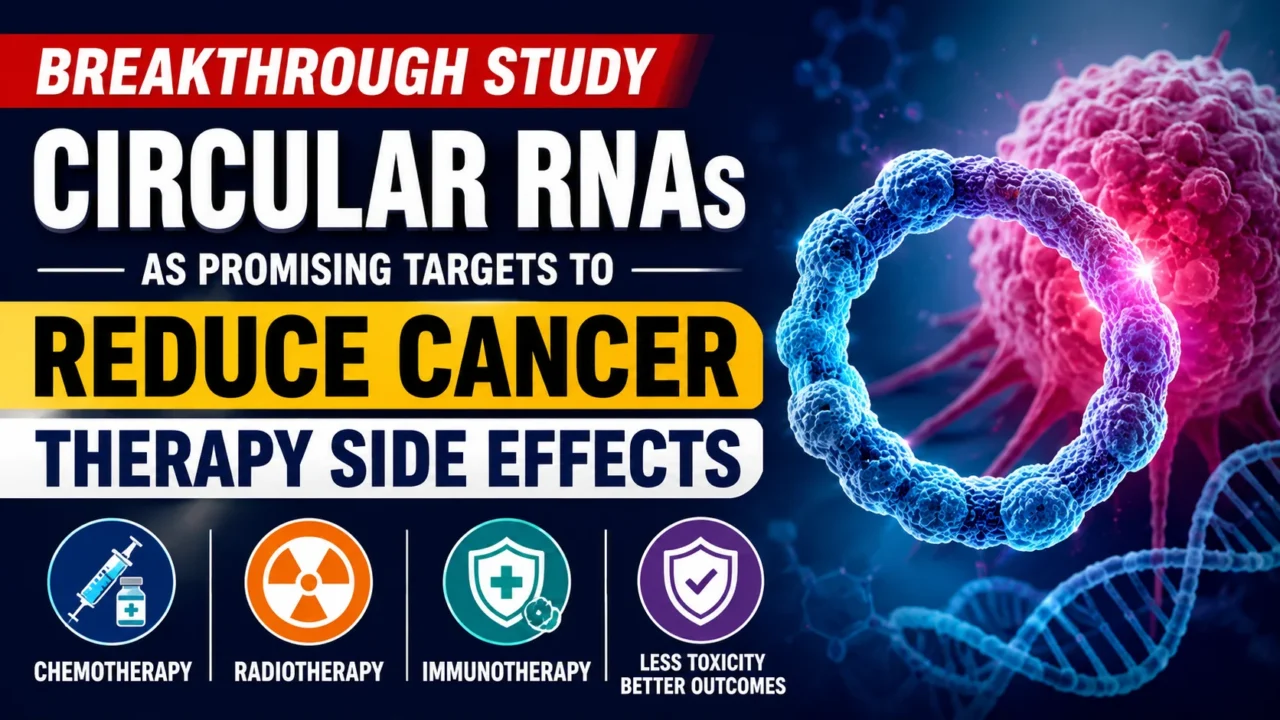

Cancer treatment has advanced significantly over the past decade, improving survival rates for millions of patients. However, managing treatment-related side effects remains one of the biggest challenges in oncology. A recent scientific review suggests that Circular RNAs in Cancer Therapy could help predict, monitor, and reduce the toxic effects of chemotherapy, radiotherapy, and immunotherapy.
Researchers believe these unique RNA molecules could become valuable biomarkers and therapeutic targets, leading to safer and more personalized cancer treatments in the future.
Quick Summary
A new scientific review highlights Circular RNAs (circRNAs) as promising regulators of cancer therapy toxicity. These stable RNA molecules influence inflammation, oxidative stress, DNA damage, and immune responses. Researchers believe circRNAs could serve as biomarkers for early toxicity detection and therapeutic targets to reduce chemotherapy, radiotherapy, and immunotherapy side effects while improving personalized cancer care.

Table of Contents
- Overview
- What Are Circular RNAs?
- Why Cancer Therapy Causes Side Effects
- How circRNAs Reduce Treatment Toxicity
- Biological Functions of circRNAs
- Organ-Specific Toxicities
- circRNAs as Early Biomarkers
- Role in Cancer Immunotherapy
- Current Challenges
- Future Applications
- Why This Research Matters
- FAQs
- Conclusion
Overview
| Particular | Details |
|---|---|
| Topic | Circular RNAs in Cancer Therapy |
| Research Focus | Reducing treatment-related toxicity |
| Cancer Therapies | Chemotherapy, Radiotherapy, Immunotherapy |
| Major Benefits | Early toxicity detection, personalized treatment, biomarker development |
| Current Status | Research stage |
What Are Circular RNAs (circRNAs)?
Circular RNAs (circRNAs) are a special type of RNA molecule that forms a closed-loop structure instead of a linear chain. This unique structure makes circRNAs highly stable and resistant to degradation.
Researchers have discovered that circRNAs regulate many important biological processes, including:
- Oxidative stress
- Apoptosis
- Inflammation
- DNA damage repair
- Mitochondrial function
- Cell signaling
Their stability makes them attractive candidates for disease diagnosis and therapeutic development.
Why Cancer Therapy Causes Side Effects
Although chemotherapy, radiotherapy, and immunotherapy effectively destroy cancer cells, they can also damage healthy tissues.
Common treatment-related side effects include:
- Heart damage (Cardiotoxicity)
- Kidney damage (Nephrotoxicity)
- Nervous system injury (Neurotoxicity)
- Gastrointestinal toxicity
- Immune-related adverse events
These complications may reduce treatment effectiveness and negatively affect patients’ quality of life.
How circRNAs Reduce Treatment Toxicity
The review explains that circRNAs have both protective and harmful roles.
Protective Effects
Some circRNAs help:
- Reduce inflammation
- Decrease oxidative stress
- Protect healthy tissues
- Maintain mitochondrial function
- Promote tissue repair
These protective mechanisms may reduce damage caused by cancer therapy.
Harmful Effects
Certain circRNAs may:
- Increase inflammatory responses
- Promote oxidative damage
- Trigger excessive apoptosis
- Worsen tissue injury
This dual role makes circRNAs important regulators of treatment toxicity.

Biological Functions of circRNAs
| Biological Process | Function |
|---|---|
| Oxidative Stress | Controls cellular oxidative damage |
| Apoptosis | Regulates programmed cell death |
| Mitochondrial Function | Maintains energy production |
| DNA Damage Repair | Supports cellular repair mechanisms |
| Inflammation | Regulates immune responses |
| Immune Signaling | Influences treatment tolerance |
Organ-Specific Toxicities Influenced by circRNAs
Cardiotoxicity
circRNAs regulate oxidative stress and inflammatory pathways that influence heart damage during chemotherapy.
Nephrotoxicity
Researchers found that circRNAs may affect kidney cell survival and tissue repair after cancer treatment.
Neurotoxicity
circRNAs regulate neuronal inflammation and apoptosis, which may influence nervous system toxicity caused by anticancer drugs.
Gastrointestinal Toxicity
Digestive tract injury caused by chemotherapy and radiotherapy may also be regulated through circRNA-mediated signaling pathways.
circRNAs as Early Biomarkers
One of the most promising findings is the potential use of circRNAs as biomarkers.
Their advantages include:
- High molecular stability
- Tissue-specific expression
- Easy detection
- Resistance to degradation
Early detection of toxicity may allow clinicians to:
- Monitor treatment response
- Identify complications earlier
- Adjust treatment strategies
- Improve patient outcomes
Role of circRNAs in Cancer Immunotherapy
Cancer immunotherapy has transformed oncology, but immune-related adverse events remain a challenge.
circRNAs regulate:
- Immune signaling pathways
- Cytokine production
- Inflammatory responses
- Immune cell activation
These mechanisms may explain why patients respond differently to immunotherapy and could support personalized treatment strategies.
Current Challenges
Despite encouraging findings, several challenges remain.
Researchers emphasize the need for:
- Better circRNA detection technologies
- Standardized laboratory methods
- Large-scale clinical studies
- Improved understanding of circRNA biology
- Safe therapeutic delivery systems
Further validation is required before circRNA-based therapies become part of routine clinical practice.
Future Applications of circRNAs
Researchers believe circRNAs may support:
- Personalized cancer treatment
- Early toxicity prediction
- Precision oncology
- Safer chemotherapy
- Improved immunotherapy management
- Better patient quality of life
Future therapies targeting circRNA-mediated pathways may reduce side effects while preserving the effectiveness of cancer treatment.
Why This Research Matters
This study highlights a promising approach to making cancer treatment safer.
Instead of focusing only on destroying cancer cells, future therapies may also protect healthy tissues. circRNAs could become valuable biomarkers and therapeutic targets that improve treatment tolerance, reduce toxicity, and support precision medicine.
Frequently Asked Questions (FAQs)
What are circular RNAs (circRNAs)?
Circular RNAs are stable RNA molecules with a closed-loop structure that regulate gene expression and cellular functions.
Why are circRNAs important in cancer therapy?
They regulate biological pathways involved in treatment-related toxicity and may help reduce side effects.
Can circRNAs detect treatment toxicity early?
Yes. Their stability and tissue-specific expression make them promising biomarkers for early toxicity detection.
Which cancer treatments are associated with circRNA research?
Current studies focus on chemotherapy, radiotherapy, and immunotherapy.
What organs are affected by treatment toxicity?
The heart, kidneys, nervous system, gastrointestinal tract, and immune system are commonly affected.
Are circRNA-based therapies currently available?
No. They are still under research and require further clinical validation.
How can circRNAs improve personalized medicine?
They may help identify patients at higher risk of toxicity and guide individualized treatment decisions.
What is the future of circRNA research?
Researchers believe circRNAs could become important biomarkers and therapeutic targets for safer cancer treatment.
Recommended Products