


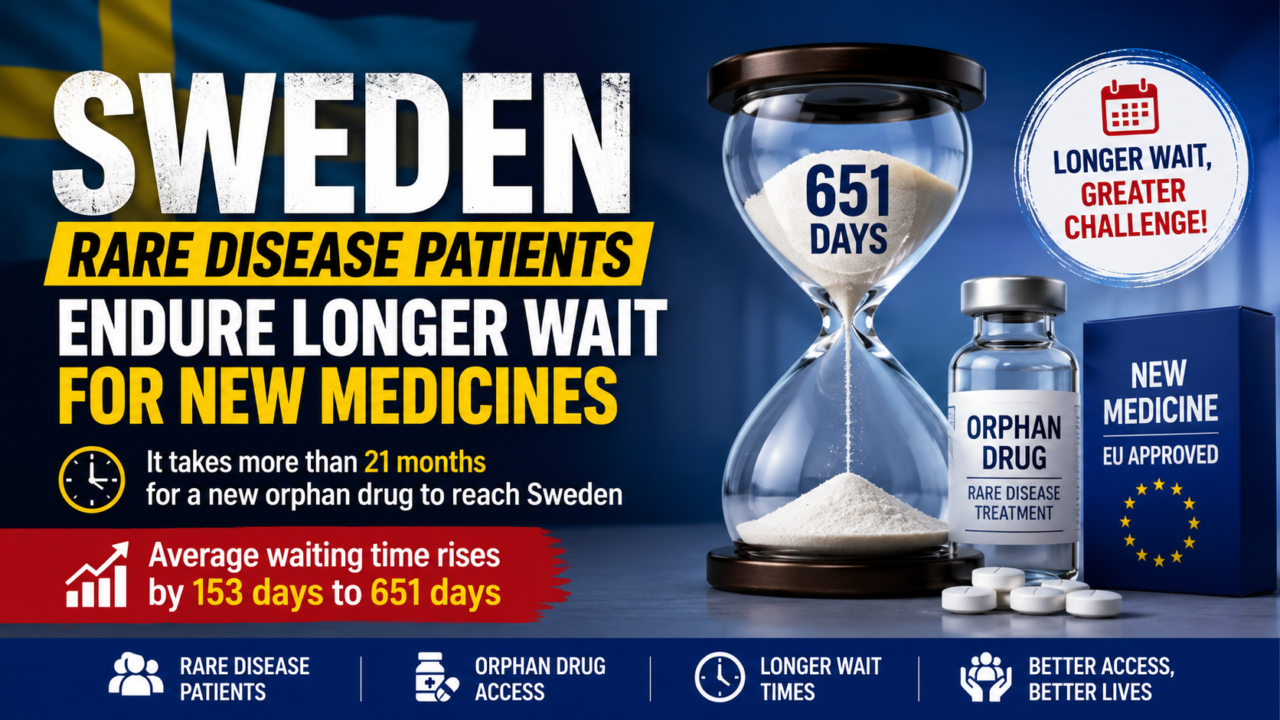

Access to Orphan Drugs in Sweden Slows Significantly
Patients living with rare diseases in Sweden are experiencing longer delays in accessing newly approved medicines, according to the latest Patients W.A.I.T. Indicator 2025 published by the European Federation of Pharmaceutical Industries and Associations (EFPIA).
The report reveals that Swedish patients now wait an average of 651 days—more than 21 months—to gain access to newly authorized orphan drugs after receiving central European Union marketing approval. This marks a substantial increase from the previous year’s average of 498 days, representing a rise of 153 days (30%).
What Are Orphan Drugs?
Orphan drugs are medicines developed specifically to diagnose, prevent, or treat rare diseases that affect a small percentage of the population. Due to the limited number of patients, pharmaceutical companies often face challenges recovering development costs, making market access and reimbursement decisions particularly important.
Key Findings from the EFPIA WAIT Indicator 2025
| Indicator | Sweden 2024 | Sweden 2025 |
|---|---|---|
| Average Time to Availability | 498 Days | 651 Days |
| Increase in Waiting Time | – | +153 Days |
| Percentage Increase | – | 30% |
| New Orphan Drugs Reimbursed | 23 | 23 |
| EU Average Reimbursed Orphan Drugs | 28 | 28 |
The findings indicate that Sweden is falling behind several European countries in providing access to innovative therapies for rare disease patients.
Why Are Delays Increasing?
Healthcare experts point to several factors contributing to the longer waiting periods.
1. Slow Reimbursement Applications
According to patient organizations, pharmaceutical companies do not always submit reimbursement applications immediately after receiving EU approval.
Some companies may delay or avoid launching orphan medicines in Sweden because of the small patient population and concerns regarding pricing negotiations.
2. Complex Approval System
Sweden’s reimbursement system is often criticized for focusing heavily on achieving the lowest possible drug prices before approving patient access.
Industry representatives argue that the lengthy negotiations can discourage companies from introducing innovative medicines into the Swedish market.
3. New Reimbursement Procedures
In January 2025, Sweden’s Dental and Pharmaceutical Benefits Agency (TLV) implemented a new process requiring reimbursement decisions to wait until regional price negotiations between healthcare authorities and pharmaceutical companies are completed.
While intended to improve pricing agreements, the change has increased overall processing times.

Sweden Compared to Other European Countries
The WAIT Indicator evaluated 168 medicines approved in the European Union between 2021 and 2024.
Availability of New Medicines
| Country | New Orphan Drugs Reimbursed |
|---|---|
| Denmark | 29 |
| EU Average | 28 |
| Sweden | 23 |
| Finland | 24 |
| Norway | 12 |
Although Sweden reimbursed slightly more medicines than the overall EU average across all drug categories, its performance regarding orphan medicines remains below average.
Challenges in Accessing Rare Disease Treatments
Experts highlight that access to orphan medicines depends largely on:
- National reimbursement policies
- Evidence requirements
- Healthcare budgets
- Pricing negotiations
- Willingness-to-pay thresholds
Sweden is known for applying strict evidence assessments and maintaining relatively conservative spending thresholds, which can delay approval decisions for expensive rare disease therapies.
Additionally, Sweden lacks a comprehensive national system for individual reimbursement requests, making access more difficult for patients with rare conditions.
Positive Developments in 2025
Despite the challenges, Sweden has introduced reforms aimed at improving access to rare disease treatments.
Higher Pricing Thresholds Approved
Approximately 15 months ago, TLV adopted new reimbursement criteria allowing orphan medicines to qualify for funding even when prices are four to five times higher than previously accepted levels under specific circumstances.
During 2025:
| Outcome | Number of Medicines |
|---|---|
| Met New Criteria | 8 |
| Expected Approval | 6 |
| Rejected Due to High Price | 2 |
Many of these medicines target extremely rare and severe diseases, including non-oncological conditions that previously struggled to obtain reimbursement.
Industry and Patient Perspectives
Patient Advocacy Groups
Rare disease organizations argue that every additional month of delay can significantly affect patients’ quality of life and treatment outcomes.
They believe the current system prioritizes cost containment over rapid access to potentially life-changing therapies.
Pharmaceutical Industry
Industry representatives acknowledge that some delays originate from companies themselves but emphasize that lengthy negotiations and strict reimbursement requirements remain major barriers to market entry.
Government Authorities
The TLV recognizes the increase in processing times and has announced efforts to streamline assessments while maintaining rigorous evaluations of safety, effectiveness, and value for money.
The Future of Rare Disease Treatment Access in Sweden
Sweden is currently reviewing its reimbursement framework to improve patient access while maintaining sustainable healthcare spending.
The focus is shifting toward monitoring how medicines actually reach patients through various channels, including regional reimbursement programs and alternative access pathways.
Healthcare experts believe that balancing affordability with timely access will be crucial for ensuring rare disease patients receive innovative treatments without unnecessary delays.
Conclusion
The EFPIA Patients W.A.I.T. Indicator 2025 highlights a growing challenge for Sweden’s healthcare system. With rare disease patients now waiting an average of 651 days for access to newly approved orphan medicines, concerns are mounting among patient groups, healthcare professionals, and industry stakeholders.
While recent policy reforms may improve future access, Sweden continues to face pressure to reduce reimbursement delays and strengthen support for individuals living with rare diseases. The coming years will determine whether ongoing reforms can successfully bridge the gap between medical innovation and patient access.
Recommended Products