


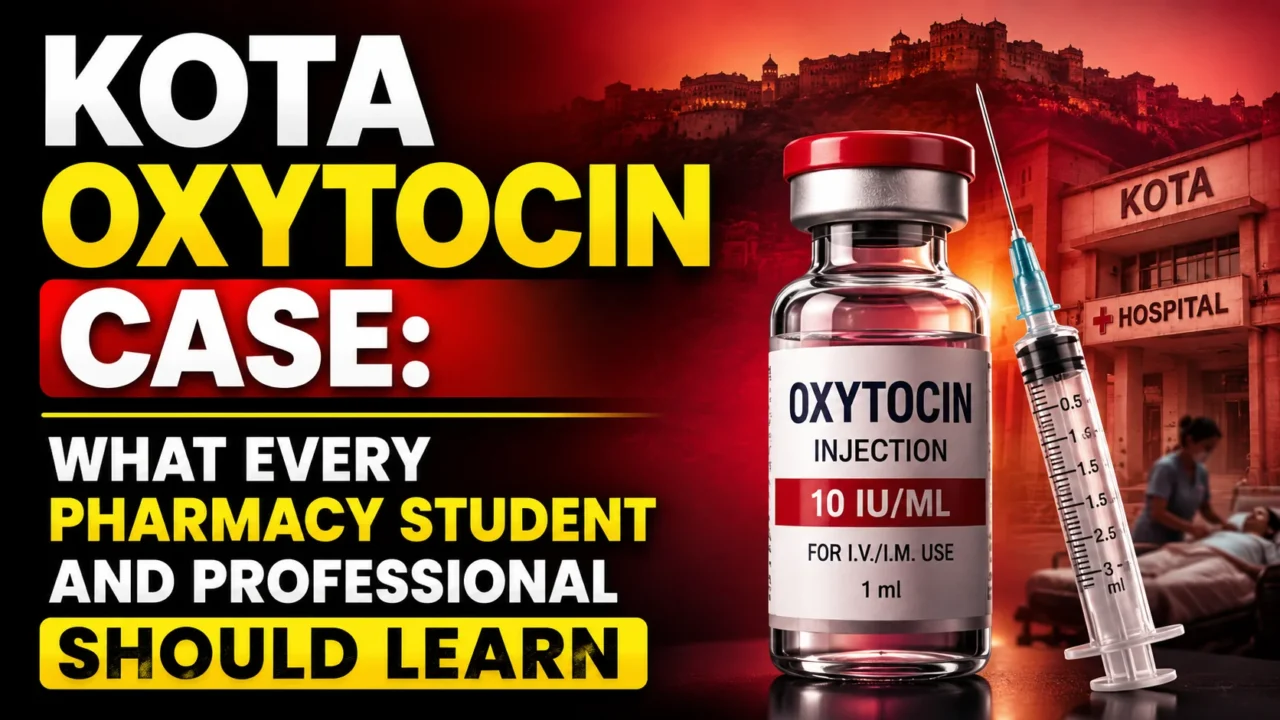

The Kota Oxytocin Case has become one of the most discussed healthcare incidents in India because it raises important questions about pharmaceutical quality, manufacturing practices, and patient safety. According to media reports, five women reportedly died after childbirth, and investigators are examining whether oxytocin injections administered during treatment contained sterile water instead of the required active pharmaceutical ingredient (API). The investigation is ongoing, and the final findings will depend on reports from the concerned regulatory authorities.
For Pharmacy students and professionals, this incident is an important reminder of why Good Manufacturing Practices (GMP), quality control, pharmacovigilance, and regulatory compliance are critical throughout the pharmaceutical supply chain.

Quick Summary
The Kota Oxytocin Case has drawn attention to drug quality assurance, pharmaceutical manufacturing standards, and patient safety. While investigations are still underway, the case emphasizes the importance of GMP, quality testing, regulatory inspections, and pharmacovigilance. Every Pharmacy student and professional should understand the lessons this incident offers for the pharmaceutical industry.
Overview
| Particular | Details |
|---|---|
| Incident | Suspected quality issue involving oxytocin injections |
| Location | Kota, Rajasthan |
| Drug Involved | Oxytocin Injection |
| Reported Outcome | Five maternal deaths under investigation |
| Investigation Status | Ongoing |
| Major Concern | Drug quality and regulatory oversight |
| Relevance | Pharmacy education, GMP, QA, QC, Pharmacovigilance |
What Happened?
According to publicly reported information, five women died after childbirth in Kota, Rajasthan. During the investigation, authorities reportedly suspected that certain oxytocin injection vials may not have contained the required active drug and instead contained sterile water.
The matter is currently under investigation, and official laboratory reports and regulatory findings will determine the exact cause. Therefore, no final conclusions should be drawn until the investigation is completed.
What is Oxytocin?
Oxytocin is a hormone commonly used in obstetrics to:
- Induce labour
- Augment labour
- Control postpartum haemorrhage (PPH)
- Reduce excessive bleeding after delivery
Because oxytocin is considered a life-saving medicine, its quality, potency, sterility, and storage conditions are extremely important.
Why is Drug Quality Important?
Drug quality ensures that every medicine contains:
- The correct active pharmaceutical ingredient (API)
- The correct strength
- Required sterility
- Proper stability
- Safe packaging
- Acceptable purity
Failure in any of these areas can seriously affect patient safety.
Pharmaceutical Lessons from the Kota Oxytocin Case
1. Good Manufacturing Practices (GMP)
Manufacturers must strictly follow GMP guidelines to ensure every batch meets quality standards.
2. Quality Control (QC)
Each production batch should undergo:
- Identity testing
- Assay testing
- Sterility testing
- Endotoxin testing (where applicable)
- Batch release testing
3. Quality Assurance (QA)
Quality Assurance ensures that manufacturing processes remain validated and compliant with regulatory requirements.
4. Pharmacovigilance
Unexpected adverse events should be reported immediately to help identify potential medicine-related risks.
5. Regulatory Oversight
Drug regulatory authorities play a key role in:
- Manufacturing inspections
- Product sampling
- Batch recalls (when required)
- Licensing and compliance monitoring
Why Should Pharmacy Students Learn About This Case?
This case is highly relevant because it highlights several core pharmacy subjects:
- Pharmaceutical Quality Assurance
- Industrial Pharmacy
- Good Manufacturing Practices
- Pharmacovigilance
- Regulatory Affairs
- Pharmaceutical Jurisprudence
- Hospital Pharmacy
- Clinical Pharmacy
Understanding real-world cases helps students connect theoretical knowledge with practical responsibilities.

Key Takeaways for Pharmacy Professionals
| Area | Learning |
|---|---|
| GMP | Strict manufacturing controls are essential |
| Quality Control | Every batch must be tested before release |
| Regulatory Affairs | Continuous inspection helps maintain compliance |
| Pharmacovigilance | Early reporting improves patient safety |
| Ethics | Patient safety must always come first |
What Can Future Pharmacists Learn?
Future pharmacists should focus on:
- Maintaining ethical pharmaceutical practices
- Following GMP and GLP guidelines
- Reporting suspected adverse drug events
- Understanding batch manufacturing records
- Promoting patient safety at every stage of medicine use
Important Note
The investigation into the Kota Oxytocin Case is still ongoing. Any conclusions regarding the exact cause of the incident should rely only on the final reports issued by the competent regulatory and investigative authorities.
Conclusion
The Kota Oxytocin Case is a significant reminder of the responsibility carried by every stakeholder in the pharmaceutical sector. Although the investigation is ongoing, the incident underscores the importance of robust manufacturing standards, quality assurance, quality control, pharmacovigilance, and ethical pharmacy practice. For Pharmacy students and professionals, this case serves as a real-world example of why every stage of the medicine lifecycle—from manufacturing to patient administration—must prioritize quality and patient safety.
Frequently Asked Questions (FAQs)
1. What is the Kota Oxytocin Case?
It refers to an ongoing investigation into suspected quality issues involving oxytocin injections administered during childbirth in Kota, Rajasthan.
2. Is the investigation complete?
No. The investigation is ongoing, and official findings are awaited.
3. Why is this case important for Pharmacy students?
It highlights the importance of GMP, quality assurance, quality control, pharmacovigilance, and pharmaceutical ethics.
4. What is GMP?
Good Manufacturing Practices (GMP) are guidelines that ensure medicines are consistently manufactured and controlled according to quality standards.
5. What is pharmacovigilance?
Pharmacovigilance is the science of detecting, assessing, understanding, and preventing adverse effects or other medicine-related problems.
6. Can poor drug quality affect patient safety?
Yes. Medicines that do not meet quality standards may fail to provide the intended therapeutic effect and can pose serious health risks.
7. Which pharmacy subjects are connected to this case?
Industrial Pharmacy, Pharmaceutical Quality Assurance, Pharmacovigilance, Hospital Pharmacy, Clinical Pharmacy, and Pharmaceutical Jurisprudence.
8. What is the biggest lesson from this case?
Patient safety depends on maintaining high standards of pharmaceutical manufacturing, quality testing, regulatory compliance, and ethical professional practice.
Internal Linking Suggestions (GDC Classes)
Link this article to:
- Pharmacovigilance Notes
- Good Manufacturing Practices (GMP)
- Pharmaceutical Quality Assurance
- Industrial Pharmacy Notes
- Drug Inspector Preparation
- Hospital Pharmacy
- Pharmaceutical Jurisprudence
- Current Affairs for GPAT
External Linking Suggestions
- CDSCO Official Website
- Ministry of Health & Family Welfare
- IPC – Pharmacovigilance Programme of India (PvPI)
- Official investigation reports (when released)
Recommended Products