



Quick Summary
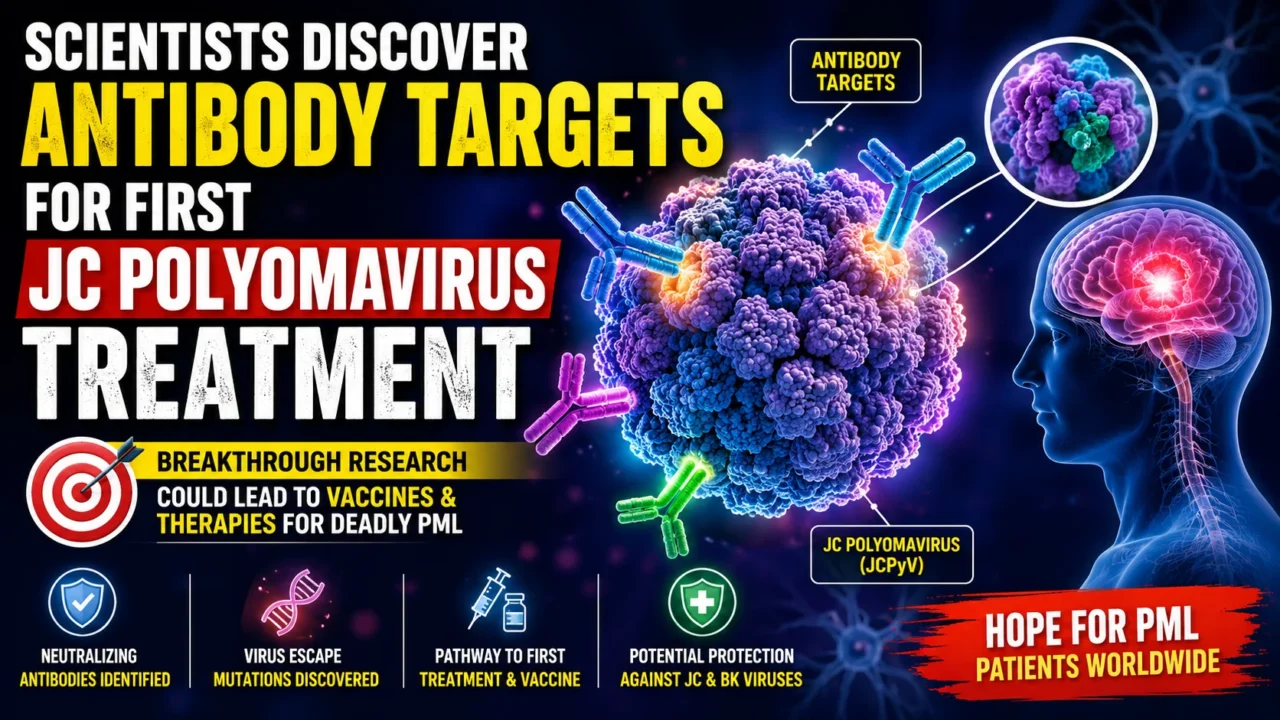
Scientists have identified key antibody targets on the JC polyomavirus (JCPyV), opening the door to the first potential treatment and vaccine for progressive multifocal leukoencephalopathy (PML), a rare but life-threatening brain infection. The discovery also offers hope for developing therapies against the closely related BK polyomavirus.
Scientists Discover Antibody Targets That Could Lead to the First JC Polyomavirus Treatment
A major breakthrough in JC Polyomavirus Treatment research has brought new hope for patients at risk of Progressive Multifocal Leukoencephalopathy (PML), a rare but often fatal brain disease.
Researchers have discovered specific antibody binding sites on the JC polyomavirus (JCPyV) that could help scientists develop the first effective antiviral treatment and vaccine against this deadly infection.
The findings were published in the prestigious journal PNAS (Proceedings of the National Academy of Sciences).

Overview
JC polyomavirus is extremely common worldwide. Most people become infected during childhood, and the virus remains inactive without causing symptoms.
However, when the immune system becomes severely weakened, the virus can reactivate and spread to the brain, causing Progressive Multifocal Leukoencephalopathy (PML).
Currently, no approved antiviral drug or vaccine exists for JC polyomavirus infection, making this research an important milestone.
Research Highlights
| Study Details | Information |
|---|---|
| Journal | PNAS |
| Research Focus | JC Polyomavirus Antibody Targets |
| Main Discovery | Identification of neutralizing antibody binding sites |
| Potential Outcome | First antibody-based treatment and vaccine |
| Additional Benefit | May help develop therapies against BK polyomavirus |

What Did Scientists Discover?
An international research team led by scientists from:
- University of Tübingen
- Brown University
- Universitätsspital Zürich
studied how the immune systems of rare PML survivors successfully fight the virus.
Using advanced structural biology techniques, they identified critical regions on the viral capsid where powerful neutralizing antibodies attach.
These antibodies:
- Prevent the virus from entering healthy cells
- Stop viral spread
- Reduce infection progression
- Offer a blueprint for future treatments
How Does JC Polyomavirus Escape the Immune System?
The researchers also found that the virus can mutate at these antibody binding sites.
These mutations allow the virus to:
- Escape immune detection
- Resist naturally produced antibodies
- Continue infecting brain cells
Understanding these escape mechanisms will help researchers design next-generation therapeutic antibodies that remain effective even against mutated viral strains.
Why Is This Discovery Important?
This breakthrough could lead to:
- The first approved treatment for JC polyomavirus infection
- Development of preventive vaccines
- Better protection for immunocompromised patients
- Reduced deaths from Progressive Multifocal Leukoencephalopathy
- Personalized antibody therapies in the future
Who Is Most at Risk?
People with weakened immune systems are at the highest risk of developing PML.
These include:
- Patients with advanced HIV infection
- Organ transplant recipients
- Cancer patients receiving chemotherapy
- Individuals taking long-term immunosuppressive medicines
- Patients receiving biologic therapies for autoimmune diseases
Potential Benefits Beyond JC Polyomavirus
Researchers also discovered similarities between JC polyomavirus and BK polyomavirus.
This means future therapies may protect against both infections.
Possible advantages include:
- Broader antiviral protection
- Improved vaccine development
- Reduced complications after organ transplantation
- Better treatment options for high-risk patients
Key Findings at a Glance
| Finding | Importance |
|---|---|
| Neutralizing antibody targets identified | Supports antibody drug development |
| Escape mutations discovered | Helps design stronger therapies |
| Structural mapping completed | Enables precision vaccine design |
| Similarity with BK polyomavirus | May allow dual-virus protection |
| No current approved treatment | Highlights urgent medical need |
Why Should Pharmacy Students and Healthcare Professionals Know This?
This research is highly relevant for:
- B.Pharm students
- D.Pharm students
- M.Pharm students
- Pharmacology researchers
- Clinical pharmacy professionals
- Hospital pharmacists
- GPAT and NIPER aspirants
- Drug Inspector exam aspirants
Understanding antibody-based therapies and viral immune escape mechanisms is increasingly important in pharmaceutical research and modern drug development.
Future Scope
Scientists believe this discovery could accelerate:
- Monoclonal antibody development
- Precision antiviral medicines
- Next-generation vaccines
- Clinical trials for JC polyomavirus
- Combination therapies against multiple polyomaviruses
Further research and human clinical studies will be required before any treatment becomes available for patients.
Frequently Asked Questions (FAQs)
1. What is JC polyomavirus?
JC polyomavirus (JCPyV) is a common virus that usually remains inactive in healthy individuals but can cause serious disease in people with weakened immune systems.
2. What disease does JC polyomavirus cause?
It can cause Progressive Multifocal Leukoencephalopathy (PML), a rare but often fatal brain infection.
3. Is there any approved treatment for JC polyomavirus?
No. Currently, there are no approved antiviral drugs or vaccines for JC polyomavirus infection.
4. What did researchers discover?
Scientists identified antibody binding sites that block the virus from entering healthy cells, providing a potential target for future therapies.
5. Why are antibody targets important?
They help researchers design medicines and vaccines that specifically prevent the virus from infecting cells.
6. Can the virus become resistant?
Yes. Researchers found that JC polyomavirus can develop mutations that allow it to escape certain antibodies, highlighting the need for next-generation therapies.
7. Can this research help treat other viruses?
Possibly. Because BK polyomavirus shares similar structural features, future therapies may protect against both viruses.
8. Has a vaccine been developed yet?
No. This research is an early scientific breakthrough, and additional laboratory and clinical studies are needed before vaccines or treatments become available.
Recommended Products