


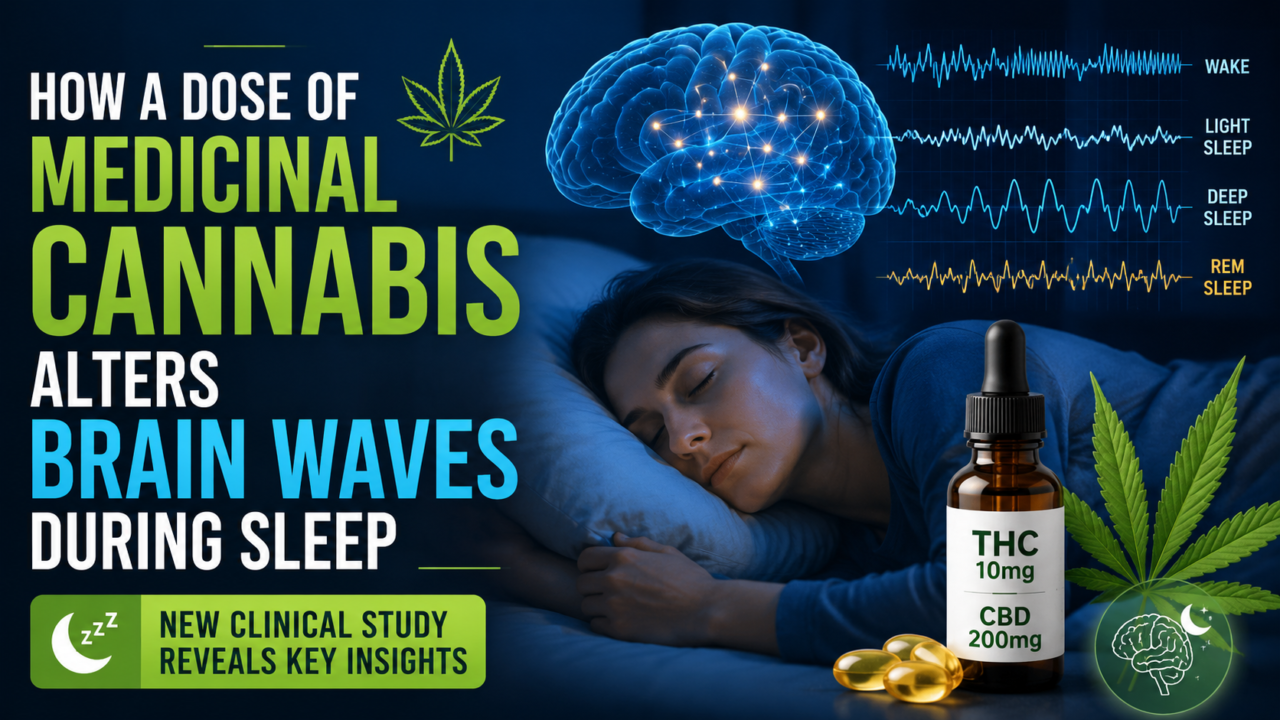

Medicinal cannabis is increasingly being used as a natural alternative to traditional sleeping pills. A recent clinical study published in the Journal of Sleep Research examined how a single dose of cannabis-based medication influences sleep patterns in adults with insomnia. The findings provide valuable insights into both the potential benefits and limitations of cannabis for sleep improvement.
Study Overview
| Aspect | Details |
|---|---|
| Study Type | Randomized, placebo-controlled crossover trial |
| Participants | 20 adults with clinical insomnia |
| Cannabis Experience | No cannabis use in previous 3 months |
| Medication Tested | 10 mg THC + 200 mg CBD oral oil |
| Research Location | Woolcock Institute of Medical Research, Sydney |
| Monitoring Method | High-density EEG (256-electrode brain monitoring) |
| Publication | Journal of Sleep Research |

Understanding the Cannabis Compounds
| Compound | Full Name | Main Effects |
|---|---|---|
| THC | Tetrahydrocannabinol | Psychoactive compound responsible for cannabis “high” |
| CBD | Cannabidiol | Non-intoxicating compound often linked to relaxation and pain relief |
Researchers selected a formulation containing a relatively high dose of CBD to potentially reduce some of THC’s unwanted effects.
Key Findings
Impact on Sleep Duration
| Sleep Measure | Change After Cannabis Dose |
|---|---|
| Total Sleep Time | Reduced by approximately 25 minutes |
| REM Sleep Duration | Reduced by approximately 34 minutes |
| Time to Enter REM Sleep | Delayed by more than 1 hour |
| Nighttime Wakefulness | No significant change |
What This Means
The cannabis medication reduced overall sleep time and significantly decreased Rapid Eye Movement (REM) sleep—the stage most closely associated with vivid dreaming.
Effects on Brain Activity During Sleep
| Sleep Stage | Brain Activity Change | Possible Interpretation |
|---|---|---|
| Light Sleep | Reduced high-frequency brain waves | Lower cortical arousal, calmer brain activity |
| Deep Sleep | Reduced slow-wave activity | Potential decrease in restorative sleep quality |
| REM Sleep | Delayed and shortened | Fewer dreams and altered sleep architecture |
Potential Benefits Observed
| Benefit | Explanation |
|---|---|
| Reduced Brain Arousal | Participants showed calmer brain activity during lighter sleep stages |
| Less REM Sleep | May reduce excessive dreaming or REM-related disturbances |
| Maintained Alertness | No major impact on reaction times the next day |
| Generally Well Tolerated | No serious adverse events reported |
Side Effects Reported
| Side Effect | Severity |
|---|---|
| Mild Daytime Sleepiness | Slight |
| Dry Mouth | Common |
| Reduced Alertness | Not significant |
| Serious Adverse Events | None reported |
Although participants felt somewhat sleepier the next day, objective testing showed no meaningful impairment in reaction time or ability to stay awake.
Limitations of the Study
| Limitation | Why It Matters |
|---|---|
| Small Sample Size | Only 20 participants |
| Single-Dose Study | Long-term effects remain unknown |
| Laboratory Setting | May not reflect normal sleep at home |
| Specific THC/CBD Ratio | Results may differ with other cannabis products |
| No Long-Term Follow-Up | Tolerance and withdrawal effects were not examined |
What Does This Mean for People with Insomnia?
Potential Advantages
✅ May reduce brain hyperactivity during sleep
✅ Could offer an alternative to traditional sleep medications
✅ Minimal next-day impairment observed
Potential Concerns
⚠️ Reduced total sleep duration
⚠️ Less REM sleep and dreaming
⚠️ Possible reduction in deep restorative sleep
⚠️ Long-term safety remains unclear
Expert Takeaway
This pilot study suggests that a single dose of medicinal cannabis containing THC and CBD can significantly alter sleep architecture in people with insomnia. While it appears to calm brain activity and reduce REM sleep, it also shortens overall sleep duration and may reduce the restorative quality of deep sleep.
The findings highlight that medicinal cannabis is not simply a “natural sleeping pill.” Instead, it changes how the brain moves through different sleep stages. More research involving larger groups and long-term use is needed before definitive conclusions can be made about its effectiveness and safety for chronic insomnia treatment.
Study Reference
Title: Acute Effects of Oral Cannabinoids on Sleep and High-Density EEG in Insomnia: A Pilot Randomised Controlled Trial
Lead Researcher: Anastasia Suraev
Institution: Woolcock Institute of Medical Research
Published In: Journal of Sleep Research
Participants: 20 adults with clinical insomnia disorder.
Recommended Products