



FSSAI Takes Major Step to Strengthen Food Safety
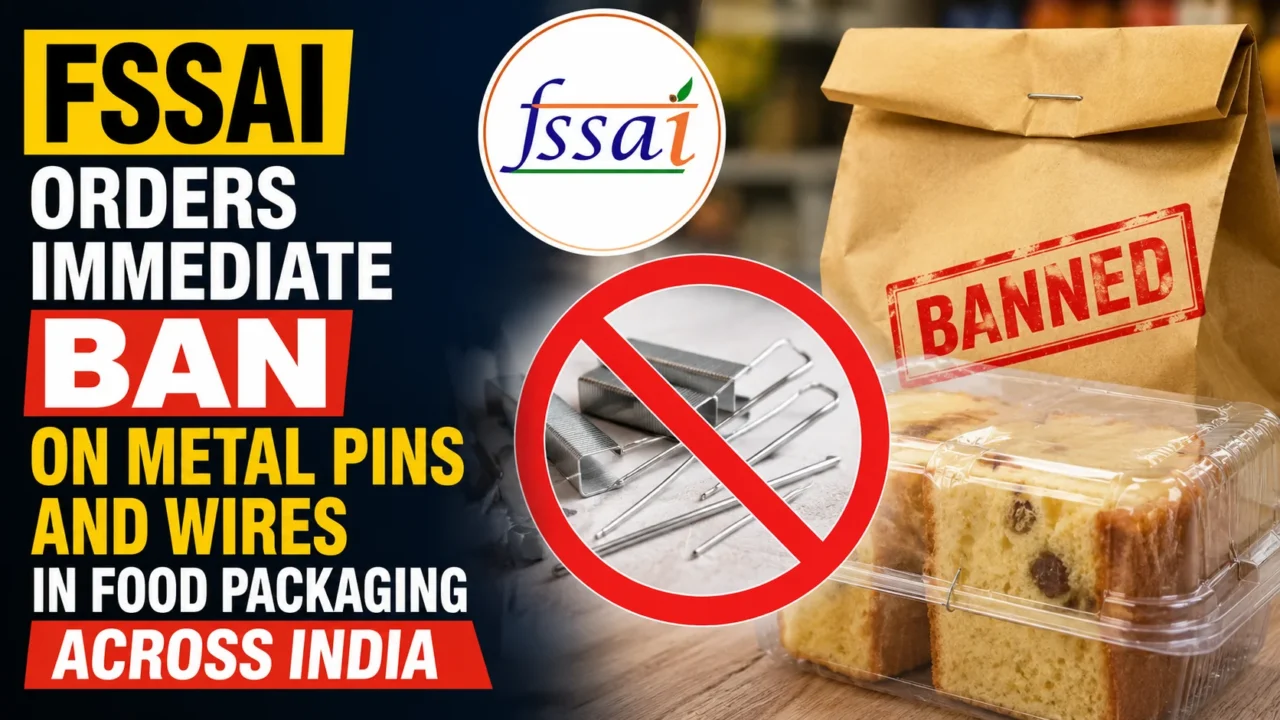
In a significant move aimed at protecting consumer health, the Food Safety and Standards Authority of India (FSSAI) has directed all Food Business Operators (FBOs) across the country to immediately stop using metallic pins, staple pins, wires, and similar materials in food packaging and food handling applications.
The decision comes in response to multiple incidents where metal pins and wire fragments were reportedly found in packaged food products, raising serious concerns about consumer safety and food quality standards.

Why Has FSSAI Issued This Ban?
Food packaging plays a critical role in preserving product quality and ensuring consumer safety. However, the use of metallic pins and wires in packaging materials can create significant contamination risks.
According to FSSAI, accidental inclusion of metallic objects in food products can lead to:
- Physical injuries to the mouth and throat
- Choking hazards
- Internal injuries to the digestive tract
- Dental damage
- Product contamination
- Consumer health emergencies
To eliminate these risks, FSSAI has instructed businesses to adopt safer packaging alternatives.
Incidents That Triggered the Action
The directive follows reports of metallic contaminants being discovered in packaged food products, including bakery and processed food items. Such incidents not only endanger consumers but also damage public trust in food manufacturers and brands.
Food safety experts have emphasized that even a small metal pin or wire fragment can cause serious injuries if accidentally consumed.
What Does the New Directive Mean?
Under the new instructions, food businesses must:
- Stop using metallic pins and staples in food packaging.
- Avoid the use of metal wires in food handling operations.
- Implement safer sealing and packaging methods.
- Strengthen quality control and inspection procedures.
- Ensure compliance with food safety regulations.
Food manufacturers, processors, distributors, retailers, and packaging units are expected to comply immediately with the directive.
Safer Alternatives to Metal Pins and Wires
To maintain packaging integrity while ensuring safety, businesses can adopt alternatives such as:
- Food-grade adhesives
- Heat-sealing technologies
- Tamper-evident packaging
- Food-safe tapes
- Mechanical locking systems
- Environment-friendly sealing solutions
These methods reduce contamination risks while maintaining product quality and shelf life.
Impact on the Food Industry
The FSSAI directive is expected to encourage modernization of food packaging practices across India.
Potential benefits include:
- Improved consumer safety
- Reduced contamination risks
- Enhanced quality assurance
- Greater consumer confidence
- Better compliance with international food safety standards
Although businesses may need to adjust their packaging processes, the long-term benefits for public health and brand reputation are expected to outweigh the transition costs.
Consumer Awareness and Food Safety
Consumers are encouraged to carefully inspect packaged food products before consumption and report any suspected contamination to the appropriate authorities.
Food safety remains a shared responsibility between regulators, manufacturers, distributors, and consumers. The latest FSSAI directive reflects the authority’s commitment to minimizing preventable food safety hazards.
Conclusion
FSSAI’s immediate ban on metallic pins, wires, and similar materials in food packaging marks an important step toward strengthening food safety standards in India. By eliminating potential sources of physical contamination, the regulator aims to protect consumers from avoidable injuries and enhance trust in packaged food products.
As the food industry adopts safer packaging alternatives, this initiative is expected to contribute to a more secure and reliable food supply chain across the country.
Recommended Products