



Can a Common Weed Help Fight Colon Cancer?
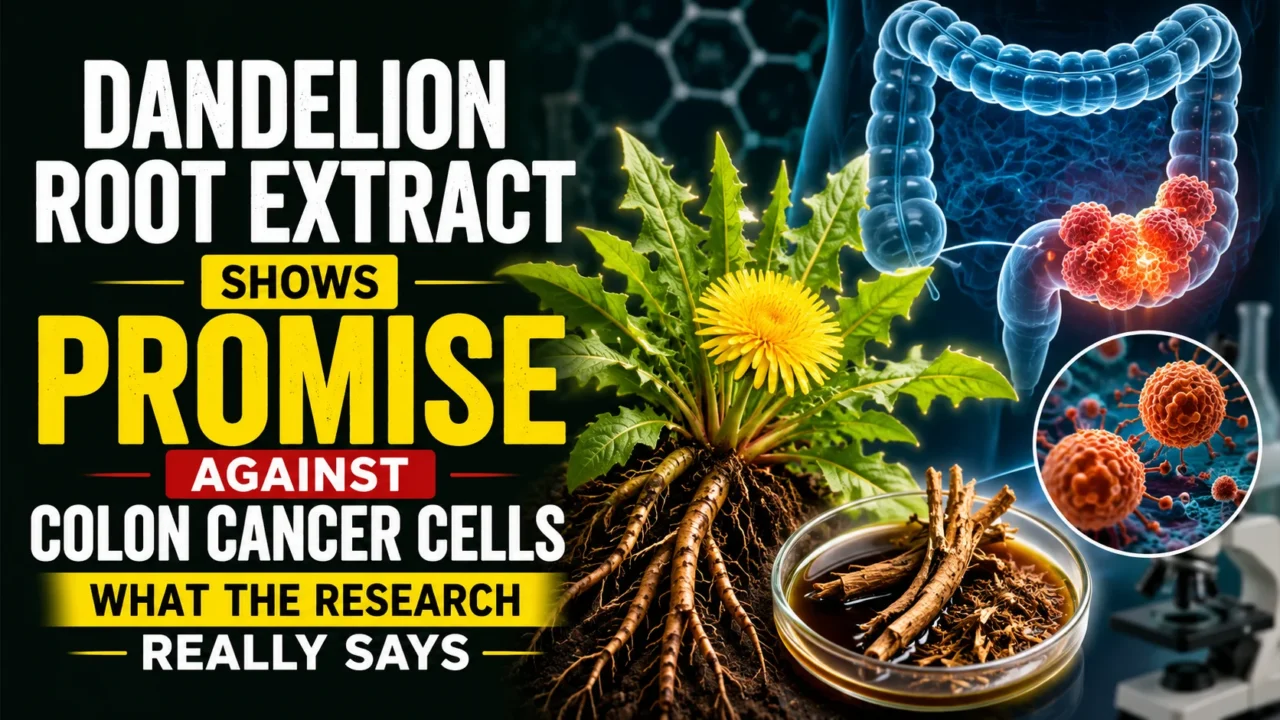
Recent social media posts have gone viral claiming that dandelion root kills over 90% of colon cancer cells within 48 hours. The claim is based on scientific research conducted by researchers at the University of Windsor, Canada, who studied the effects of dandelion root extract on colon cancer cells in laboratory settings.
While the findings are intriguing, it is important to understand what the research actually showed and what it means for patients.

What Did the Study Find?
Researchers discovered that Dandelion Root Extract (DRE) was able to trigger programmed cell death (apoptosis) in colon cancer cells during laboratory experiments.
Key findings included:
- Significant destruction of colon cancer cells in laboratory tests.
- Some studies reported that more than 95% of cancer cells were affected within 48 hours.
- Healthy cells appeared to be largely unaffected during the experiments.
- The extract worked through multiple biological pathways, making it difficult for cancer cells to develop resistance.
These results attracted considerable attention because many conventional cancer treatments can also damage healthy cells.
Why Is This Discovery Important?
Colon cancer remains one of the most common cancers worldwide. Scientists are constantly searching for treatments that can:
- Target cancer cells more precisely.
- Reduce side effects.
- Improve patient outcomes.
- Work alongside existing therapies.
The ability of dandelion root extract to selectively affect cancer cells in laboratory conditions suggests it may have potential as a future therapeutic option.
How Does Dandelion Root Extract Work?
According to researchers, dandelion root extract appears to:
1. Trigger Apoptosis
Apoptosis is the body’s natural process of removing damaged or unwanted cells. The extract appears to activate this process in cancer cells.
2. Affect Multiple Cellular Pathways
Rather than targeting a single mechanism, the extract influences several pathways involved in cancer cell survival.
3. Create Oxidative Stress in Cancer Cells
Cancer cells may become overwhelmed by oxidative stress, leading to cell death while normal cells remain relatively protected.
Important Limitation: Laboratory Results Are Not Human Results
One of the most important facts often omitted from viral posts is that these findings were primarily observed in:
- Cell culture experiments (test tubes and petri dishes)
- Laboratory settings
- Early-stage research
Laboratory success does not automatically mean the same results will occur in humans.
Many substances show promising anti-cancer effects in cell cultures but fail during clinical trials due to issues such as:
- Poor absorption in the body
- Toxicity at effective doses
- Lack of effectiveness in real patients
Can Drinking Dandelion Tea Cure Colon Cancer?
The simple answer is no scientific evidence currently supports this claim.
While dandelion root is commonly consumed as:
- Herbal tea
- Dietary supplements
- Traditional herbal remedies
there is currently no approved medical guideline recommending dandelion root as a cure for colon cancer.
Patients should never replace prescribed cancer treatments with herbal remedies without consulting qualified healthcare professionals.
Potential Health Benefits of Dandelion Root
Apart from cancer research, dandelion root has been studied for:
- Antioxidant properties
- Anti-inflammatory effects
- Digestive support
- Liver health support
- Blood sugar regulation
However, more high-quality clinical research is needed to confirm many of these benefits.
What Do Experts Say?
Cancer researchers view dandelion root extract as a promising area of investigation, but they emphasize that:
- More animal studies are needed.
- Large-scale human clinical trials are necessary.
- Safety and optimal dosage must be established.
- It should not be considered a proven cancer treatment at this stage.
Conclusion
Research from the University of Windsor suggests that dandelion root extract may have powerful anti-cancer properties in laboratory studies, with some experiments showing significant destruction of colon cancer cells within 48 hours. However, these findings are still preliminary and have not yet established dandelion root as a proven treatment for colon cancer in humans.
While the research is encouraging and deserves further investigation, patients should rely on evidence-based medical treatments and consult healthcare professionals before making any treatment decisions.
Recommended Products