


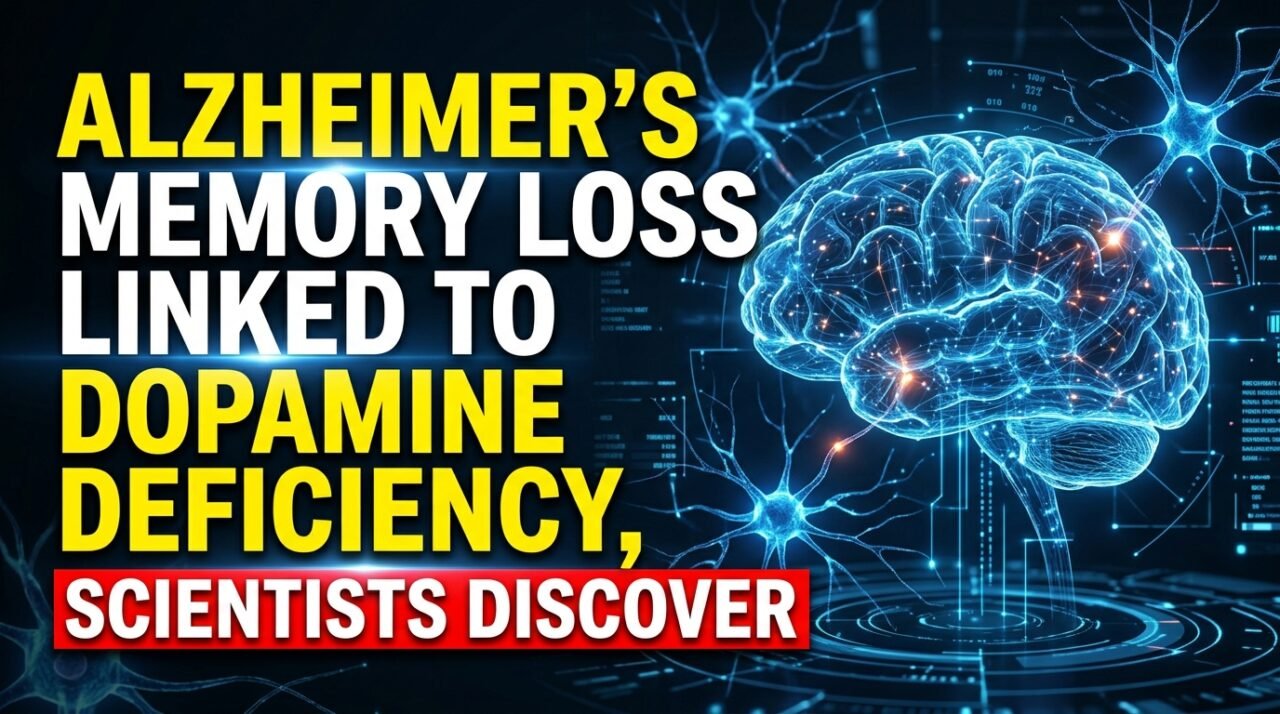

Memory loss in Alzheimer’s disease has long been connected to the buildup of harmful proteins in the brain. But now, scientists are uncovering another important factor — dopamine deficiency. Recent research suggests that reduced dopamine activity may play a major role in memory problems, confusion, and cognitive decline seen in Alzheimer’s patients.

This discovery could open the door to new treatments that focus not only on amyloid plaques and tau proteins but also on restoring healthy dopamine signaling in the brain.
What is Alzheimer’s Disease?
Alzheimer’s disease is a progressive brain disorder that slowly destroys memory, thinking skills, and the ability to perform daily activities. It is the most common cause of dementia worldwide.
Common Symptoms of Alzheimer’s
| Early Symptoms | Advanced Symptoms |
|---|---|
| Forgetting recent events | Severe memory loss |
| Difficulty concentrating | Trouble recognizing family |
| Misplacing items | Personality changes |
| Confusion with time | Loss of communication skills |
| Mood swings | Difficulty walking or eating |
What is Dopamine?
Dopamine is a chemical messenger in the brain that helps regulate:
- Memory and learning
- Motivation
- Mood and emotions
- Focus and attention
- Reward and pleasure systems
Low dopamine levels are already linked to conditions like Parkinson’s disease and depression. Scientists now believe dopamine deficiency may also contribute significantly to Alzheimer’s-related memory loss.
What Did Scientists Discover?
Researchers found that patients with Alzheimer’s may experience disruptions in dopamine-producing brain pathways. This affects communication between neurons, especially in regions responsible for memory formation and learning.
Key Findings from the Study
| Discovery | Impact on Brain |
|---|---|
| Reduced dopamine activity | Weakens memory signals |
| Damage to dopamine neurons | Impairs learning ability |
| Lower dopamine receptors | Reduces cognitive performance |
| Brain communication disruption | Increases confusion and forgetfulness |
Scientists believe dopamine imbalance may happen much earlier than previously thought, even before severe symptoms appear.
How Dopamine Affects Memory
The brain depends on dopamine to strengthen neural connections involved in learning new information. When dopamine levels fall:
- Brain cells communicate less effectively
- Memory storage becomes weaker
- Focus and attention decline
- Learning new tasks becomes difficult
This may explain why Alzheimer’s patients often struggle with recalling names, recent events, or conversations.
Possible Future Treatments
The discovery is exciting because it may lead to new therapies targeting dopamine pathways.
Potential Treatment Approaches
| Treatment Idea | Possible Benefit |
|---|---|
| Dopamine-boosting medications | Improve memory function |
| Brain stimulation therapies | Enhance neural activity |
| Early dopamine screening | Detect Alzheimer’s sooner |
| Lifestyle interventions | Support brain health naturally |
Researchers are still studying whether dopamine-based treatments can slow or reverse memory decline.
Lifestyle Habits That May Support Dopamine Naturally
While no lifestyle change can cure Alzheimer’s, healthy habits may support dopamine function and overall brain health.
Helpful Brain-Healthy Habits
- Regular physical exercise
- Quality sleep
- Meditation and stress reduction
- Balanced diet rich in antioxidants
- Social interaction and mental activities
- Reading, puzzles, and memory games
Foods that may support dopamine production include:
| Food | Nutrient Benefit |
|---|---|
| Eggs | Rich in tyrosine |
| Bananas | Supports dopamine synthesis |
| Fish | Omega-3 fatty acids |
| Nuts and seeds | Brain-supporting minerals |
| Dark chocolate | Mood-enhancing compounds |
Why This Discovery Matters
For years, Alzheimer’s research focused mainly on amyloid plaques and tau tangles. The dopamine connection introduces a fresh perspective and could change how scientists understand memory loss.
If future studies confirm these findings, treatments aimed at restoring dopamine balance may help improve quality of life for millions of people affected by Alzheimer’s disease worldwide.
Final Thoughts
The discovery linking dopamine deficiency to Alzheimer’s memory loss offers new hope in the fight against dementia. Although researchers still have much to learn, this breakthrough may eventually lead to earlier diagnosis, better therapies, and improved brain health strategies.
As science continues to explore the complex workings of the brain, understanding the role of dopamine could become one of the most important advances in Alzheimer’s research.
Recommended Products