


Quick Summary
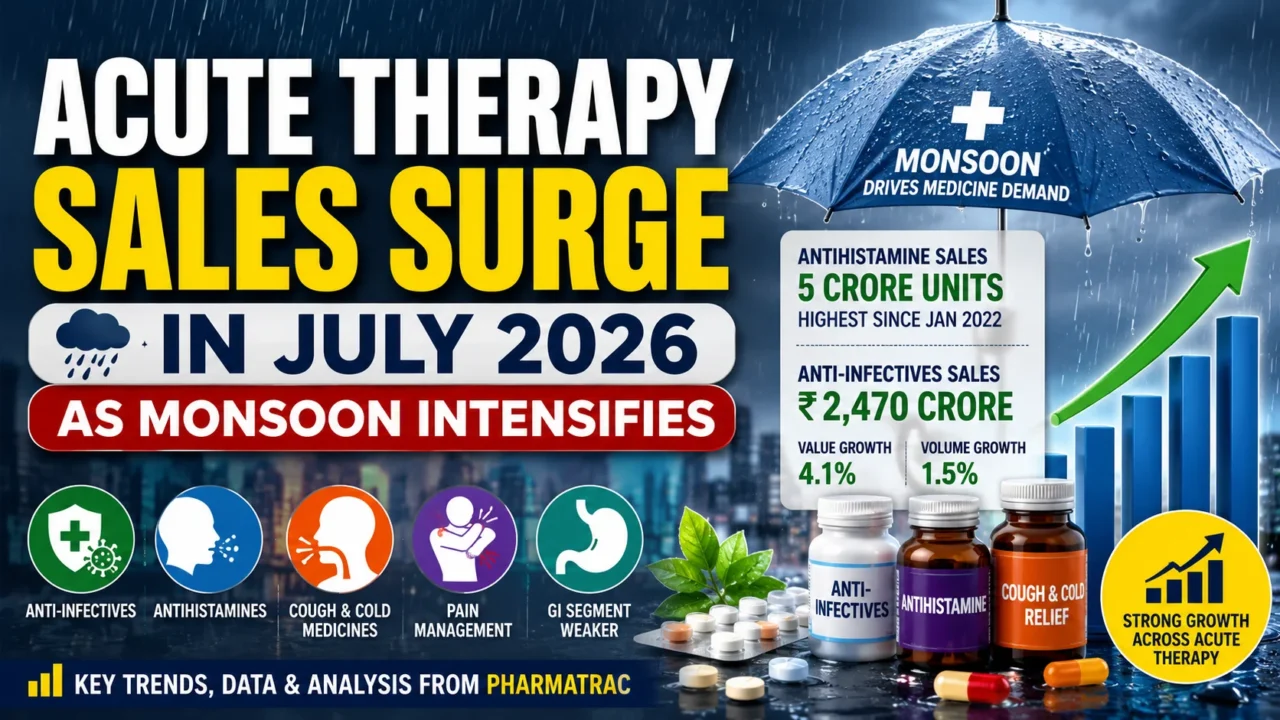
Acute therapy sales in July 2026 showed strong seasonal momentum as monsoon-related illnesses increased demand for anti-infectives, antihistamines, cough and cold medicines, and pain-management products. Antihistamine sales reached around 5 crore units, while anti-infectives recorded ₹2,470 crore in sales with 4.1% value growth and 1.5% volume growth.
Overview: Indian Acute Therapy Market in July 2026
The Indian acute therapy market witnessed strong growth in July 2026 as the intensifying monsoon season increased demand for medicines used to manage seasonal infections, allergies, respiratory symptoms and pain.
According to PharmaTrac market data cited in the analysis, several acute therapy categories recorded positive growth during the month.
The strongest seasonal movement was seen across categories such as:
- Anti-infectives
- Antihistamines
- Cough and cold medicines
- Pain-management medicines
- Other acute therapy products
The trend highlights the close relationship between seasonal disease patterns and pharmaceutical demand in India.

Why Did Acute Therapy Sales Increase in July?
The monsoon season can influence healthcare demand because rainfall, humidity, temperature fluctuations and changing environmental conditions can affect the prevalence of several seasonal illnesses.
Key factors influencing acute therapy demand include:
| Factor | Potential impact on medicine demand |
|---|---|
| Increased rainfall | Can contribute to seasonal infections |
| High humidity | May worsen some allergy and respiratory symptoms |
| Temperature changes | Can influence respiratory illness patterns |
| Seasonal infections | May increase demand for anti-infective therapies |
| Environmental allergens | Can contribute to allergy symptoms |
| Respiratory illnesses | Can increase demand for cough and cold medicines |
| Regional weather variations | Creates differences in medicine consumption across states |
The impact is not uniform across India. Weather conditions and disease patterns can vary significantly from one region to another.
Antihistamine Sales Reach a Four-Year High
One of the most notable developments in July was the increase in antihistamine sales.
According to the data referenced in the original market analysis, antihistamines reached approximately 5 crore units in July, representing their highest level since January 2022.
Antihistamines are commonly used to manage allergy-related symptoms such as:
- Sneezing
- Runny nose
- Nasal symptoms
- Itching
- Other allergic manifestations
The increase is consistent with the seasonal demand pattern associated with changes in rainfall, humidity and environmental exposure during the monsoon.

Antihistamine Market Trend
| Indicator | July 2026 |
|---|---|
| Antihistamine sales | Around 5 crore units |
| Reported significance | Highest level since January 2022 |
| Major demand driver | Seasonal allergy-related symptoms |
Note: The figures above are based on the market data cited in the source material provided for this article.
Anti-Infective Sales Also Show Positive Growth
The anti-infective segment also recorded healthy growth during July.
According to the market data provided:
| Anti-Infective Indicator | July 2026 |
|---|---|
| Sales | ₹2,470 crore |
| Value growth | 4.1% |
| Volume growth | 1.5% |
Anti-infectives are an important component of India’s acute therapy market. Government industry data also identifies anti-infectives as one of the major therapeutic segments in the Indian pharmaceutical market, with Pharmatrac used as a market-data source.
The July movement indicates stronger demand within the segment during the monsoon period.
Important: Increased sales do not automatically mean that antibiotics or other anti-infectives are clinically appropriate for every seasonal illness. Their use should remain based on appropriate diagnosis and professional medical advice.
Cough and Cold Medicines Rebound
Cough and cold medicines also showed a rebound in July after comparatively weaker demand during the earlier part of the year.
Respiratory medicine demand can vary according to weather conditions and the prevalence of respiratory illnesses. Seasonal changes can therefore influence the performance of respiratory and cough-and-cold categories.
The July rebound adds another indication that monsoon conditions are influencing acute therapy demand.
Pain-Management Medicines Also Record Growth
The positive trend was not restricted to anti-infectives and allergy medicines.
Pain-management medicines also recorded growth during July.
Pain and analgesic therapies form an important part of the Indian pharmaceutical market. Government pharmaceutical-industry data lists Pain/Analgesics as a major therapeutic segment.
This suggests that the July increase was relatively broad across several acute therapy categories rather than being limited to a single segment.
Gastrointestinal Segment Remains Comparatively Weaker
The gastrointestinal segment was an exception to the broader positive trend.
Gastrointestinal medicine demand can show different seasonal patterns compared with respiratory, allergy and infection-related therapies. The July performance was comparatively weaker in the data discussed here.
This difference demonstrates why seasonal pharmaceutical demand cannot be evaluated only at the overall market level.
Different therapy areas can respond differently to:
- Weather
- Food and water conditions
- Seasonal infections
- Consumer health behaviour
- Regional disease patterns
Acute Therapy Demand and the Monsoon Season
Acute therapy demand typically becomes an important area to watch during the monsoon months.
The relationship can be understood as:
Monsoon → Environmental changes → Seasonal illnesses → Healthcare visits → Medicine demand
However, this relationship should not be interpreted as a direct cause-and-effect relationship for every individual medicine or disease.
The intensity of seasonal demand can vary depending on geography, rainfall and local disease patterns.
State-Level Trends Could Provide More Insight
A national market figure does not always show the complete picture.
State-level analysis could provide greater insight into how regional weather and disease trends influence medicine consumption.
For example, states such as:
- Kerala
- Gujarat
- Maharashtra
may experience different seasonal demand patterns because of differences in rainfall, humidity, temperature and disease prevalence.
Why Regional Pharma Data Matters
Regional analysis can help pharmaceutical companies, distributors and healthcare stakeholders understand:
- Which therapy categories are gaining demand
- Where demand is increasing
- How weather patterns affect medicine consumption
- Which products may require closer inventory monitoring
- How seasonal trends differ between states
Key Acute Therapy Market Trends in July 2026
| Segment | July 2026 Trend |
|---|---|
| Antihistamines | Strong increase |
| Anti-infectives | Positive growth |
| Cough & cold | Rebound |
| Pain management | Positive growth |
| Gastrointestinal | Comparatively weaker |
| Overall acute therapy | Strong seasonal momentum |
What Could Happen in the Coming Months?
The performance of acute therapy categories in the coming months will depend partly on the progression of the monsoon and regional disease patterns.
If seasonal infections, allergies and respiratory illnesses remain elevated, demand for related acute therapies could remain strong.
However, pharmaceutical sales are influenced by several factors beyond weather, including:
- Disease prevalence
- Prescribing patterns
- Healthcare access
- Product availability
- Pricing
- Regional demand
- New product launches
- Consumer healthcare behaviour
Therefore, July’s performance should be viewed as a seasonal market signal rather than a guarantee of future growth.
Why Is This Trend Important for the Indian Pharma Industry?
The July increase provides useful insights for several stakeholders across the pharmaceutical ecosystem.
For Pharmaceutical Companies
Seasonal demand data can support inventory planning, production decisions and regional sales strategies.
For Distributors and Pharmacies
Understanding seasonal demand can help improve stock planning for frequently used acute therapy categories.
For Pharmacy Students and Pharma Professionals
The trend provides a practical example of how epidemiology, seasonality, healthcare demand and pharmaceutical sales are interconnected.
For Healthcare Stakeholders
Regional market data can help identify changing patterns in medicine demand and healthcare consumption.
Key Takeaways
- Acute therapy sales increased in July 2026 amid stronger seasonal demand.
- Antihistamine sales reached around 5 crore units, according to the data cited.
- Antihistamine sales were reported at their highest level since January 2022.
- Anti-infectives recorded ₹2,470 crore in sales.
- Anti-infectives posted 4.1% value growth and 1.5% volume growth.
- Cough and cold medicines showed a rebound.
- Pain-management medicines also recorded positive growth.
- Gastrointestinal medicines were comparatively weaker.
- Monsoon conditions remain an important factor influencing acute therapy demand.
- Regional weather and disease patterns may create significant state-level differences.
Frequently Asked Questions
1. Why did acute therapy sales increase in July 2026?
Acute therapy sales increased amid stronger seasonal demand associated with monsoon-related illnesses, allergies, respiratory symptoms and infections.
2. Which acute therapy segment showed a strong increase in July 2026?
Antihistamines were among the strongest-performing categories, with sales reaching around 5 crore units according to the data cited.
3. What were anti-infective sales in July 2026?
The data provided for this analysis reports anti-infective sales of ₹2,470 crore in July 2026.
4. What was the growth rate of anti-infectives in July 2026?
Anti-infectives recorded 4.1% value growth and 1.5% volume growth, according to the cited market data.
5. Why do antihistamine sales increase during the monsoon?
Changes in humidity, rainfall and environmental allergens can contribute to allergy-related symptoms in some populations, potentially increasing demand for antihistamines.
6. Did cough and cold medicine sales increase in July?
Yes. The data discussed in this article indicates that cough and cold medicines rebounded in July after relatively weaker demand during the first half of the year.
7. Which acute therapy segment was comparatively weaker?
The gastrointestinal segment was comparatively weaker in July, reflecting a different seasonal demand pattern.
8. Will acute therapy sales continue to grow after July?
Future performance cannot be guaranteed. Demand will depend on monsoon progression, disease patterns, regional conditions and other pharmaceutical-market factors.
Related Pharma Market Topics
Readers interested in pharmaceutical industry trends may also explore:
- Indian Pharmaceutical Market Trends 2026
- PharmaTrac Market Performance
- Anti-Infective Market in India
- Respiratory Medicine Market Trends
- Pharmaceutical Industry Growth in India
- Pharma Career Opportunities in India
Internal linking suggestion for GDC Classes: Link these topics to your existing GDC Classes articles wherever those pages already exist. Do not create links to pages that are not published.
Conclusion
The acute therapy sales surge in July 2026 highlights the strong influence of seasonal health patterns on pharmaceutical demand in India.
Antihistamines, anti-infectives, cough and cold medicines, and pain-management therapies showed positive movement, while the gastrointestinal segment remained comparatively weaker.
The next few months will be important for understanding whether this momentum continues as the monsoon progresses.
For pharmaceutical companies, distributors, pharmacists and healthcare professionals, monitoring regional weather, disease patterns and therapy-wise market data can provide valuable insights into changing medicine demand.
For pharmacy students and pharma professionals, these market trends also offer a useful real-world perspective on how seasonality, disease prevalence and pharmaceutical consumption interact within the Indian healthcare market.
Recommended Products