



India Emerges as the “Pharmacy of the World” but Faces a Major Raw Material Challenge
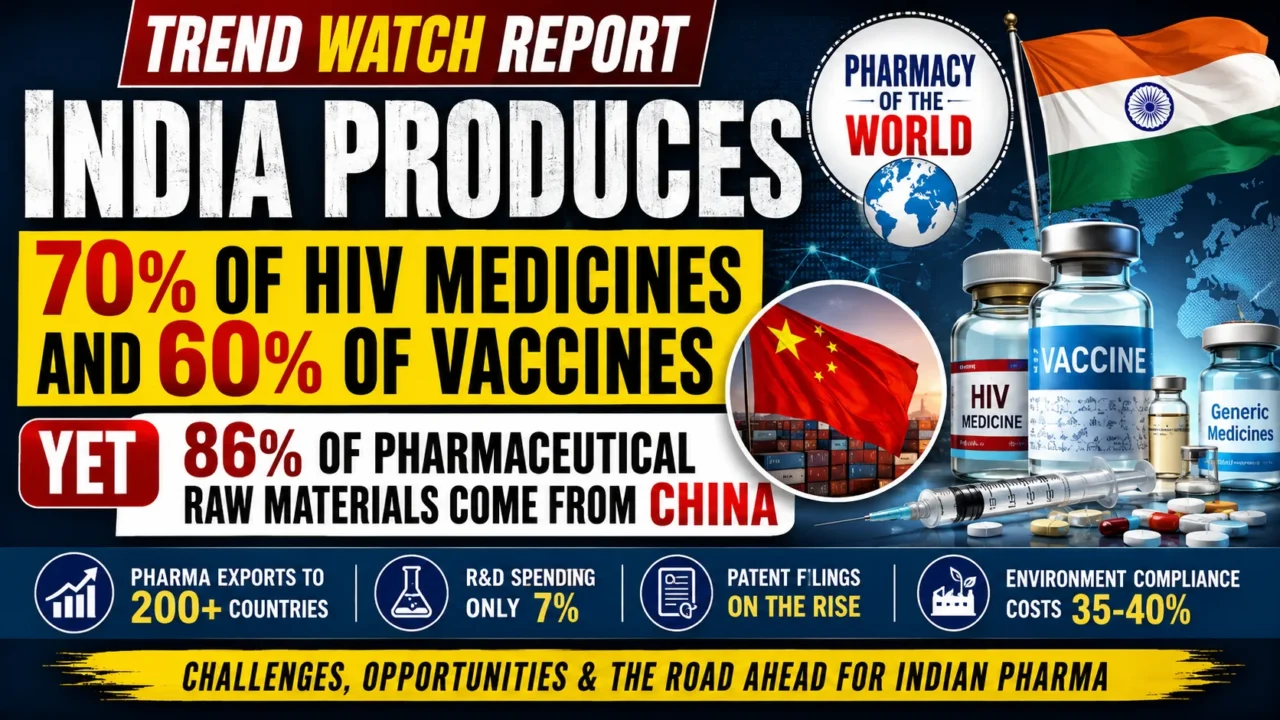
India has earned global recognition as the “Pharmacy of the World” due to its unmatched capability in manufacturing affordable medicines and vaccines. According to a recent trend watch report, India manufactures 70% of the world’s HIV medicines and 60% of global vaccines, making it one of the most important pharmaceutical producers worldwide.
However, despite this remarkable achievement, the Indian pharmaceutical industry remains heavily dependent on China for Active Pharmaceutical Ingredients (APIs) and other pharmaceutical raw materials, with nearly 86% of these critical inputs being imported from China. This dependence raises concerns about supply chain security, manufacturing costs, and long-term self-reliance.
India: A Global Pharmaceutical Manufacturing Leader
India has become one of the world’s largest producers of generic medicines and vaccines. The pharmaceutical sector contributes around 1.7% to India’s GDP and provides employment to nearly 2.7 million people. Indian pharmaceutical companies supply affordable medicines to more than 200 countries, making healthcare accessible across the globe.
India currently manufactures nearly 20% of the world’s generic medicines, around 70% of global HIV medicines, and 60% of vaccines used worldwide. These achievements highlight the country’s vital role in global healthcare.
Major Export Markets
Indian pharmaceutical products are trusted worldwide. The United States remains India’s largest pharmaceutical export destination, accounting for nearly 40% of exports, while the United Kingdom accounts for approximately 25%. Indian medicines are also exported extensively to Africa, Europe, Latin America, and Southeast Asia.
The combination of affordability, quality manufacturing, and strong regulatory compliance has made India a preferred supplier of generic medicines.

Heavy Dependence on Chinese Raw Materials
Although India is a global pharmaceutical manufacturing hub, its dependence on China for pharmaceutical raw materials continues to be a significant concern. Around 86% of APIs, bulk drugs, and chemical intermediates used by Indian manufacturers are imported from China.
This dependency creates several challenges, including supply chain disruptions, fluctuating prices, geopolitical risks, and increased manufacturing costs. Strengthening domestic API production has become a key priority for ensuring India’s pharmaceutical security.
Telangana Leads India’s Pharma Production
Telangana has emerged as India’s largest pharmaceutical manufacturing hub, contributing nearly 40% of the country’s pharmaceutical production. Hyderabad has become a global center for pharmaceutical companies, vaccine manufacturers, biotechnology firms, and research organizations.
Other leading pharmaceutical manufacturing states include Gujarat and Maharashtra, which also contribute significantly to India’s pharmaceutical exports.
Research and Development Requires Greater Investment
Despite its manufacturing strength, India’s pharmaceutical industry invests only around 7% of its sales revenue in Research and Development (R&D). In comparison, many leading global pharmaceutical companies invest between 15% and 20%.
Higher investment in R&D is essential for developing innovative medicines, biologics, patented drugs, and advanced healthcare technologies. Increased research spending will enable India to move beyond generic medicine manufacturing and become a global innovation leader.
Growth in Patent Filings
India has witnessed significant growth in pharmaceutical and life sciences patent filings over the past decade. The rising number of patents reflects increasing innovation, stronger research capabilities, and a growing focus on intellectual property protection.
This positive trend indicates that India’s pharmaceutical ecosystem is gradually evolving toward research-driven growth.
Environmental Compliance Adds to Costs
Pharmaceutical manufacturing requires strict environmental compliance. Many companies spend a substantial portion of their R&D budgets on waste management, pollution control, and effluent treatment systems to meet environmental regulations.
While these investments are essential for sustainable manufacturing, they also reduce the funds available for research and innovation.
Increasing Global Competition
India is also facing growing competition from emerging pharmaceutical manufacturing nations. Countries such as Mexico are rapidly expanding their pharmaceutical exports and attracting global investments.
To maintain its leadership position, India must continue improving manufacturing efficiency, innovation, research capabilities, regulatory compliance, and domestic API production.
The Way Forward
India’s pharmaceutical industry has enormous growth potential. To strengthen its global leadership, the country should focus on:
- Increasing domestic production of APIs and bulk drugs.
- Reducing dependence on imports from China.
- Investing more in Research and Development.
- Encouraging pharmaceutical innovation and biotechnology.
- Strengthening patent-driven research.
- Expanding sustainable pharmaceutical manufacturing.
- Supporting government initiatives like the Production Linked Incentive (PLI) Scheme.
Conclusion
India has become an indispensable pillar of global healthcare by manufacturing 70% of HIV medicines and 60% of the world’s vaccines. These achievements reinforce India’s position as the “Pharmacy of the World.”
However, reducing dependence on imported pharmaceutical raw materials, increasing research investment, and promoting innovation will be critical for ensuring long-term growth and global competitiveness. By strengthening domestic manufacturing and advancing pharmaceutical research, India can further solidify its position as the world’s leading pharmaceutical powerhouse.
Recommended Products