


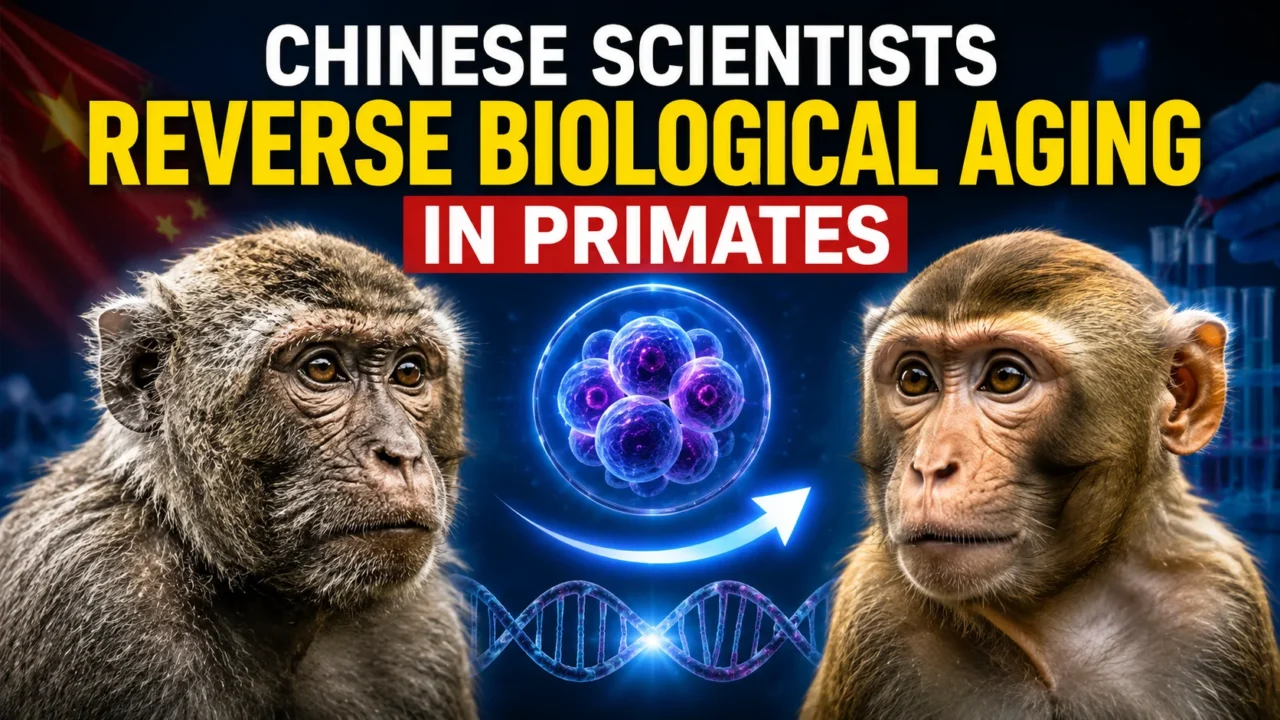

A groundbreaking study by Chinese scientists has sparked global excitement in the field of aging research. Researchers have reportedly succeeded in reversing biological aging markers in elderly primates using genetically engineered stem cells. The findings suggest that age-related decline may not be a one-way process, opening new possibilities for future regenerative medicine and healthy aging treatments.

What Did the Scientists Discover?
For decades, aging has been viewed as an irreversible biological process characterized by cellular damage, inflammation, tissue degeneration, and declining organ function. However, researchers from the Chinese Academy of Sciences and Capital Medical University have challenged this long-standing belief through an innovative experiment involving aged cynomolgus macaques.
The research team developed a special type of human mesenchymal progenitor stem cell engineered to overexpress the FOXO3 gene, a gene widely recognized for its role in longevity, cellular stress resistance, and healthy aging.
These specially modified cells, known as Senescence-Resistant Cells (SRCs), were administered intravenously to elderly macaques every two weeks over a period of 44 weeks.
Remarkable Results Across Multiple Organ Systems
The treatment produced impressive outcomes across numerous physiological systems.
Researchers observed:
- Reduction in senescent (aging) cells
- Improved tissue regeneration
- Decreased inflammation
- Enhanced metabolic function
- Better immune system performance
- Improved cardiovascular health markers
- Rejuvenation effects in multiple organ systems
Most notably, signs of rejuvenation were detected across 61 different tissue types and 10 major physiological systems, suggesting a broad systemic impact rather than isolated improvements.
The Role of FOXO3 in Longevity
FOXO3 is often referred to as a “longevity gene” because of its association with extended lifespan in humans and other organisms. The gene helps regulate:
- Cellular repair mechanisms
- Stress response pathways
- Oxidative damage protection
- Stem cell maintenance
- Metabolic balance
By enhancing FOXO3 activity in stem cells, scientists aimed to create cells capable of resisting age-related deterioration and supporting tissue renewal.
Why Is This Research Important?
The study represents a significant advancement in regenerative medicine because it demonstrates the possibility of slowing—or even partially reversing—biological aging at the cellular level in a species closely related to humans.
If future research confirms similar benefits in humans, this approach could potentially help combat age-related diseases such as:
- Alzheimer’s disease
- Cardiovascular disorders
- Osteoarthritis
- Immune system decline
- Metabolic diseases
However, experts caution that these findings are still at the experimental stage and much more research is needed before human clinical applications become available.
Challenges Before Human Use
Despite the promising results, several questions remain:
- Long-term safety of genetically engineered stem cells.
- Potential side effects in humans.
- Optimal dosage and treatment schedules.
- Cost and scalability of the therapy.
- Regulatory approval requirements.
Human clinical trials will be necessary to determine whether the treatment is both safe and effective for aging-related conditions.
The Future of Anti-Aging Medicine
The successful rejuvenation of elderly primates marks an exciting step toward understanding and potentially controlling the aging process. While a true “anti-aging cure” remains distant, this research demonstrates that biological aging may be more flexible than previously thought.
As scientists continue exploring stem cell therapies, gene regulation, and regenerative medicine, the dream of extending healthy lifespan may move closer to reality.
Conclusion
The recent study involving FOXO3-engineered stem cells in elderly macaques provides compelling evidence that biological aging markers can be reversed in primates. Although further studies and human trials are required, the findings offer hope for future treatments aimed at promoting healthy aging, preventing age-related diseases, and improving quality of life in older populations.
Recommended Products