

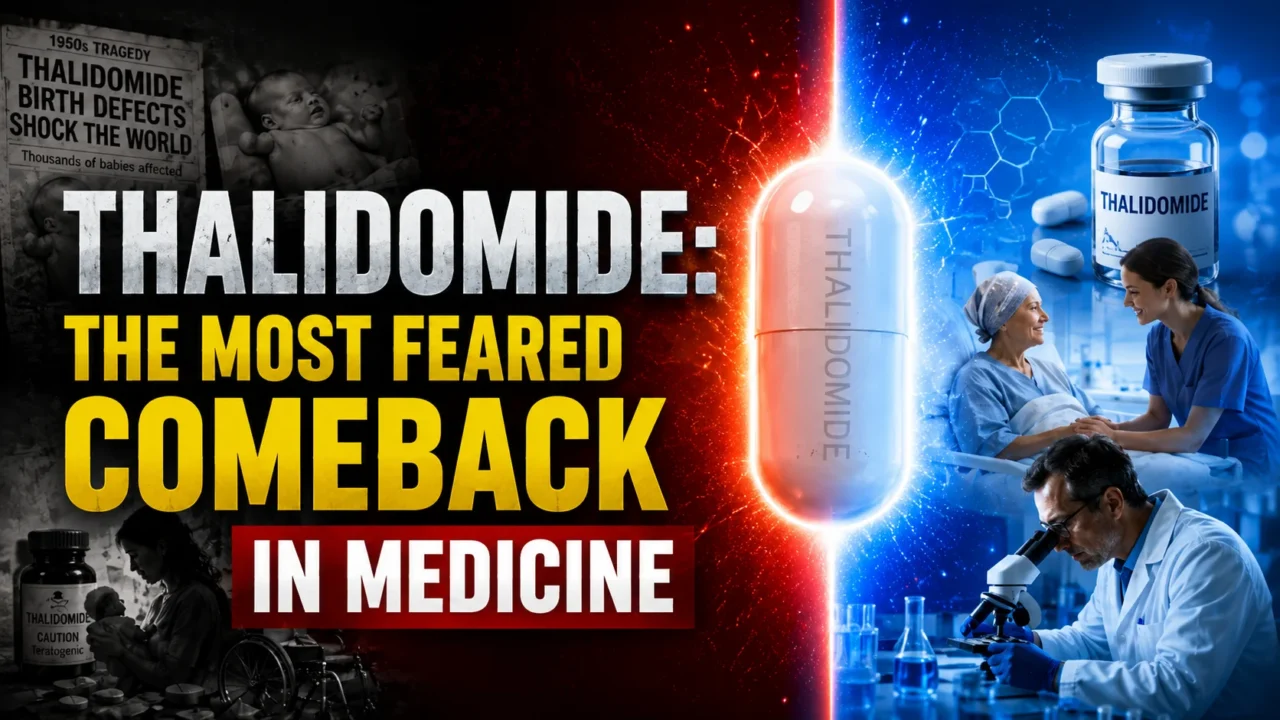

Thalidomide is one of the most controversial drugs in medical history. Once responsible for one of the world’s worst pharmaceutical disasters, it later made an extraordinary return to modern medicine. Today, the same drug that caused thousands of birth defects is used under strict regulations to treat serious diseases such as multiple myeloma and certain inflammatory conditions.
Its story is not just about a medicine—it is a lesson that transformed drug regulation, clinical trials, and patient safety worldwide.

The Birth of Thalidomide
Thalidomide was first developed in the 1950s by the German pharmaceutical company Chemie Grünenthal. It was marketed as a safe sedative and sleeping pill. Doctors soon began prescribing it to pregnant women to relieve morning sickness, anxiety, and insomnia.
At the time, the drug was considered remarkably safe because it appeared difficult to overdose on. As a result, it quickly gained popularity across Europe, Australia, Asia, and other parts of the world.
The Tragedy That Shocked the World
By the late 1950s and early 1960s, doctors began noticing an alarming increase in babies born with severe congenital disabilities.
The most common defect was phocomelia, a rare condition in which babies are born with severely shortened or absent limbs. Other birth defects included:
- Heart abnormalities
- Ear and eye defects
- Internal organ malformations
- Nervous system disorders
Researchers eventually linked these birth defects to thalidomide use during pregnancy.
It is estimated that more than 10,000 children worldwide were affected by thalidomide-related birth defects, while many pregnancies ended in miscarriage or stillbirth.
The tragedy led to the withdrawal of thalidomide from markets around the world in 1961.
How the Disaster Changed Drug Regulation Forever
The thalidomide disaster became a turning point in pharmaceutical regulation.
Before thalidomide, drug approval requirements were relatively limited. After the tragedy, governments introduced stricter regulations to ensure medicines were safe and effective before reaching patients.
Major changes included:
1. Stronger Clinical Trials
Medicines now undergo extensive testing before approval.
2. Reproductive Toxicity Studies
Drugs must be evaluated for their effects on pregnancy and fetal development.
3. Enhanced Pharmacovigilance
Post-marketing surveillance systems were strengthened to monitor adverse drug reactions.
4. Informed Consent Requirements
Patients participating in clinical trials must be fully informed about risks and benefits.
These reforms continue to shape modern drug development today.
The Surprising Return of Thalidomide
Despite its tragic history, scientists continued studying thalidomide and discovered that it possessed powerful immunomodulatory and anti-inflammatory properties.
Researchers found that the drug could help manage certain serious medical conditions when used under strict controls.
This led to a carefully regulated reintroduction of thalidomide in clinical practice.
Current Medical Uses of Thalidomide
Multiple Myeloma
One of the most important uses of thalidomide today is in the treatment of multiple myeloma, a type of blood cancer.
It helps slow cancer growth and improves treatment outcomes when used in combination with other therapies.
Erythema Nodosum Leprosum (ENL)
Thalidomide is highly effective in treating ENL, a painful inflammatory complication of leprosy.
Other Investigational Uses
Researchers have explored thalidomide and related compounds for:
- Certain autoimmune diseases
- Inflammatory disorders
- Cancer therapies
Strict Safety Measures
Because of its known teratogenic effects, thalidomide is now distributed under highly controlled risk-management programs.
Safety measures include:
- Mandatory pregnancy testing
- Use of effective contraception
- Restricted prescribing programs
- Patient education and counseling
- Regular monitoring during treatment
Pregnant women must never use thalidomide due to the risk of severe birth defects.
Lessons from the Thalidomide Story
The thalidomide tragedy remains one of the most important lessons in medical history.
It taught the world that:
- Drug safety can never be assumed.
- Rigorous clinical testing is essential.
- Continuous monitoring of medicines is necessary.
- Patient safety must always come first.
At the same time, it demonstrated that scientific research can sometimes find new therapeutic value in drugs previously considered unusable.
Conclusion
Thalidomide’s journey from a devastating medical disaster to a life-saving treatment represents one of the most remarkable stories in pharmaceutical history. While its legacy is marked by tragedy, it also led to stronger drug regulations and safer medicines for future generations.
Today, thalidomide serves as a reminder of both the risks and possibilities within modern medicine—a drug once feared worldwide that now helps save lives under carefully controlled conditions.
Recommended Products