

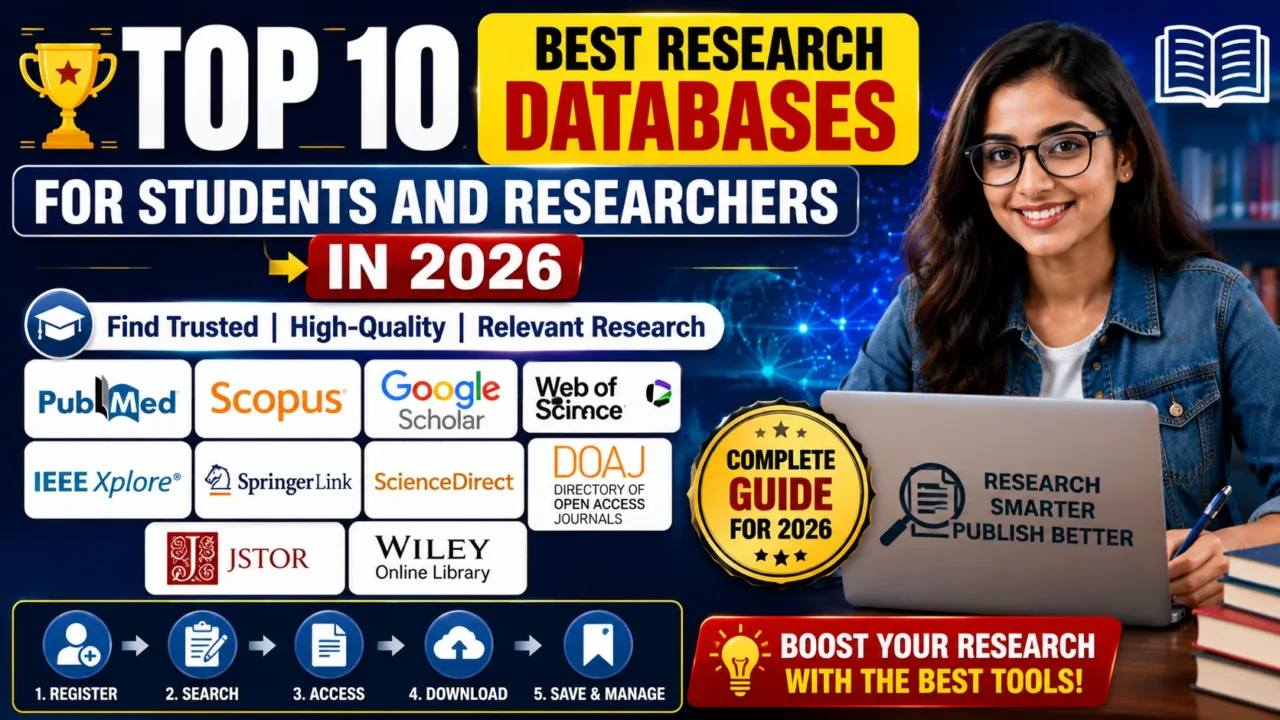

Research databases are essential tools for finding reliable scientific articles, journals, conference papers, theses, patents, and scholarly publications. Whether you are preparing for GPAT, NIPER JEE, M.Pharm research, PhD studies, or academic projects, using the right database can save time and improve the quality of your research.
In this article, we explore the Top 10 Research Databases that every student, researcher, and academic professional should know.
1. PubMed
Website: pubmed.ncbi.nlm.nih.gov
PubMed is one of the most widely used databases in biomedical and life sciences research. Managed by the U.S. National Library of Medicine, it provides access to millions of research articles in medicine, pharmacy, biotechnology, and healthcare.
Key Features
- Free access
- Biomedical and pharmaceutical research
- Clinical studies and review articles
- MeSH-based advanced searching
2. Scopus
Scopus is one of the largest abstract and citation databases of peer-reviewed literature.
Key Features
- Citation tracking
- Research analytics
- International journals
- Author profiles and h-index data
Best For
- Literature reviews
- Citation analysis
- Academic performance evaluation

3. Web of Science
Web of Science is a premium multidisciplinary research database widely used by universities and research institutions worldwide.
Key Features
- Citation indexing
- Impact factor analysis
- Research trend identification
- High-quality journal coverage
4. Google Scholar
Google Scholar is the most accessible academic search engine for students.
Key Features
- Free access
- Articles, theses, books, patents, and conference papers
- Citation counts
- Easy literature searching
Best For
- Quick literature search
- Finding full-text articles
5. ScienceDirect
ScienceDirect is Elsevier’s leading platform for scientific and technical research publications.
Key Features
- Millions of research papers
- Full-text journal access
- Pharmacy and biotechnology journals
- Advanced filtering options
6. Cochrane Library
The Cochrane Library specializes in evidence-based healthcare research.
Key Features
- Systematic reviews
- Clinical trial data
- Evidence-based medicine
- Healthcare decision-making resources
Best For
- Clinical pharmacy research
- Healthcare professionals
7. Embase
Embase is a biomedical and pharmacological research database widely used for drug-related studies.
Key Features
- Extensive drug information
- Pharmacovigilance studies
- Clinical research articles
- European journal coverage
8. JSTOR
JSTOR provides access to academic journals, books, and primary sources across various disciplines.
Key Features
- Historical research articles
- Humanities and social sciences
- Archive collections
- Interdisciplinary research
9. IEEE Xplore
IEEE Xplore is one of the best databases for engineering and technology research.
Key Features
- Engineering journals
- Artificial Intelligence research
- Computer science papers
- Conference proceedings
Best For
- AI and Machine Learning research
- Engineering projects
10. Directory of Open Access Journals (DOAJ)
DOAJ provides free access to thousands of peer-reviewed open-access journals.
Key Features
- Free full-text access
- High-quality journals
- Global research coverage
- Open-access publishing support
Comparison Table
| Database | Best For | Free/Paid |
|---|---|---|
| PubMed | Pharmacy & Medicine | Free |
| Scopus | Citation Analysis | Paid |
| Web of Science | Impact Factor Research | Paid |
| Google Scholar | General Academic Search | Free |
| ScienceDirect | Scientific Journals | Mixed |
| Cochrane Library | Clinical Research | Mixed |
| Embase | Drug Research | Paid |
| JSTOR | Humanities & Archives | Mixed |
| IEEE Xplore | Engineering & AI | Mixed |
| DOAJ | Open Access Journals | Free |
Which Database is Best for Pharmacy Students?
If you are a B.Pharm, M.Pharm, Pharm.D, GPAT, NIPER JEE, or PhD student, the most useful databases are:
- PubMed
- Scopus
- ScienceDirect
- Embase
- Google Scholar
- Cochrane Library
These databases provide high-quality pharmaceutical, clinical, and biomedical research articles that can support academic projects, dissertations, publications, and competitive exam preparation.
Conclusion
Research databases play a crucial role in scientific discovery and academic success. While Google Scholar is excellent for quick searches, databases such as PubMed, Scopus, Web of Science, and ScienceDirect provide more comprehensive and reliable research resources. Learning how to use these databases effectively can significantly improve your research quality and academic performance.
Recommended Products