


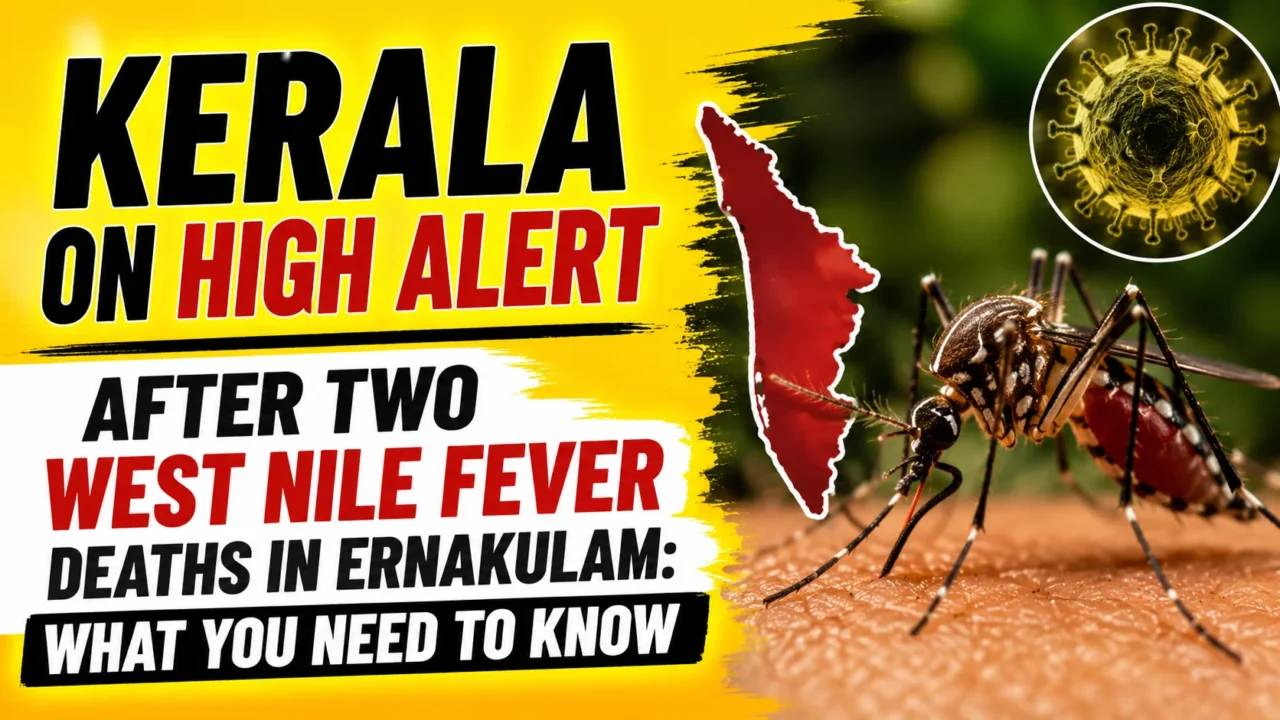

Kerala has issued a high health alert following the reported deaths of two individuals from suspected West Nile Fever in Ernakulam district within a span of one week. The development has prompted health authorities to intensify surveillance measures and launch mosquito-control activities across affected areas.

What Happened?
According to health reports, a 70-year-old man from Kadungalloor near Aluva recently died after being infected with West Nile Fever. This was the second suspected death linked to the disease in Ernakulam district within a week, raising concerns among public health officials.
In response, the Kerala Health Department has strengthened monitoring efforts and urged local authorities to eliminate mosquito breeding sites to prevent further spread of the disease.
What is West Nile Fever?
West Nile Fever is a mosquito-borne viral disease caused by the West Nile Virus (WNV). The virus is primarily transmitted through the bite of infected Culex mosquitoes, which become infected after feeding on infected birds.
Unlike some infectious diseases, West Nile Virus does not spread directly from person to person through casual contact.
Symptoms of West Nile Fever
Most people infected with West Nile Virus do not develop symptoms. However, some individuals may experience mild to moderate symptoms, including:
- Fever
- Headache
- Body aches
- Fatigue
- Skin rash
- Nausea and vomiting
- Swollen lymph nodes
In severe cases, particularly among elderly individuals and those with weakened immune systems, the infection can affect the nervous system.
Severe Complications
A small percentage of infected individuals may develop serious neurological conditions such as:
- Encephalitis (inflammation of the brain)
- Meningitis (inflammation of the membranes surrounding the brain and spinal cord)
- Muscle weakness
- Paralysis
- Confusion and disorientation
These complications require immediate medical attention and hospitalization.
Why Are Health Authorities Concerned?
The recent deaths have highlighted the potential severity of West Nile Virus infections, especially among older adults. Kerala’s Health Department has warned that negligence in controlling mosquito breeding could increase the risk of further cases.
Health officials are conducting:
- Enhanced disease surveillance
- Mosquito population control measures
- Public awareness campaigns
- Monitoring of high-risk areas
Prevention Tips
There is currently no specific vaccine available for West Nile Fever in humans. Prevention mainly focuses on avoiding mosquito bites.
Protect Yourself by:
- Using mosquito repellents
- Wearing full-sleeved clothing
- Sleeping under mosquito nets
- Installing window screens
- Avoiding outdoor exposure during peak mosquito activity
Eliminate Mosquito Breeding Sites
- Remove stagnant water from containers
- Clean water tanks regularly
- Dispose of unused tires, cans, and plastic containers
- Keep surroundings clean and dry
Public Health Advisory
Residents of Kerala, particularly those in Ernakulam district and surrounding regions, are advised to remain vigilant and seek medical attention if they develop symptoms such as fever, severe headache, confusion, or neurological signs after mosquito exposure.
Early diagnosis and supportive medical care can significantly improve outcomes in severe cases.
Conclusion
The recent West Nile Fever-related deaths in Ernakulam have prompted Kerala to strengthen public health measures and mosquito-control efforts. While most infections remain mild or asymptomatic, severe neurological complications can occur in vulnerable individuals. Public cooperation in mosquito prevention and early medical consultation will play a crucial role in controlling the spread of the disease.
Recommended Products