


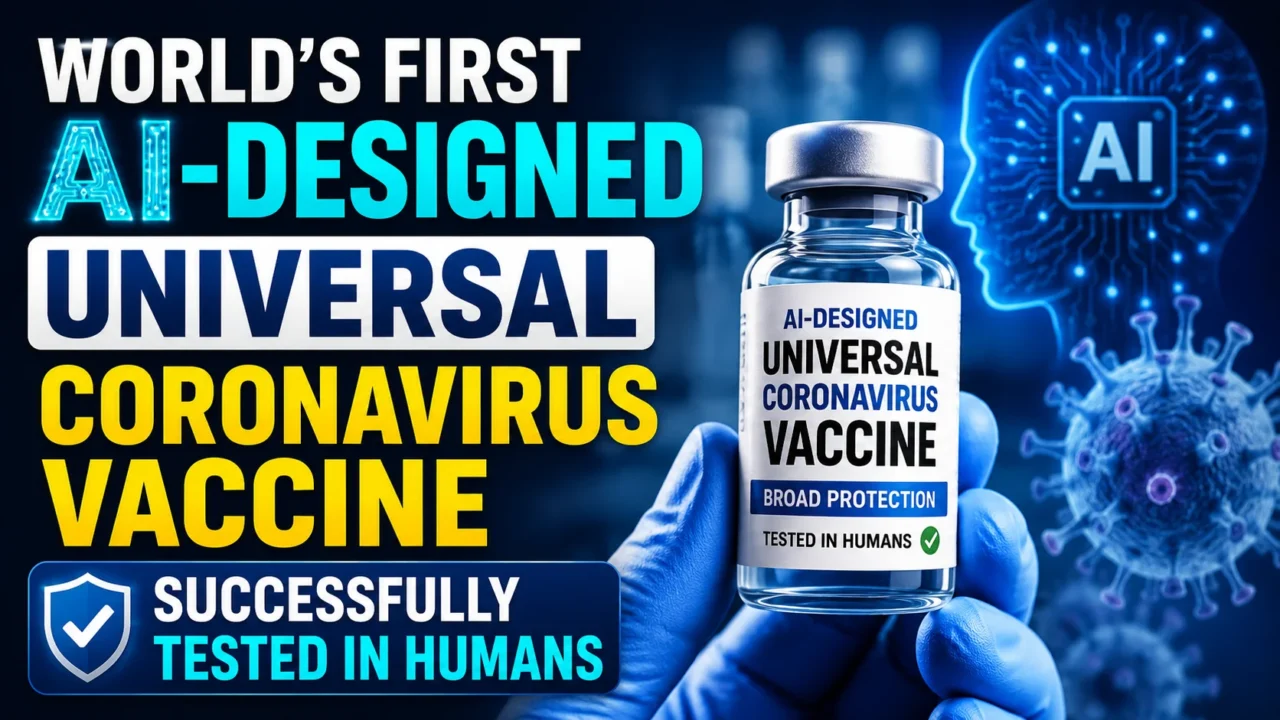

Scientists have achieved a significant milestone in vaccine research by successfully testing an AI-designed universal coronavirus vaccine in humans for the first time. Developed by researchers at the University of Cambridge and biotechnology company DIOSynVax (DVX) Ltd, the experimental vaccine was found to be safe, well tolerated, and capable of generating immune responses against multiple coronaviruses.
The findings, published in the Journal of Infection, represent a major step toward creating vaccines that can protect against entire families of viruses rather than a single strain.
What Makes This Vaccine Different?
Traditional vaccines are typically designed to target a specific virus strain. As viruses evolve and mutate, vaccines often require updates to maintain effectiveness. This has been evident with seasonal influenza vaccines and updated COVID-19 booster shots.
The new universal coronavirus vaccine takes a different approach. Instead of targeting a single virus, it focuses on common features shared across the entire Sarbecovirus family—a group that includes:
- SARS-CoV-2 (the virus responsible for COVID-19)
- SARS-CoV
- Several bat coronaviruses with pandemic potential
By targeting these shared characteristics, the vaccine aims to provide broad and long-lasting protection, even as viruses continue to evolve.
First Human Trial Shows Promising Results
The Phase 1 clinical trial involved 39 healthy volunteers. Researchers reported that:
- The vaccine was safe and well tolerated.
- No significant side effects were observed.
- Participants developed immune responses against multiple coronaviruses.
- The vaccine showed activity against SARS-CoV-2, SARS, and related bat viruses that have not yet infected humans.
These findings suggest the vaccine could potentially protect against future coronavirus outbreaks before they emerge in the human population.

AI-Powered Vaccine Design
One of the most groundbreaking aspects of this research is that the vaccine’s active ingredient was designed entirely using artificial intelligence and machine learning.
Researchers created what they call a “super-antigen”—a vaccine component designed to train the immune system to recognize a broad range of related viruses.
Using global surveillance data, AI analyzed the genetic sequences of numerous Sarbecoviruses and identified regions that remain relatively stable across the virus family. These conserved features were then combined into a single vaccine antigen capable of generating broad immune protection.
This innovative approach allows scientists to prepare for future viral threats rather than simply reacting to outbreaks after they occur.
Needle-Free Vaccine Delivery
Another notable feature of the study was its delivery method.
The vaccine was administered as a DNA vaccine using a microfluidic jet device, a needle-free technology that delivers the vaccine through the skin using high-pressure liquid streams.
Potential advantages of this approach include:
- Reduced fear associated with injections
- Improved patient compliance
- Easier mass vaccination campaigns
- Elimination of needle-related waste
The AI-designed super-antigen is also compatible with multiple vaccine delivery platforms, providing flexibility for future development.
A Platform for Future Pandemic Protection
Researchers believe the same AI-driven technology could be adapted for other virus families beyond coronaviruses.
Potential future applications include:
- Influenza viruses
- Ebola viruses
- Emerging zoonotic pathogens
- Future pandemic threats
By focusing on viral families rather than individual strains, scientists hope to develop vaccines capable of providing broader and more durable protection.
Why This Breakthrough Matters
The COVID-19 pandemic highlighted the need for faster and more proactive vaccine development strategies. AI-designed universal vaccines could transform global health preparedness by:
- Reducing the need for frequent vaccine reformulation
- Providing protection against future viral variants
- Accelerating vaccine development timelines
- Enhancing pandemic preparedness worldwide
Rather than continuously updating vaccines in response to viral mutations, scientists may eventually create vaccines that remain effective against entire groups of related viruses.
The Road Ahead
While the Phase 1 trial results are encouraging, larger clinical trials will be necessary to confirm effectiveness and long-term protection. Future studies will evaluate how well the vaccine prevents infection and disease in diverse populations.
Nevertheless, the successful completion of the first human trial marks an important proof of concept for AI-designed vaccine technology and opens the door to a new era of preventive medicine.
Conclusion
The successful human testing of an AI-designed universal coronavirus vaccine represents a major scientific breakthrough. By combining artificial intelligence, machine learning, and advanced vaccine engineering, researchers have taken a significant step toward protecting humanity from future coronavirus outbreaks and potential pandemics.
If future trials confirm its effectiveness, this technology could revolutionize vaccine development and reshape how the world prepares for emerging infectious diseases.
Recommended Products