


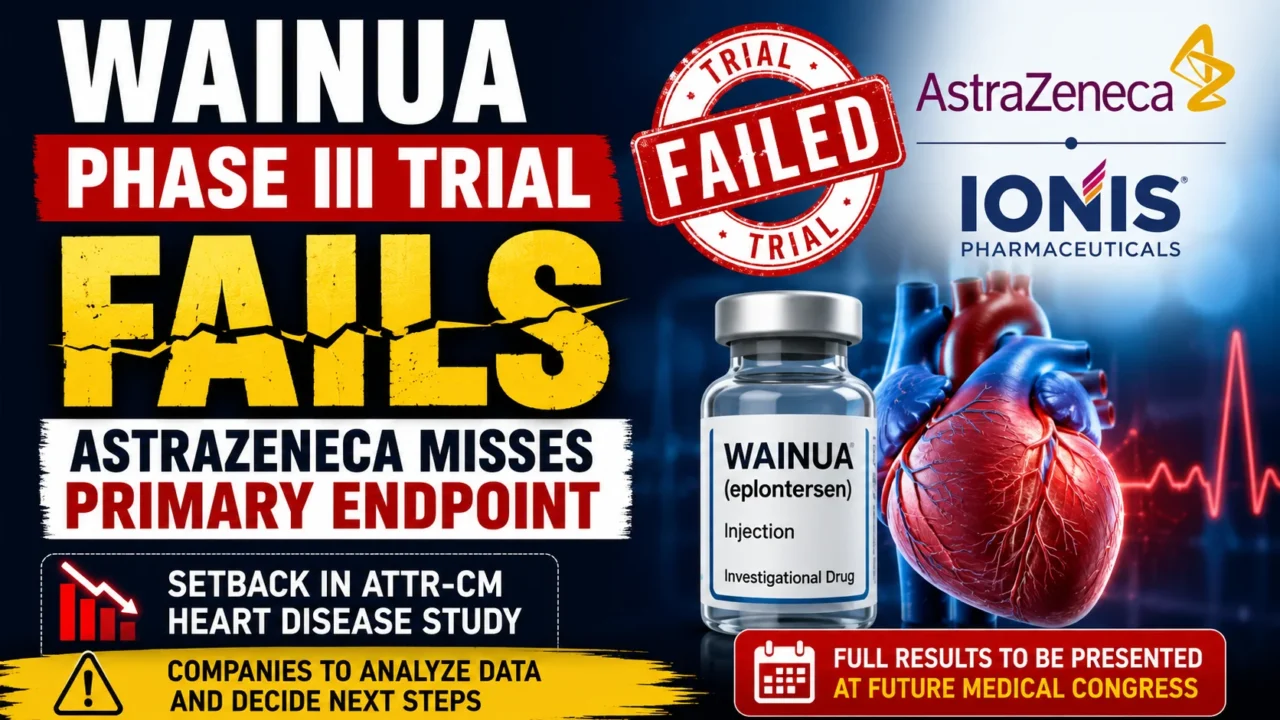

The Wainua Phase III Trial has delivered disappointing results for AstraZeneca and Ionis Pharmaceuticals. The companies announced that the Phase III CARDIO-TTRansform clinical trial evaluating Wainua (eplontersen) for adults with transthyretin-mediated amyloid cardiomyopathy (ATTR-CM) failed to achieve its primary efficacy endpoint.
Although the investigational therapy demonstrated a favorable safety profile and was generally well tolerated, it did not significantly reduce the combined risk of cardiovascular death and recurrent cardiovascular clinical events compared with placebo.
This outcome represents a significant setback for AstraZeneca’s plans to expand Wainua into the ATTR-CM treatment market.
Quick Summary
The Wainua Phase III Trial failed to meet its primary endpoint in patients with transthyretin-mediated amyloid cardiomyopathy (ATTR-CM). While AstraZeneca and Ionis confirmed that Wainua remained safe and well tolerated, the study did not significantly reduce cardiovascular deaths or recurrent cardiovascular events. The companies will now analyze secondary endpoints and subgroup data before determining the next regulatory steps.

Wainua Phase III Trial Overview
| Particular | Details |
|---|---|
| Drug | Wainua (Eplontersen) |
| Companies | AstraZeneca & Ionis Pharmaceuticals |
| Trial Name | CARDIO-TTRansform |
| Trial Phase | Phase III |
| Disease | Transthyretin-Mediated Amyloid Cardiomyopathy (ATTR-CM) |
| Participants | More than 1,400 |
| Trial Duration | Up to 140 Weeks |
| Primary Endpoint | Cardiovascular Death + Recurrent Cardiovascular Clinical Events |
| Trial Result | Primary Endpoint Not Achieved |

What is Wainua (Eplontersen)?
Wainua (eplontersen) is an RNA-targeted medicine designed to reduce the production of transthyretin (TTR), the protein responsible for amyloid deposits in various organs.
The medicine is currently approved in several countries for treating Hereditary Transthyretin-Mediated Amyloid Polyneuropathy (ATTRv-PN).
The Phase III study evaluated whether the medicine could also benefit patients suffering from ATTR-CM, a progressive heart disease caused by transthyretin amyloid deposits in cardiac tissue.
About the CARDIO-TTRansform Trial
The CARDIO-TTRansform study is one of the largest clinical trials conducted in ATTR-CM.
Study Objective
Researchers evaluated whether Wainua could reduce:
- Cardiovascular death
- Recurrent cardiovascular clinical events
when compared with placebo over a treatment period of up to 140 weeks.
The study enrolled more than 1,400 patients worldwide.
Why Did the Wainua Phase III Trial Fail?
According to AstraZeneca and Ionis Pharmaceuticals, the study failed to achieve a statistically significant improvement in its primary endpoint.
Although patients tolerated the medicine well, the treatment did not demonstrate sufficient clinical benefit over placebo in reducing cardiovascular death and recurrent cardiovascular events.
As a result, the primary objective of the study was not met.
Safety Findings
Despite missing the efficacy endpoint, the trial produced encouraging safety results.
The companies reported:
- Safety profile remained consistent with previous studies.
- Wainua was generally well tolerated.
- No new major safety concerns were identified.
These findings support the medicine’s existing approved use.
Does This Affect Wainua’s Current Approval?
No.
The unsuccessful ATTR-CM trial does not affect Wainua’s existing approvals for:
- Hereditary Transthyretin-Mediated Amyloid Polyneuropathy (ATTRv-PN)
Patients receiving Wainua for its approved indication can continue treatment as prescribed.
What Happens Next?
AstraZeneca and Ionis Pharmaceuticals have announced that they will continue analyzing:
- Secondary efficacy endpoints
- Predefined subgroup analyses
- Additional clinical outcomes
The companies will review the complete dataset before discussing future development plans with regulatory authorities.
The detailed trial findings are expected to be presented at a future international medical congress.
Key Highlights
| Particular | Information |
|---|---|
| Drug | Wainua (Eplontersen) |
| Trial | CARDIO-TTRansform |
| Phase | III |
| Disease | ATTR-CM |
| Participants | 1,400+ |
| Primary Endpoint | Not Achieved |
| Safety | Well Tolerated |
| Existing Approval | ATTRv-PN Remains Approved |
Why Should Pharmacy Students and Pharma Professionals Know This?
This clinical trial update is valuable for:
- GPAT aspirants studying clinical research.
- NIPER entrance preparation.
- Drug Inspector examination.
- Regulatory Affairs professionals.
- Clinical Research students.
- Pharmacovigilance and pharmaceutical industry professionals.
It demonstrates how Phase III clinical trial outcomes influence drug development, regulatory decisions, and future therapeutic indications.
Frequently Asked Questions (FAQs)
1. What is Wainua?
Wainua (eplontersen) is an RNA-targeted medicine approved for treating hereditary transthyretin-mediated amyloid polyneuropathy (ATTRv-PN).
2. What was the objective of the Wainua Phase III Trial?
The study evaluated whether Wainua could reduce cardiovascular death and recurrent cardiovascular clinical events in adults with ATTR-CM.
3. Did the Wainua Phase III Trial meet its primary endpoint?
No. The trial failed to achieve a statistically significant improvement in the primary efficacy endpoint.
4. Was Wainua considered safe?
Yes. AstraZeneca reported that Wainua remained generally well tolerated, with a safety profile consistent with previous clinical studies.
5. Does this trial failure affect Wainua’s existing approval?
No. Wainua remains approved for hereditary transthyretin-mediated amyloid polyneuropathy (ATTRv-PN).
6. How many patients participated in the CARDIO-TTRansform trial?
More than 1,400 patients participated worldwide.
7. What are the next steps?
The companies will analyze secondary endpoints and subgroup analyses before deciding future regulatory actions.
8. When will the full study results be available?
The complete findings are expected to be presented at a future medical congress and shared with the scientific community.
Important Dates
| Event | Date |
|---|---|
| Trial Result Announcement | 2026 |
| Detailed Data Presentation | To be announced |
Important Links
| Resource | Details |
|---|---|
| Company | AstraZeneca |
| Research Partner | Ionis Pharmaceuticals |
| Trial | CARDIO-TTRansform |
| Official Clinical Trial Information | Available through AstraZeneca and clinical trial registries |
Conclusion
The Wainua Phase III Trial represents a significant development in cardiovascular drug research. While AstraZeneca and Ionis Pharmaceuticals successfully demonstrated that Wainua has a favorable safety profile, the investigational therapy failed to achieve its primary efficacy endpoint in patients with transthyretin-mediated amyloid cardiomyopathy (ATTR-CM).
Although this result limits Wainua’s expansion into the ATTR-CM indication, the medicine remains approved for hereditary transthyretin-mediated amyloid polyneuropathy (ATTRv-PN). Future analyses of secondary endpoints and subgroup data may provide additional insights into the drug’s clinical potential.
Recommended Products