


Quick Summary
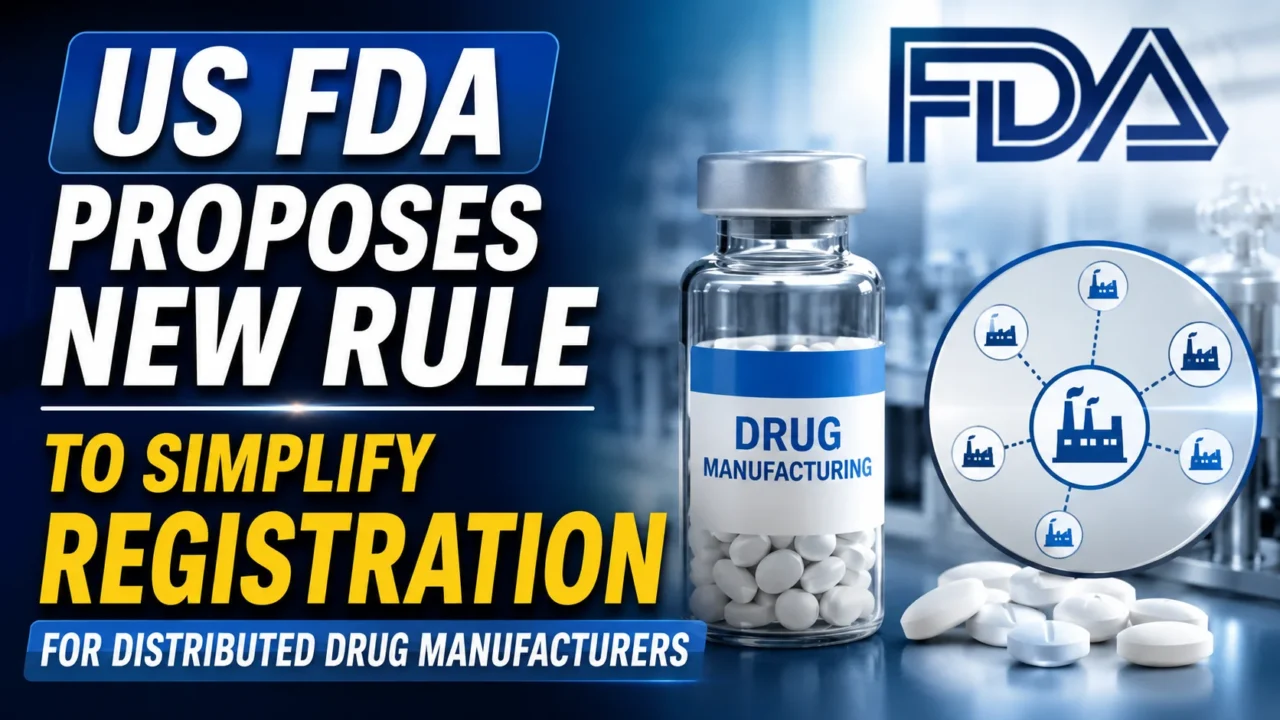
The US FDA has proposed a new rule that would allow qualifying distributed drug manufacturing networks to register as a single establishment instead of registering each manufacturing unit separately. The proposal aims to reduce regulatory burden, improve supply chain transparency, strengthen oversight, and support modern pharmaceutical manufacturing technologies.

US FDA Distributed Drug Manufacturing Rule 2026
The US FDA Distributed Drug Manufacturing Rule is a proposed regulatory reform that aims to modernize how pharmaceutical manufacturers register their production facilities. Instead of requiring every manufacturing unit to register separately, qualifying distributed manufacturing networks may be able to register as a single establishment.
The proposal supports advanced manufacturing technologies while helping the FDA improve oversight of both domestic and international pharmaceutical supply chains.
Overview
| Particular | Details |
|---|---|
| Organization | U.S. Food and Drug Administration (FDA) |
| Rule Status | Proposed Rule |
| Category | Drug Manufacturing Regulation |
| Applies To | Distributed Drug Manufacturing Networks |
| Purpose | Simplify Establishment Registration |
| Benefit | Reduced Administrative Burden & Better Supply Chain Transparency |
What Is Distributed Drug Manufacturing?
Distributed drug manufacturing is an advanced pharmaceutical production model that operates through a hub-and-spoke system.
Central Hub
The central hub is responsible for:
- Quality Management
- Regulatory Compliance
- Manufacturing Standards
- Process Control
Manufacturing Units (Spokes)
Multiple manufacturing facilities produce identical drug products while operating under centralized supervision.
This manufacturing model enables companies to:
- Increase production capacity
- Improve manufacturing flexibility
- Respond faster during medicine shortages
- Maintain standardized product quality
Current FDA Registration Requirements
Under the current FDA regulations:
- Every manufacturing facility must register separately.
- Each establishment requires individual registration updates.
- Expansion or relocation requires additional regulatory documentation.
- Companies operating multiple facilities face higher administrative costs.
These requirements can delay expansion and increase compliance efforts.
What Does the Proposed FDA Rule Change?
The proposed FDA rule would allow qualifying distributed manufacturing networks to register as one single establishment rather than registering every manufacturing unit individually.
Proposed Changes
The proposal would allow manufacturers to:
- Register distributed manufacturing networks as one establishment.
- Add new manufacturing units through a simplified update process.
- Relocate facilities without completing entirely new registrations.
- Remove discontinued manufacturing units more efficiently.
- Notify the FDA before relocating manufacturing facilities.
These changes better reflect modern pharmaceutical manufacturing systems while maintaining regulatory oversight.
Additional Changes for Foreign Manufacturers
The FDA also plans to improve transparency across the global pharmaceutical supply chain.
Certain foreign manufacturers producing products for the U.S. market may now be required to register with the FDA.
These include facilities manufacturing:
- Active Pharmaceutical Ingredients (APIs)
- Drug Components
- Pharmaceutical Intermediates
The proposal would provide the FDA with greater visibility into upstream manufacturing operations.
Benefits of the Proposed Rule
| Benefit | Description |
|---|---|
| Reduced Administrative Burden | Fewer registration requirements |
| Faster Expansion | Easier addition and relocation of manufacturing units |
| Lower Compliance Costs | Less regulatory paperwork |
| Better Supply Chain Transparency | Improved tracking of manufacturing locations |
| Stronger FDA Oversight | Better monitoring of manufacturing activities |
| Support for Innovation | Encourages advanced manufacturing technologies |
Industry Impact
The proposal is expected to benefit manufacturers using:
- Continuous Manufacturing
- Modular Manufacturing
- Distributed Pharmaceutical Production Systems
- Advanced Manufacturing Technologies
The rule could help manufacturers respond more efficiently to medicine shortages while maintaining product quality and regulatory compliance.
Why Is This Proposal Important?
Modern pharmaceutical manufacturing has evolved significantly over the past decade. Traditional registration systems often do not reflect distributed manufacturing models.
If finalized, this proposal could:
- Improve regulatory efficiency
- Reduce paperwork
- Encourage pharmaceutical innovation
- Strengthen global supply chain monitoring
- Improve medicine availability
What Does This Mean for Pharmacy Students and Professionals?
Although the proposal mainly affects pharmaceutical manufacturers, it is important for:
- B.Pharm Students
- D.Pharm Students
- M.Pharm Students
- GPAT Aspirants
- Drug Inspector Aspirants
- Regulatory Affairs Professionals
- Pharmaceutical Industry Professionals
Understanding FDA regulatory updates is valuable for competitive examinations and pharmaceutical careers.
Comparison: Current vs Proposed Registration System
| Current System | Proposed System |
|---|---|
| Separate registration for every manufacturing unit | Single registration for qualifying distributed networks |
| Higher paperwork | Simplified documentation |
| Slower expansion | Faster expansion |
| Multiple regulatory filings | Streamlined updates |
| Limited upstream visibility | Improved supply chain transparency |

Important Points at a Glance
- FDA proposes single registration for distributed manufacturing networks.
- Manufacturing units can be added more easily.
- Facility relocation process becomes simpler.
- Better oversight of domestic and foreign manufacturers.
- Increased pharmaceutical supply chain transparency.
- Supports modern manufacturing technologies.
Conclusion
The US FDA Distributed Drug Manufacturing Rule represents a significant step toward modernizing pharmaceutical regulation. By allowing qualifying distributed manufacturing networks to register as a single establishment, the FDA aims to reduce compliance burdens, improve operational efficiency, and strengthen oversight of domestic and international pharmaceutical manufacturing.
If finalized, the proposal could accelerate innovation, enhance supply chain transparency, and support a more resilient pharmaceutical manufacturing ecosystem while maintaining high standards of drug quality and patient safety.
Frequently Asked Questions (FAQs)
Q1. What is the FDA’s new distributed manufacturing rule?
The FDA proposes allowing qualifying distributed drug manufacturing networks to register as one establishment instead of registering each production facility separately.
Q2. Is the new FDA rule currently in effect?
No. It is currently a proposed rule and has not yet been finalized.
Q3. What is distributed drug manufacturing?
It is a manufacturing model where multiple production sites operate under centralized quality management and regulatory oversight.
Q4. Why is the FDA proposing this rule?
The proposal aims to reduce administrative burden, improve regulatory efficiency, and increase pharmaceutical supply chain transparency.
Q5. Which manufacturers will benefit?
Manufacturers using distributed, modular, and continuous manufacturing systems are expected to benefit the most.
Q6. Will foreign manufacturers be affected?
Yes. Some foreign manufacturers producing APIs, drug components, and intermediates for the U.S. market may be required to register with the FDA.
Q7. Will this reduce regulatory oversight?
No. The proposal simplifies registration while strengthening FDA oversight through improved transparency and reporting.
Q8. Why should pharmacy students know about this rule?
FDA regulatory updates are important for pharmacy education, Drug Inspector exams, GPAT, regulatory affairs careers, and understanding global pharmaceutical manufacturing practices.
Recommended Products