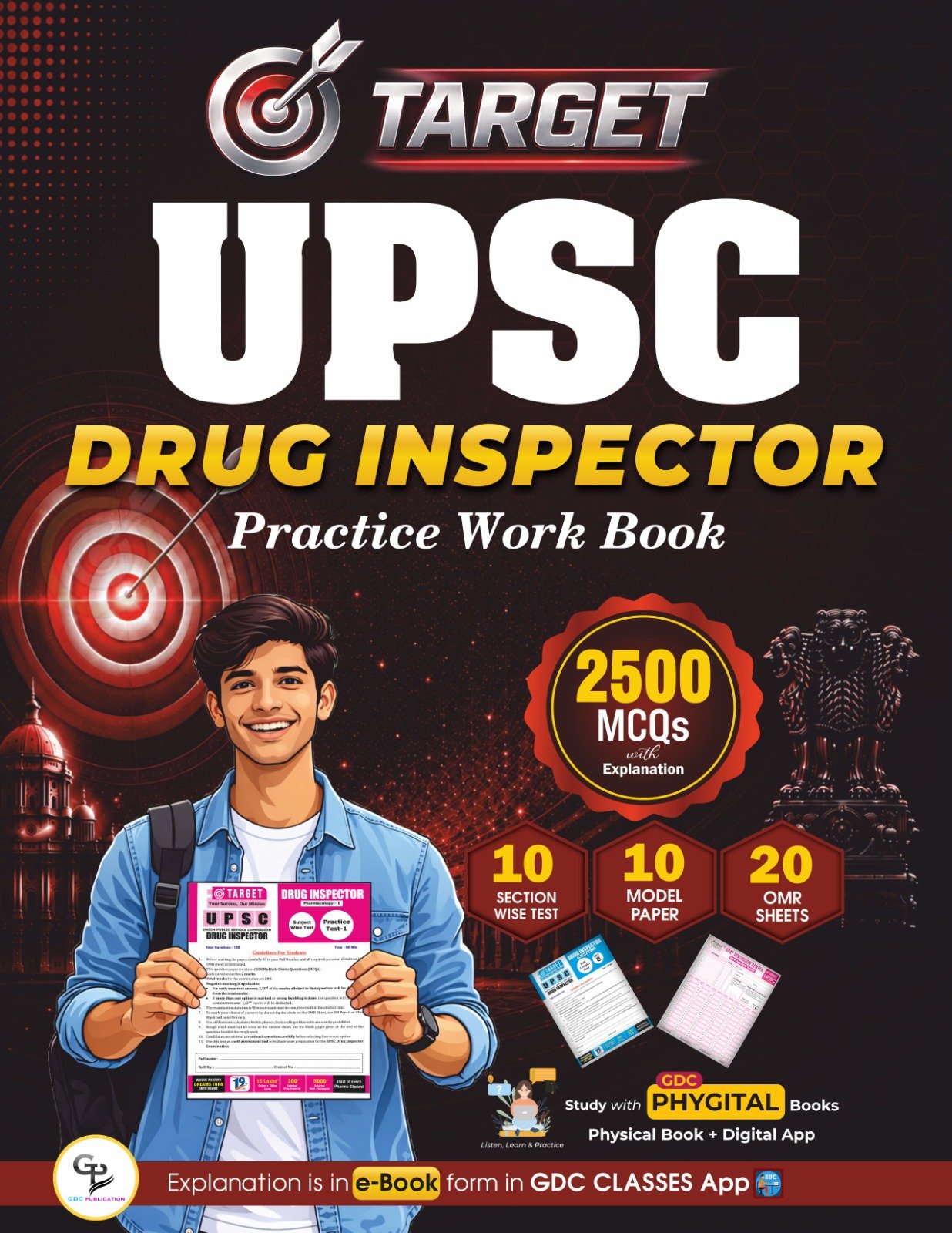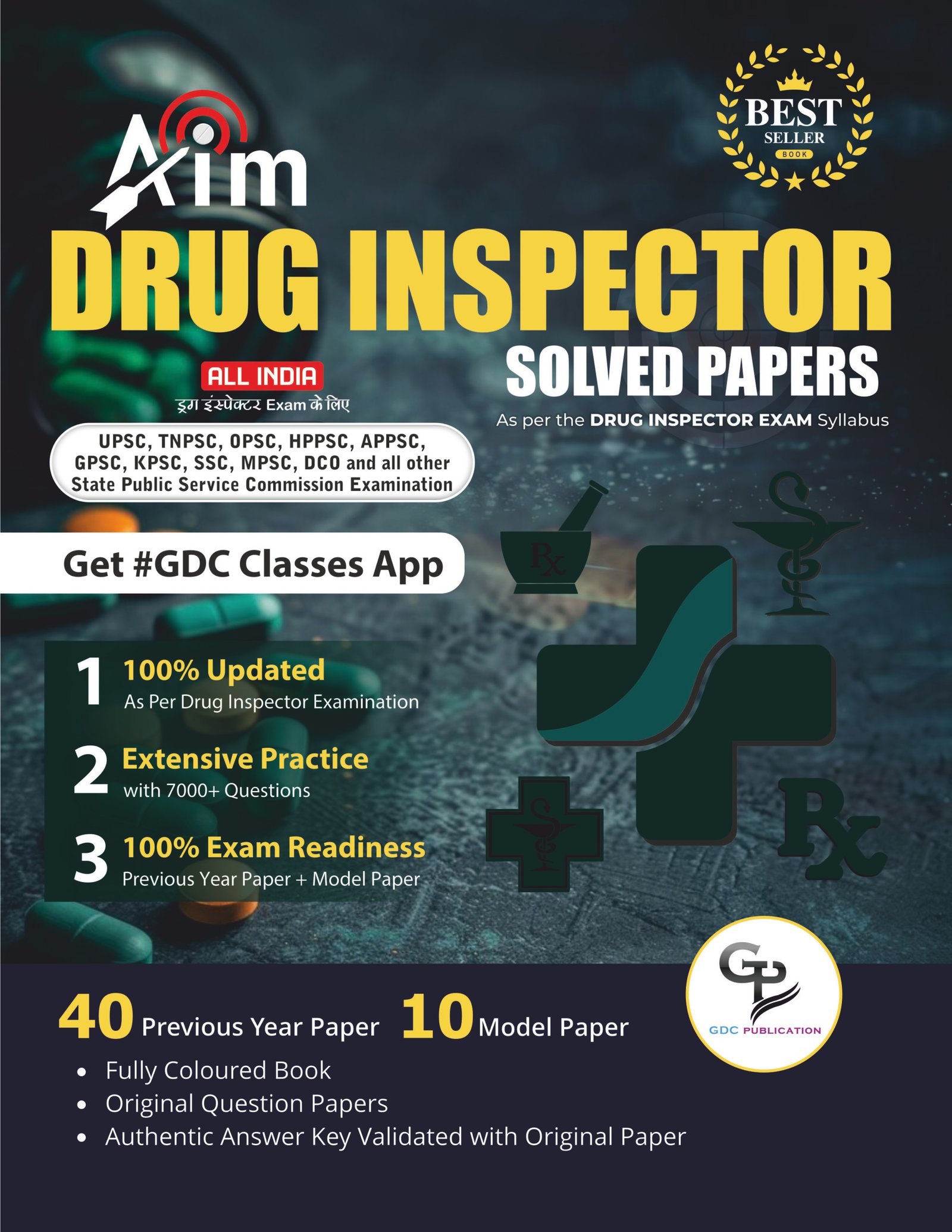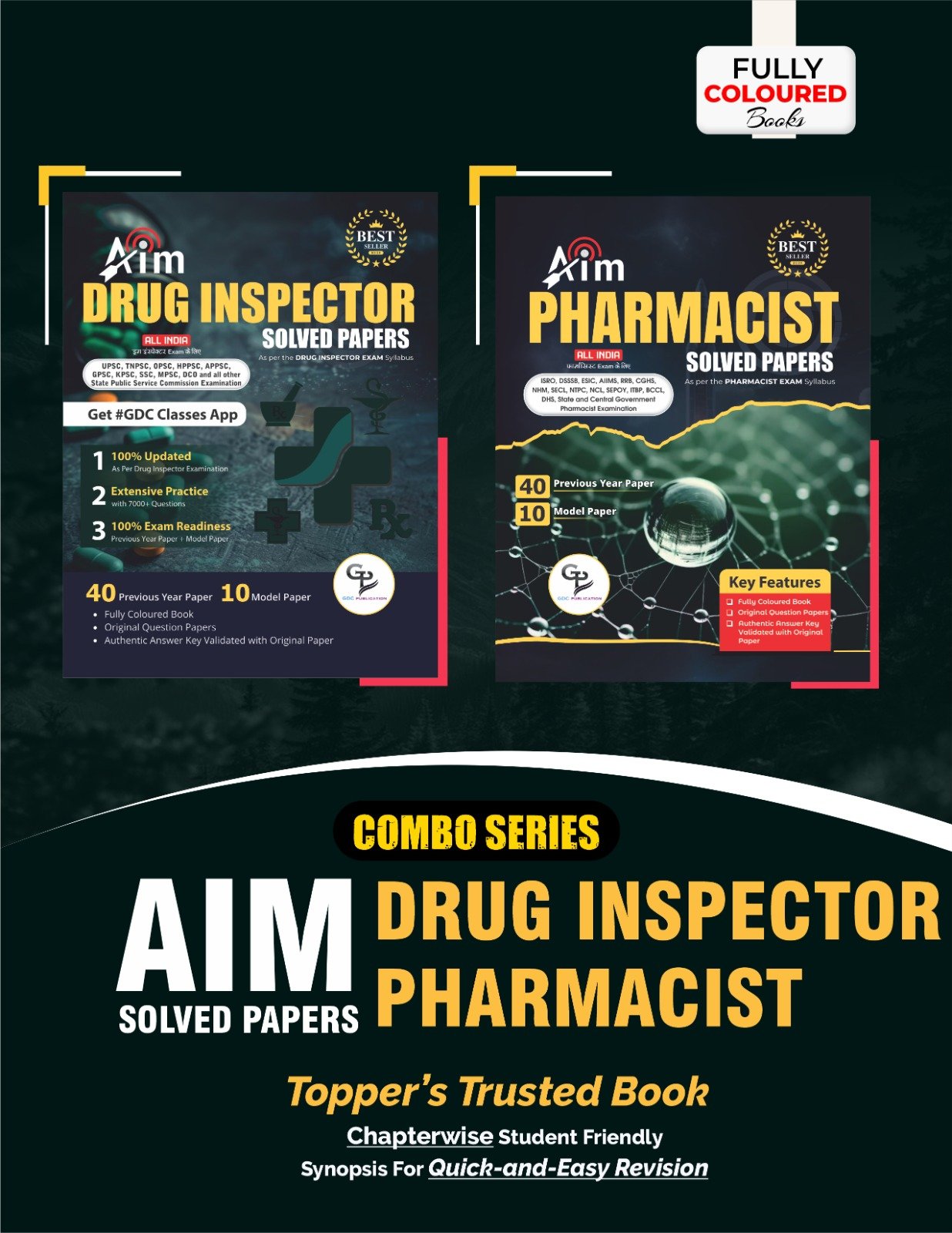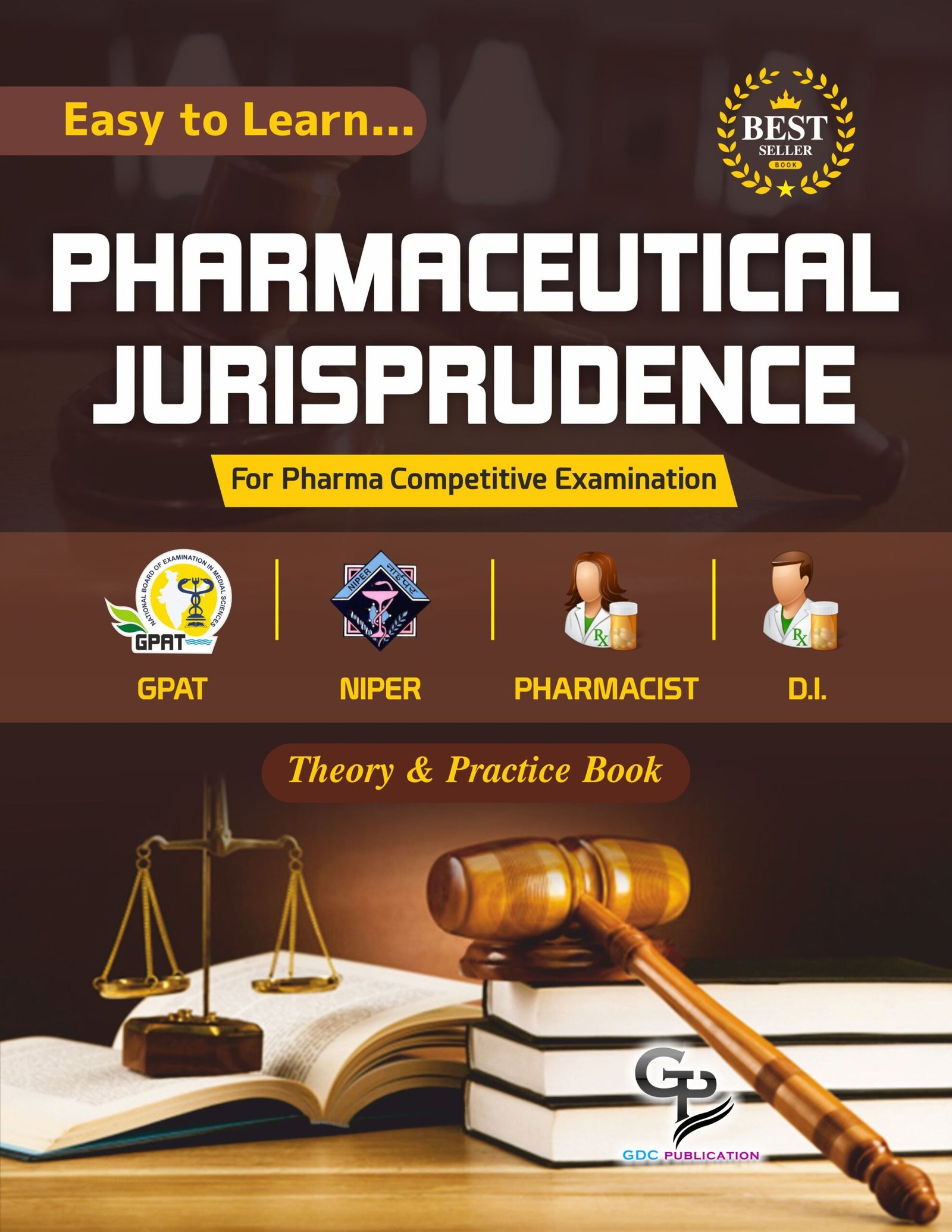


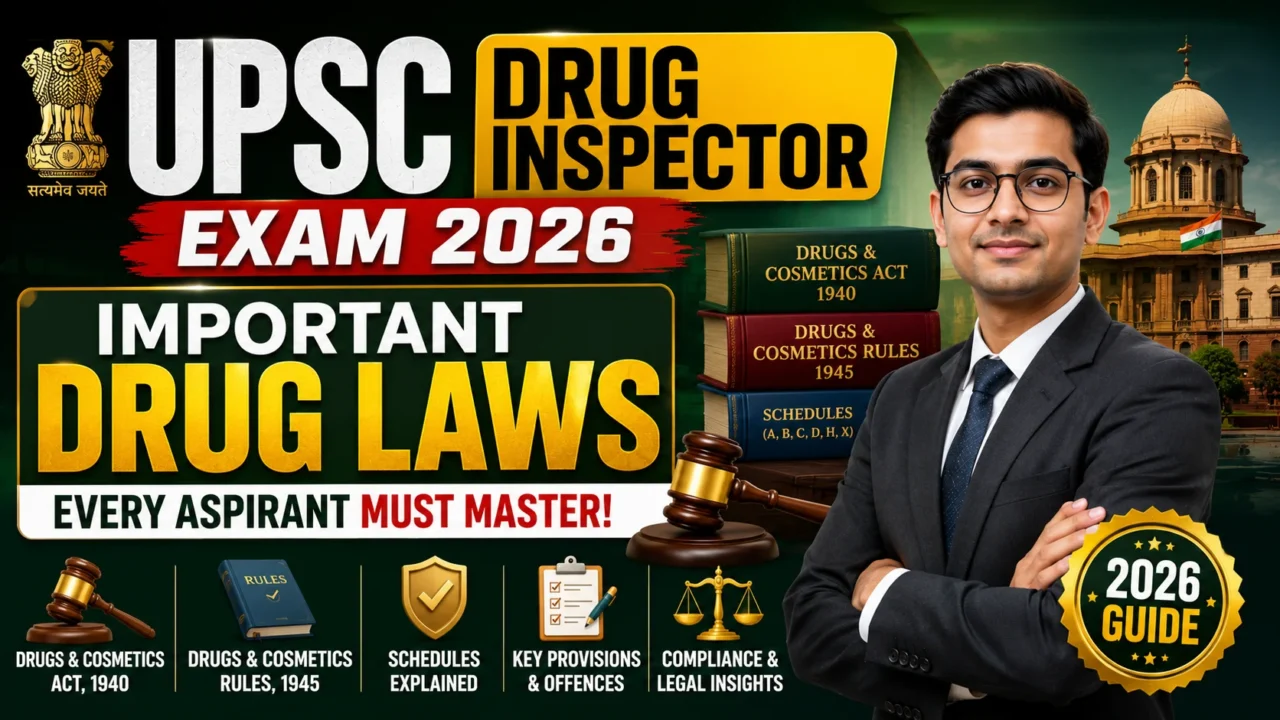

Preparing for the UPSC Drug Inspector Examination requires a strong understanding of India’s pharmaceutical laws. Questions from the Drugs and Cosmetics Act, 1940, Drugs and Cosmetics Rules, 1945, Pharmacy Act, 1948, and related legislation are asked regularly in the examination. Candidates who thoroughly study these laws gain a significant advantage in both the written exam and the interview.
This article covers the most important drug laws for the UPSC Drug Inspector Exam, along with key provisions, objectives, and preparation tips.
Why Drug Laws Are Important in UPSC Drug Inspector Exam?
The primary responsibility of a Drug Inspector is to ensure the quality, safety, and efficacy of drugs manufactured, sold, and distributed in India. Therefore, UPSC places considerable emphasis on pharmaceutical legislation.
Expected Weightage
- Drugs and Cosmetics Act, 1940
- Drugs and Cosmetics Rules, 1945
- Pharmacy Act, 1948
- Drugs and Magic Remedies Act, 1954
- NDPS Act, 1985
- Medical Devices Rules, 2017
- New Drugs and Clinical Trials Rules, 2019
- Cosmetics Rules, 2020
- Consumer Protection Act
- National Pharmaceutical Pricing Authority (NPPA)

1. Drugs and Cosmetics Act, 1940 (Most Important)
This is the most important law for the Drug Inspector examination.
Important Topics
- Objectives of the Act
- Definitions
- Standard Quality Drugs
- Misbranded Drugs
- Adulterated Drugs
- Spurious Drugs
- Manufacture and Sale
- Licensing Authority
- Government Analyst
- Drug Inspector
- Sampling Procedure
- Search and Seizure
- Penalties
- Appeals
- Offences and Punishments
Frequently Asked Sections
- Section 16
- Section 17
- Section 17A
- Section 17B
- Section 18
- Section 22
- Section 23
- Section 27
- Section 32
- Section 33
2. Drugs and Cosmetics Rules, 1945
Candidates should focus on:
- Licensing Rules
- Good Manufacturing Practices (Schedule M)
- GMP Requirements
- Schedule H
- Schedule H1
- Schedule X
- Schedule G
- Schedule C & C1
- Schedule K
- Schedule P
- Schedule Y
- Labeling Requirements
- Storage Conditions
- Recall Procedures
3. Pharmacy Act, 1948
Important areas include:
- Pharmacy Council of India (PCI)
- State Pharmacy Council
- Education Regulations
- Registration of Pharmacists
- Central Register
- Professional Ethics
- Removal from Register
4. Drugs and Magic Remedies (Objectionable Advertisements) Act, 1954
Study the following topics:
- Objectives
- Prohibited Advertisements
- Diseases covered under the Act
- Penalties
- Powers of Inspectors
5. Narcotic Drugs and Psychotropic Substances (NDPS) Act, 1985
Important Topics
- Objectives
- Controlled Substances
- Narcotic Drugs
- Psychotropic Substances
- Licensing
- Storage
- Transportation
- Punishments
- Bail Provisions
6. Medical Devices Rules, 2017
Prepare:
- Device Classification
- Licensing Procedure
- Import
- Manufacturing
- Clinical Investigation
- Quality Management System
- Risk Classification
7. New Drugs and Clinical Trials Rules, 2019
Important Topics
- Definition of New Drug
- Ethics Committee
- Clinical Trial Approval
- Compensation Rules
- Bioavailability (BA)
- Bioequivalence (BE)
- Investigator Responsibilities
8. Cosmetics Rules, 2020
Study:
- Import License
- Manufacturing License
- Labeling
- Quality Standards
- Cosmetics Registration
- Safety Requirements
9. Consumer Protection Act, 2019
Important Topics
- Consumer Rights
- Product Liability
- Deficiency
- Unfair Trade Practices
- Consumer Commissions
10. Drug Price Control Order (DPCO), 2013
Important Topics
- National Pharmaceutical Pricing Authority (NPPA)
- Ceiling Price
- Scheduled Drugs
- Non-Scheduled Drugs
- Price Monitoring
11. Biomedical Waste Management Rules, 2016
Focus on:
- Categories of Waste
- Color Coding
- Disposal
- Responsibilities of Healthcare Facilities
12. Clinical Establishments Act, 2010
Important Topics
- Registration
- Minimum Standards
- Regulation of Clinical Establishments
High-Scoring Schedules You Must Remember
- Schedule A
- Schedule C
- Schedule C(1)
- Schedule D
- Schedule E(1)
- Schedule F
- Schedule G
- Schedule H
- Schedule H1
- Schedule J
- Schedule K
- Schedule M
- Schedule M-I
- Schedule N
- Schedule P
- Schedule P1
- Schedule Q
- Schedule U
- Schedule U1
- Schedule V
- Schedule X
- Schedule Y
Important Authorities to Remember
- Central Drugs Standard Control Organization (CDSCO)
- Drug Controller General of India (DCGI)
- Central Drugs Laboratory (CDL)
- Pharmacy Council of India (PCI)
- National Pharmaceutical Pricing Authority (NPPA)
- State Drug Control Administration
Frequently Asked Drug Inspector Topics
- Licensing Procedure
- Drug Sampling Procedure
- Search & Seizure
- Labeling Requirements
- GMP
- GDP
- GLP
- GCP
- Recall Procedure
- Batch Recall
- Pharmacovigilance
- ADR Reporting
- Cosmetics Regulation
- Medical Devices
- Blood Banks
- Vaccine Storage
- Biological Products
30-Day Drug Laws Preparation Plan
Week 1
- Drugs and Cosmetics Act
- Important Sections
- Definitions
Week 2
- Drugs and Cosmetics Rules
- All Important Schedules
Week 3
- Pharmacy Act
- NDPS Act
- Magic Remedies Act
- Medical Devices Rules
Week 4
- Mock Tests
- Previous Year Questions
- Revision of Important Sections
- Important Case Studies
Preparation Tips
- Read the Bare Acts at least twice.
- Memorize all important schedules and sections.
- Practice previous year UPSC Drug Inspector questions.
- Prepare short notes for Acts and Rules.
- Revise penalties, licensing provisions, and powers of Drug Inspectors regularly.
- Solve mock tests focused on pharmaceutical legislation.
Conclusion
Drug laws form the backbone of the UPSC Drug Inspector Examination. A strong command of the Drugs and Cosmetics Act, 1940, Drugs and Cosmetics Rules, 1945, Pharmacy Act, 1948, NDPS Act, 1985, and other allied legislation will significantly improve your chances of success. Combine conceptual understanding with regular revision and previous year question practice to maximize your score.
Recommended Products