


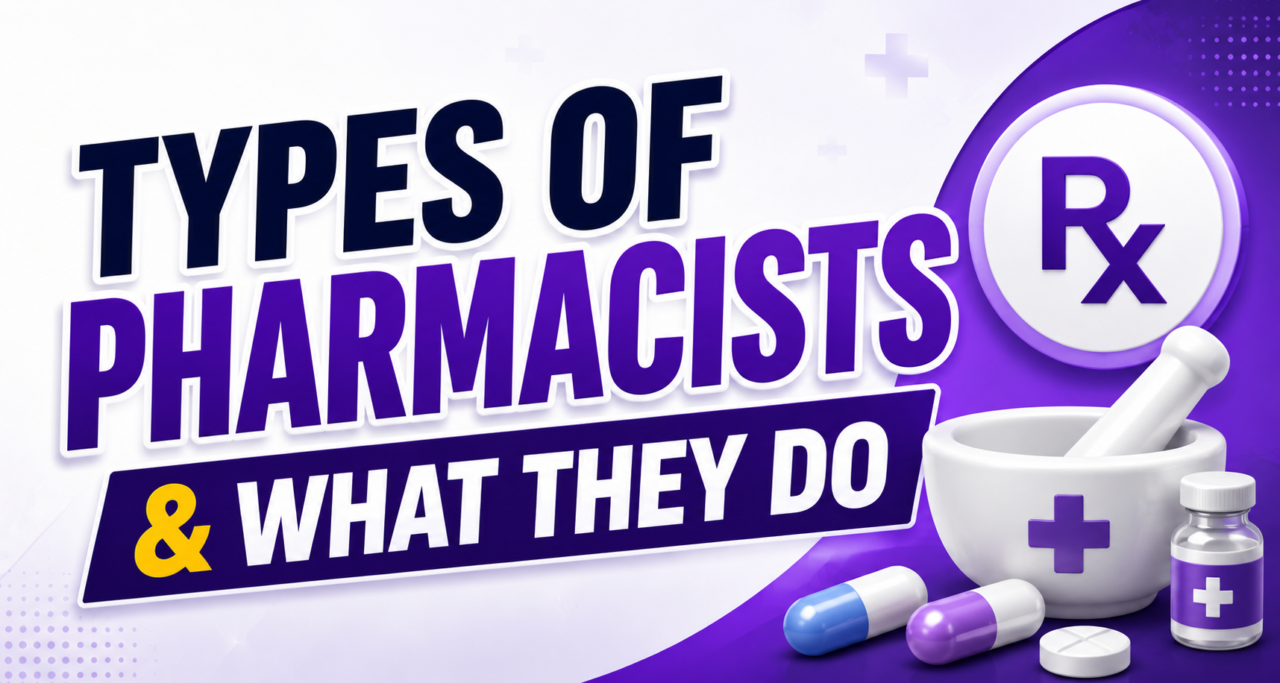

Pharmacists play a vital role in healthcare by ensuring patients receive the right medications, proper guidance, and safe treatment outcomes. While many people associate pharmacists with dispensing medicines at local pharmacies, the profession offers a wide range of career paths in hospitals, research, industry, and specialized healthcare services.
In this blog, let’s explore the different types of pharmacists and what they do.
1. Community Pharmacists
Community pharmacists are the most commonly recognized pharmacists. They work in retail pharmacies, drugstores, or independent pharmacies.
What They Do:
- Dispense prescription medications
- Explain how medicines should be used
- Advise patients about side effects and drug interactions
- Recommend over-the-counter medicines
- Provide vaccinations and health screenings
Skills Required:
- Strong communication skills
- Patient counseling
- Medication management
Community pharmacists are often the first healthcare professionals people consult for minor health concerns.

2. Hospital Pharmacists
Hospital pharmacists work directly within hospitals and healthcare centers alongside doctors and nurses.
What They Do:
- Prepare and dispense medications for admitted patients
- Monitor patient drug therapies
- Ensure correct dosage and medication safety
- Provide emergency medications
- Support intensive care and surgical teams
Work Environment:
- Hospitals
- Emergency care units
- Intensive Care Units (ICUs)
Their role is critical in ensuring patient safety during treatment and recovery.
3. Clinical Pharmacists
Clinical pharmacists specialize in direct patient care and medication therapy management.
What They Do:
- Review patient medical histories
- Optimize medication plans
- Work closely with physicians
- Manage chronic diseases like diabetes or hypertension
- Educate patients about treatment plans
Specializations:
- Cardiology
- Oncology
- Pediatrics
- Infectious diseases
Clinical pharmacists help improve treatment outcomes and reduce medication-related complications.
4. Industrial Pharmacists
Industrial pharmacists work in pharmaceutical companies involved in manufacturing and product development.
What They Do:
- Develop new medicines
- Ensure product quality and safety
- Conduct research and testing
- Oversee drug manufacturing processes
- Maintain regulatory compliance
Industries They Work In:
- Pharmaceutical manufacturing
- Biotechnology companies
- Research laboratories
They contribute significantly to innovation in healthcare and medicine production.
5. Research Pharmacists
Research pharmacists focus on discovering and testing new drugs and therapies.
What They Do:
- Conduct clinical trials
- Analyze drug effectiveness
- Study disease treatments
- Develop new pharmaceutical formulations
- Publish scientific research
Career Opportunities:
- Universities
- Research institutes
- Pharmaceutical R&D departments
Their work helps advance medical science and improve future healthcare treatments.
6. Consultant Pharmacists
Consultant pharmacists provide expert medication advice to healthcare facilities and patients.
What They Do:
- Review medication use in nursing homes
- Prevent medication errors
- Improve patient medication plans
- Train healthcare staff
Common Workplaces:
- Nursing homes
- Rehabilitation centers
- Long-term care facilities
They ensure safe and effective medication use for vulnerable patient groups.
7. Nuclear Pharmacists
Nuclear pharmacists specialize in radioactive medications used for diagnosis and treatment.
What They Do:
- Prepare radioactive drugs
- Ensure safe handling of nuclear materials
- Support diagnostic imaging procedures
- Work with radiologists and nuclear medicine specialists
Specialized Areas:
- PET scans
- Cancer diagnosis
- Imaging procedures
This is one of the most specialized and highly technical pharmacy fields.
8. Veterinary Pharmacists
Veterinary pharmacists focus on medications used for animals.
What They Do:
- Prepare medications for pets and livestock
- Adjust dosages based on animal species
- Advise veterinarians on drug therapies
- Compound custom animal medications
Workplaces:
- Veterinary hospitals
- Animal clinics
- Pharmaceutical companies
They help improve the health and wellbeing of animals.
9. Compounding Pharmacists
Compounding pharmacists create customized medications tailored to individual patient needs.
What They Do:
- Prepare special dosage forms
- Create allergy-free medications
- Adjust medicine flavors for children
- Produce custom creams, capsules, or liquids
Why It Matters:
Some patients need personalized medications that are not commercially available.
10. Online or Telepharmacy Pharmacists
With digital healthcare growing rapidly, telepharmacy pharmacists provide services remotely.
What They Do:
- Offer virtual medication counseling
- Review prescriptions online
- Assist patients through digital platforms
- Improve healthcare access in remote areas
Benefits:
- Convenience
- Faster support
- Better healthcare accessibility
Telepharmacy is becoming increasingly important in modern healthcare systems.
Why Pharmacists Are Important
Pharmacists are essential healthcare professionals who:
- Ensure safe medication use
- Prevent harmful drug interactions
- Educate patients
- Improve treatment outcomes
- Support doctors and healthcare teams
Their expertise directly impacts patient health and quality of care.
Final Thoughts
The pharmacy profession offers diverse and rewarding career opportunities beyond traditional retail pharmacies. Whether working in hospitals, research labs, pharmaceutical industries, or specialized medical fields, pharmacists play a key role in advancing healthcare and improving lives.
As healthcare continues to evolve, the demand for skilled pharmacists across different specialties will continue to grow.
If you’re considering a career in pharmacy, there are many exciting paths to explore based on your interests and skills.
Recommended Products