


Breakthrough Biomimetic Nanoparticles Could Revolutionize Pulmonary Fibrosis Therapy
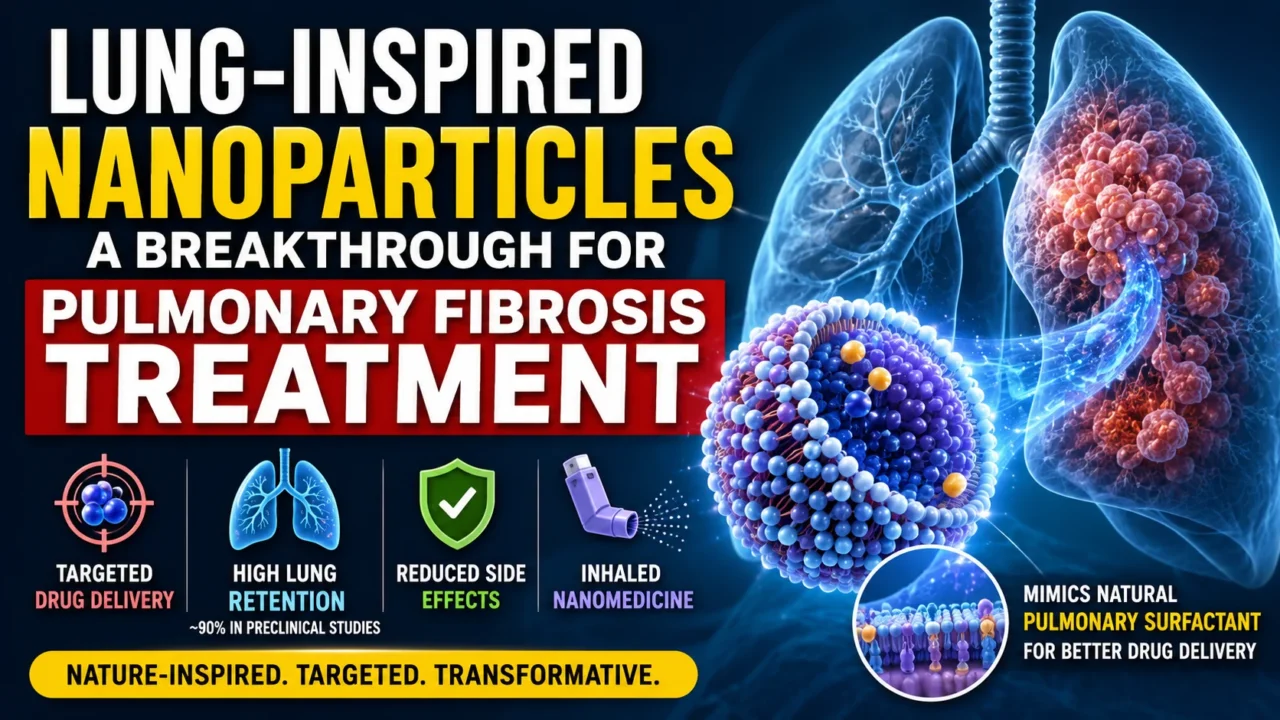
Researchers at the CIC biomaGUNE Center for Cooperative Research in Biomaterials have developed an innovative lung-inspired nanoparticle platform that may significantly improve the treatment of pulmonary fibrosis. The novel technology utilizes biomimetic nanoparticles that closely resemble the lung’s natural pulmonary surfactant, enabling targeted drug delivery directly to diseased lung tissues while minimizing systemic side effects.
This advancement represents a promising step toward more effective and safer therapies for patients suffering from chronic respiratory diseases.
What Is Pulmonary Fibrosis?
Pulmonary fibrosis is a progressive lung disease characterized by the accumulation of scar tissue (fibrosis) within the lungs. Over time, this scarring thickens and stiffens lung tissue, making it increasingly difficult for oxygen to pass into the bloodstream.
Common Symptoms of Pulmonary Fibrosis
| Symptom | Description |
|---|---|
| Shortness of Breath | Difficulty breathing, especially during physical activity |
| Chronic Dry Cough | Persistent cough without mucus production |
| Fatigue | Constant tiredness and reduced energy levels |
| Chest Discomfort | Tightness or pain in the chest |
| Reduced Exercise Tolerance | Difficulty performing daily activities |
Current treatment options are limited and often involve oral antifibrotic medications that can cause significant adverse effects, highlighting the need for improved therapeutic approaches.
What Are Lung-Inspired Nanoparticles?
The newly developed nanoparticles are designed to mimic pulmonary surfactant, a naturally occurring mixture of lipids and proteins that lines the tiny air sacs (alveoli) in the lungs.
Functions of Pulmonary Surfactant
| Function | Importance |
| Reduces Surface Tension | Prevents alveolar collapse during breathing |
| Facilitates Gas Exchange | Supports oxygen and carbon dioxide transport |
| Protects Lung Tissue | Acts as a protective barrier |
| Maintains Lung Function | Essential for normal respiratory activity |
By using surfactant-derived materials as drug carriers, researchers created a delivery system that the lungs naturally recognize and accept.

How the New Nanoparticles Work
The innovative nanomedicine platform delivers antifibrotic drugs directly into the lungs through inhalation.
Mechanism of Action
| Step | Process |
| 1 | Drug is encapsulated inside biomimetic nanoparticles |
| 2 | Nanoparticles are inhaled into the lungs |
| 3 | Particles distribute throughout lung tissue |
| 4 | Drug accumulates at fibrotic sites |
| 5 | Therapeutic effect occurs with minimal systemic exposure |
This targeted approach allows higher drug concentration at the disease site while reducing exposure to healthy organs.
Remarkable Lung Retention Achieved
One of the most significant findings from the study was the exceptional lung retention of the nanoparticles.
Preclinical Study Results
| Parameter | Result |
| Lung Retention After Inhalation | Approximately 90% |
| Drug Localization | Predominantly within lung tissue |
| Systemic Exposure | Significantly reduced |
| Therapeutic Efficiency | Enhanced drug concentration at disease site |
Researchers observed that nearly 90% of the administered nanomedicine remained in the lungs after inhalation, maximizing therapeutic effectiveness.
Why Is This Technology Important?
Traditional oral antifibrotic therapies often distribute drugs throughout the body, which can lead to unwanted side effects.
Advantages of Lung-Inspired Nanoparticles
| Benefit | Clinical Impact |
| Targeted Drug Delivery | Improved efficacy |
| Reduced Drug Dose | Lower toxicity risk |
| Enhanced Lung Retention | Prolonged therapeutic action |
| Reduced Side Effects | Better patient compliance |
| Improved Safety Profile | Potential for long-term treatment |
The technology could help patients receive effective treatment while minimizing adverse reactions.
Overcoming Natural Lung Defense Mechanisms
The respiratory system has several protective mechanisms that remove foreign particles before they can exert therapeutic effects.
Challenges in Pulmonary Drug Delivery
| Challenge | Impact |
| Mucociliary Clearance | Removes inhaled particles |
| Immune Surveillance | Eliminates foreign materials |
| Alveolar Macrophages | Engulf inhaled substances |
| Biological Barriers | Limit drug penetration |
Because the nanoparticles closely resemble natural pulmonary surfactant, they can better evade these defenses and distribute efficiently throughout the lungs.
Advanced Manufacturing Process
The researchers also developed an automated microfluidic production method that ensures consistent nanoparticle quality.
Manufacturing Advantages
| Feature | Benefit |
| Automated Production | Increased reproducibility |
| Uniform Particle Size | Consistent drug delivery |
| Stable Drug Encapsulation | Improved shelf life |
| Scalable Manufacturing | Supports commercialization |
| High Batch Consistency | Reliable therapeutic performance |
This reproducible synthesis process may accelerate future clinical translation and commercialization.
Potential Applications Beyond Pulmonary Fibrosis
The lung-inspired nanoparticle platform may have applications far beyond pulmonary fibrosis.
Future Respiratory Disease Applications
| Disease | Potential Benefit |
| Pulmonary Fibrosis | Targeted antifibrotic therapy |
| Chronic Obstructive Pulmonary Disease (COPD) | Localized anti-inflammatory treatment |
| Asthma | Improved inhaled drug delivery |
| Lung Infections | Targeted antimicrobial therapy |
| Lung Cancer | Precision chemotherapy delivery |
| Acute Respiratory Distress Syndrome (ARDS) | Enhanced therapeutic targeting |
Researchers believe the technology could serve as a versatile platform for a wide range of inhaled therapies.
Research Collaboration
The study was led by the Molecular and Functional Biomarkers Group at CIC biomaGUNE under the leadership of Professor Jesús Ruiz-Cabello.
Collaborating Institutions
- CIC biomaGUNE Center for Cooperative Research in Biomaterials
- Complutense University of Madrid
- Department of Biochemistry and Molecular Biology
The findings were published in the prestigious journal Advanced Healthcare Materials.
Future Outlook
Although additional preclinical and clinical studies are required before the technology becomes available to patients, the results demonstrate the tremendous potential of biomimetic nanomedicine in respiratory healthcare.
By combining nature-inspired design with advanced nanotechnology, researchers are creating smarter drug delivery systems capable of improving treatment outcomes while enhancing patient safety.
If successfully translated into clinical practice, lung-inspired nanoparticles could transform the management of pulmonary fibrosis and other chronic respiratory diseases, ushering in a new era of precision pulmonary medicine.
Key Takeaways
✅ Lung-inspired nanoparticles mimic natural pulmonary surfactant
✅ Approximately 90% lung retention achieved in preclinical studies
✅ Targeted delivery reduces systemic side effects
✅ Potential for lower drug doses and improved safety
✅ Scalable manufacturing process developed
✅ Applications may extend to multiple respiratory diseases
✅ Represents a promising advancement in biomimetic nanomedicine
Keywords: Pulmonary Fibrosis Treatment, Lung Inspired Nanoparticles, Biomimetic Nanomedicine, Pulmonary Surfactant Nanoparticles, Inhaled Drug Delivery, Respiratory Disease Treatment, Advanced Healthcare Materials, Nanoparticle Drug Delivery, Precision Medicine, Pulmonary Drug Delivery.
Recommended Products