


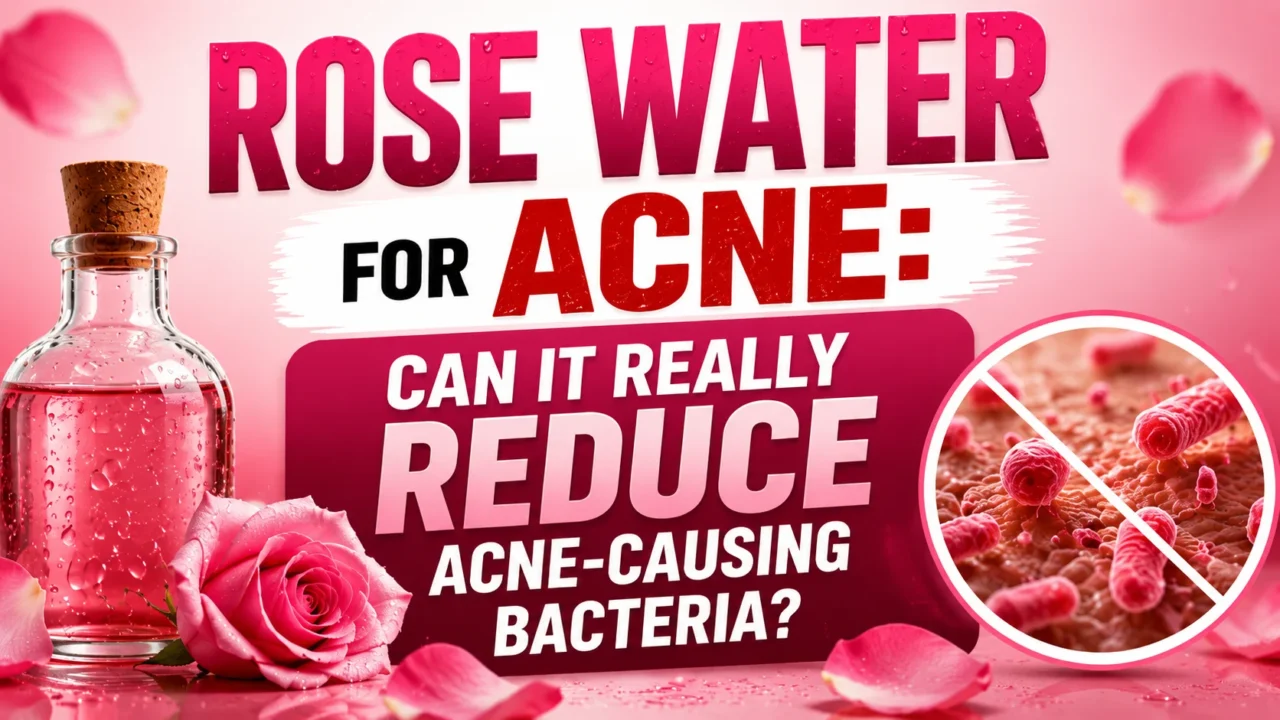

Rose water has been a popular skincare remedy for centuries. From traditional beauty rituals to modern skincare routines, it is often praised for its soothing, refreshing, and anti-inflammatory properties. Recently, claims have emerged suggesting that applying rose water to the skin may help reduce acne-causing bacteria and improve overall skin health.
But what does science actually say? Can rose water help fight acne, or is it just another skincare trend? Let’s explore the evidence.

What Is Rose Water?
Rose water is a natural liquid obtained through the distillation of rose petals, primarily from species such as Rosa damascena. It contains various bioactive compounds, including:
- Phenolic compounds
- Flavonoids
- Terpenes
- Antioxidants
- Essential oils
These compounds are believed to contribute to its therapeutic and cosmetic benefits.
Understanding Acne and Acne-Causing Bacteria
Acne is a common skin condition that occurs when hair follicles become clogged with oil, dead skin cells, and bacteria.
One of the major bacteria associated with acne is:
Cutibacterium acnes (formerly known as Propionibacterium acnes)
This bacterium can trigger inflammation, redness, and the formation of pimples, papules, and pustules.
Does Rose Water Have Antibacterial Properties?
Several scientific studies have found that rose extracts and rose essential oils possess antimicrobial activity against certain microorganisms.
Potential mechanisms include:
1. Phenolic Compounds
Phenolic compounds are natural plant chemicals known for their antimicrobial effects. They may help inhibit the growth of certain bacteria by disrupting bacterial cell membranes.
2. Antioxidant Activity
Rose water contains antioxidants that help combat oxidative stress and support healthy skin function.
3. Anti-Inflammatory Effects
Inflammation plays a significant role in acne development. Rose water may help reduce skin irritation, redness, and inflammation.
Can Rose Water Reduce Acne-Causing Bacteria?
Research suggests that rose extracts may exhibit antibacterial activity against some skin-related microorganisms. However, claims such as:
“Rose water reduces acne-causing bacteria by up to 60%”
should be interpreted cautiously unless supported by specific clinical studies.
While laboratory studies indicate antimicrobial potential, there is currently limited high-quality clinical evidence proving that regular rose water application alone can significantly reduce acne-causing bacteria in real-world conditions.
Potential Benefits of Rose Water for Acne-Prone Skin
Even if rose water is not a standalone acne treatment, it may offer several supportive benefits:
Soothes Irritated Skin
Its anti-inflammatory properties may help calm redness and irritation.
Maintains Skin Hydration
Rose water can provide gentle hydration without making the skin excessively oily.
Refreshes and Tones the Skin
Many people use rose water as a natural facial toner.
Supports Skin Barrier Function
Antioxidants may help protect the skin from environmental stressors.
May Reduce Mild Inflammation
Helpful for individuals with sensitive or mildly inflamed skin.
How to Use Rose Water Safely
If you want to incorporate rose water into your skincare routine:
As a Facial Mist
Spray directly onto clean skin.
As a Toner
Apply using a cotton pad after cleansing.
Mixed with Face Masks
Can be added to clay or herbal face masks.
Before Moisturizing
Use after cleansing and before applying moisturizer.
Precautions
Although generally safe, some individuals may experience:
- Skin irritation
- Allergic reactions
- Sensitivity to fragrance compounds
Always perform a patch test before applying any new skincare product to your face.
What Dermatologists Recommend for Acne
For moderate to severe acne, evidence-based treatments remain the gold standard:
- Benzoyl peroxide
- Salicylic acid
- Retinoids
- Azelaic acid
- Topical antibiotics (when prescribed)
- Oral medications for severe cases
Rose water may serve as a complementary skincare product but should not replace medically proven acne treatments.
Final Verdict
Rose water contains antioxidants, phenolic compounds, and anti-inflammatory substances that may support skin health and help soothe acne-prone skin. Some laboratory studies suggest antimicrobial activity, but current scientific evidence is insufficient to conclude that rose water alone can dramatically reduce acne-causing bacteria or cure acne.
For individuals with mild acne or sensitive skin, rose water can be a refreshing addition to a skincare routine. However, those with persistent or severe acne should seek advice from a dermatologist and follow evidence-based treatment options.
Recommended Products