


Cancer remains one of the world’s most challenging diseases, affecting millions of people every year. Scientists and researchers are constantly searching for safer and more effective treatments that can destroy cancer cells without harming healthy tissues. A recent breakthrough involving laser-activated nanoparticles has attracted global attention and may represent a major step forward in cancer treatment.

What Is the New Technology?
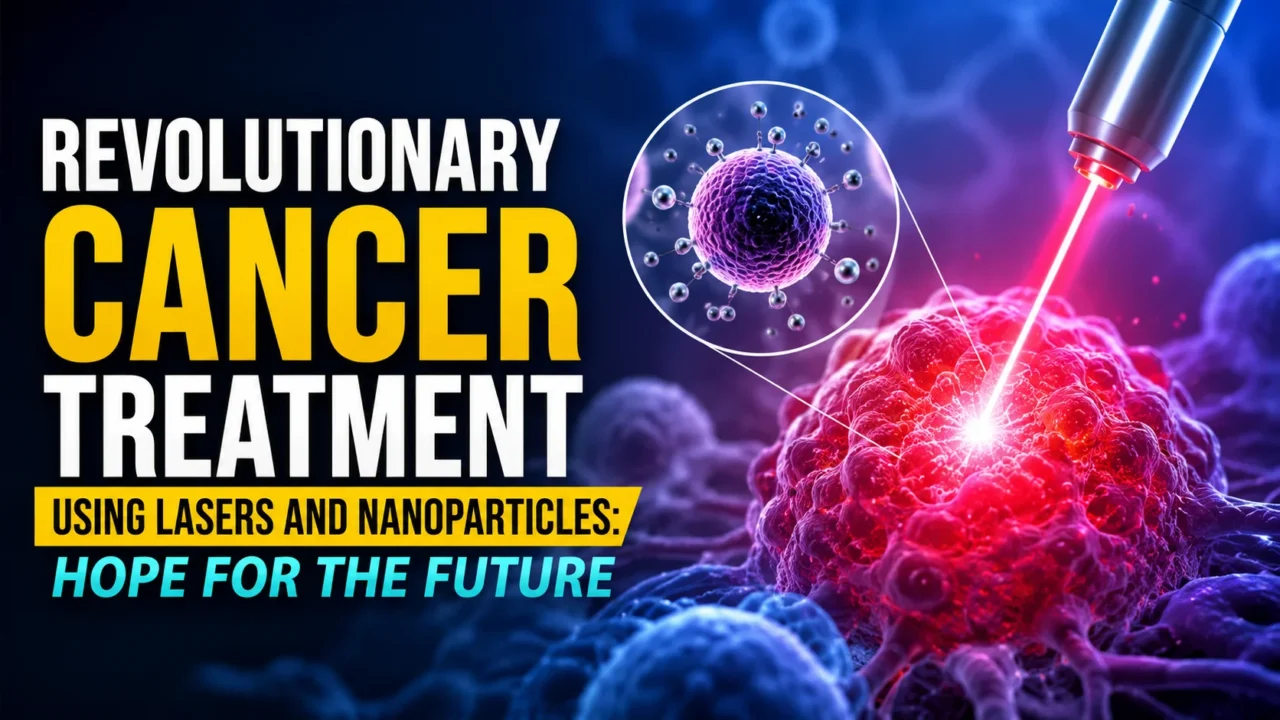
Researchers have developed a treatment method that combines nanoparticles with laser technology to target and destroy cancer tumors. Nanoparticles are extremely tiny particles, often thousands of times smaller than the width of a human hair. These particles can be engineered to travel directly to cancer cells.
Once the nanoparticles accumulate inside a tumor, doctors use a specialized laser to activate them. The activated nanoparticles generate heat that destroys cancer cells from within while minimizing damage to surrounding healthy tissue.
How Does the Treatment Work?
The process generally involves the following steps:
- Injection of Nanoparticles – Specially designed nanoparticles are introduced into the body.
- Targeting Cancer Cells – The particles naturally accumulate in tumor tissues.
- Laser Activation – A laser is directed toward the tumor area.
- Heat Generation – The nanoparticles absorb laser energy and convert it into heat.
- Tumor Destruction – The heat destroys cancer cells while reducing the impact on nearby healthy cells.
This technique is known as photothermal therapy.
Why Is This Discovery Important?
Traditional cancer treatments such as chemotherapy and radiation therapy can cause significant side effects because they may affect healthy cells along with cancer cells. The laser-nanoparticle approach offers several potential advantages:
- More precise targeting of tumors
- Reduced damage to healthy tissues
- Fewer side effects
- Faster recovery times
- Potentially improved treatment outcomes
Scientists believe this technology could improve the quality of life for many cancer patients.
Can Cancer Tumors Really Be Eliminated in 15 Days?
The viral claim that cancer tumors were completely eliminated in just 15 days comes from early laboratory and research findings. While the results are exciting, it is important to understand that:
- Research is still ongoing.
- Most studies have been conducted in controlled laboratory settings.
- Larger human clinical trials are needed.
- Results may vary depending on the type and stage of cancer.
Therefore, although the technology shows great promise, it should not yet be considered a guaranteed cure for all cancers.
The Role of Nanotechnology in Modern Medicine
Nanotechnology is becoming one of the most important fields in healthcare. Beyond cancer treatment, nanoparticles are being explored for:
- Targeted drug delivery
- Early disease detection
- Medical imaging enhancement
- Gene therapy
- Personalized medicine
These innovations could transform how diseases are diagnosed and treated in the future.
Challenges Ahead
Despite the encouraging results, researchers still face several challenges:
- Ensuring long-term safety of nanoparticles
- Scaling up production for widespread use
- Meeting regulatory approval requirements
- Conducting extensive clinical trials
- Reducing treatment costs
Addressing these challenges will be essential before the technology becomes widely available.
Conclusion
Laser-activated nanoparticle therapy represents an exciting advancement in cancer research. By combining the precision of lasers with the targeting capabilities of nanotechnology, scientists are developing treatments that may one day eliminate tumors more effectively and with fewer side effects than traditional methods.
While claims of completely eliminating cancer tumors in 15 days should be viewed cautiously until validated by large-scale clinical studies, the research highlights the incredible potential of modern medical science. As further studies continue, this innovative approach could play a significant role in the future of cancer treatment and offer new hope to patients worldwide.
Recommended Products