



New Discovery Could Transform the Treatment of Atherosclerosis and Reduce Heart Attack Risk
Heart disease remains the leading cause of death worldwide, with atherosclerosis responsible for millions of heart attacks and strokes each year. While traditional treatments primarily focus on lowering cholesterol levels, new research suggests that targeting specific immune mechanisms may offer a powerful new approach to preventing cardiovascular disease.
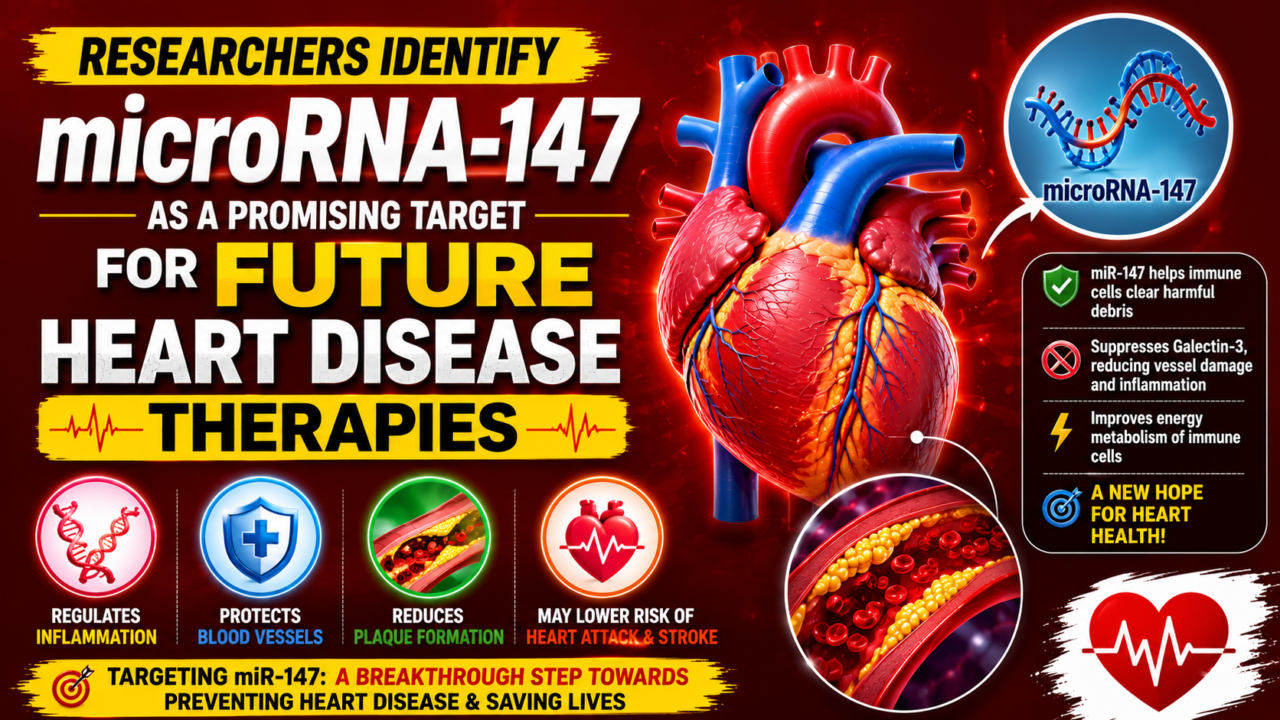
Scientists at Ludwig Maximilian University of Munich have identified a small regulatory molecule called microRNA-147 (miR-147) that appears to play a crucial role in controlling inflammation and plaque development inside arteries. The findings, recently published in the journal Circulation, could pave the way for innovative therapies designed to slow or even prevent the progression of atherosclerosis.
What Is Atherosclerosis?
Atherosclerosis is a chronic condition in which fatty deposits, cholesterol, and other substances accumulate within the walls of arteries.
Over time, these deposits form plaques that narrow blood vessels and restrict blood flow.
Common Consequences of Atherosclerosis
- Heart Attack
- Stroke
- Peripheral Artery Disease
- Coronary Artery Disease
- Sudden Cardiac Death
As plaques grow larger or become unstable, they can rupture and trigger life-threatening cardiovascular events.
Understanding the Role of Macrophages
Macrophages are specialized immune cells responsible for removing harmful substances, dead cells, and debris from the body.
For years, scientists believed that inflammation caused by macrophages mainly contributed to the progression of atherosclerosis. However, the new study reveals a far more complex picture.
Key Functions of Macrophages
| Function | Role |
|---|---|
| Remove Dead Cells | Prevent Plaque Growth |
| Clear Cellular Debris | Reduce Inflammation |
| Fight Infection | Immune Defense |
| Regulate Tissue Repair | Promote Healing |
The researchers discovered that some macrophages may actually help protect arteries from excessive plaque formation.

Advanced Imaging Reveals New Insights
Using cutting-edge four-dimensional microscopic imaging, researchers observed macrophage behavior within atherosclerotic plaques in mouse models.
The team focused on a specific group of immune cells known as non-foamy macrophages, also called lipid-free macrophages.
Unlike traditional “foamy” macrophages that accumulate cholesterol, these cells remain free of excess lipids and perform unique protective functions.
The Dual Nature of Inflammation
One of the study’s most important findings is that inflammation is not always harmful.
Protective Actions of Lipid-Free Macrophages
These macrophages help:
✅ Remove dead cells
✅ Clear damaged DNA
✅ Prevent cholesterol crystal formation
✅ Slow plaque progression
However, researchers also found that these same cells can sometimes damage the endothelium, the delicate inner lining of blood vessels, contributing to inflammation.
This discovery highlights the complex balance between beneficial and harmful immune responses in cardiovascular disease.
What Is microRNA-147 (miR-147)?
MicroRNAs are tiny RNA molecules that regulate gene activity within cells.
The study identified miR-147 as a critical regulator produced primarily by lipid-free macrophages.
Researchers found that miR-147 helps these cells function more efficiently while reducing their harmful effects on blood vessels.
Key Findings About miR-147
Benefits of miR-147
| Function | Impact |
|---|---|
| Improves Debris Clearance | Reduces Plaque Formation |
| Limits Cholesterol Crystal Growth | Stabilizes Plaques |
| Protects Endothelial Cells | Reduces Vascular Damage |
| Supports Cellular Energy Production | Improves Macrophage Function |
The researchers discovered that miR-147 enables macrophages to clear dead cellular material more effectively while minimizing inflammation.
What Happens When miR-147 Is Missing?
To understand the importance of miR-147, scientists examined what happened when the molecule was absent.
Results of miR-147 Deficiency
| Observation | Effect |
|---|---|
| Increased Plaque Formation | Higher Disease Risk |
| More Cellular Debris | Greater Inflammation |
| Higher Cholesterol Crystal Levels | Plaque Instability |
| Reduced Debris Removal | Accelerated Disease Progression |
Without miR-147, arteries developed significantly larger and more dangerous plaques.
The Connection Between miR-147 and Galectin-3
The study also uncovered a crucial biological pathway involving a protein called Galectin-3.
Researchers found that miR-147 suppresses the production of Galectin-3, which is known to:
- Damage endothelial cells
- Promote inflammation
- Disrupt cellular energy metabolism
- Reduce macrophage efficiency
When Galectin-3 levels rise, macrophages struggle to clear debris effectively, allowing plaque growth to accelerate.
Potential for Future Heart Disease Treatments
The discovery of miR-147 opens exciting possibilities for next-generation cardiovascular therapies.
Potential Therapeutic Strategies
Researchers believe future treatments could:
✅ Enhance miR-147 activity
✅ Mimic the effects of miR-147
✅ Block harmful Galectin-3 pathways
✅ Improve immune regulation inside arteries
✅ Slow or prevent plaque progression
Such approaches could complement existing cholesterol-lowering therapies and provide a more targeted method of treating atherosclerosis.
Why This Research Is Important
Current cardiovascular treatments focus primarily on:
- Lowering LDL cholesterol
- Reducing blood pressure
- Preventing blood clots
While these strategies have significantly improved outcomes, many patients continue to experience heart attacks and strokes.
The new findings suggest that controlling specific inflammatory pathways may offer an additional layer of protection.
Traditional vs Emerging Approaches
| Traditional Treatments | Future Approaches |
|---|---|
| Cholesterol Reduction | Immune Regulation |
| Blood Pressure Control | microRNA-Based Therapies |
| Antiplatelet Drugs | Precision Inflammation Management |
| Lifestyle Changes | Targeted Cellular Modulation |
Expert Perspectives
The researchers emphasize that inflammation in atherosclerosis is far more nuanced than previously understood.
Rather than simply suppressing inflammation, future therapies may selectively enhance beneficial immune functions while blocking harmful ones.
This precision-medicine approach could lead to safer and more effective treatments for cardiovascular disease.
Future Research Directions
Although the results are highly encouraging, additional studies are needed before miR-147-based therapies become available for patients.
Future research will focus on:
- Human clinical trials
- Drug development strategies
- Long-term safety evaluation
- Optimal delivery methods
- Combination therapy approaches
If successful, these studies could lead to entirely new classes of cardiovascular medicines.
Conclusion
The discovery of microRNA-147 (miR-147) represents a significant breakthrough in understanding the immune mechanisms behind atherosclerosis. Researchers have shown that this small RNA molecule helps lipid-free macrophages clear harmful debris, reduce cholesterol crystal formation, and protect blood vessels from damage.
By targeting miR-147 and related inflammatory pathways, future therapies may offer a powerful new strategy for preventing plaque growth, reducing the risk of heart attacks and strokes, and improving cardiovascular health worldwide.
As scientists continue to explore the complex relationship between immunity and heart disease, miR-147 could emerge as one of the most promising therapeutic targets in the fight against cardiovascular disease.
Recommended Products