

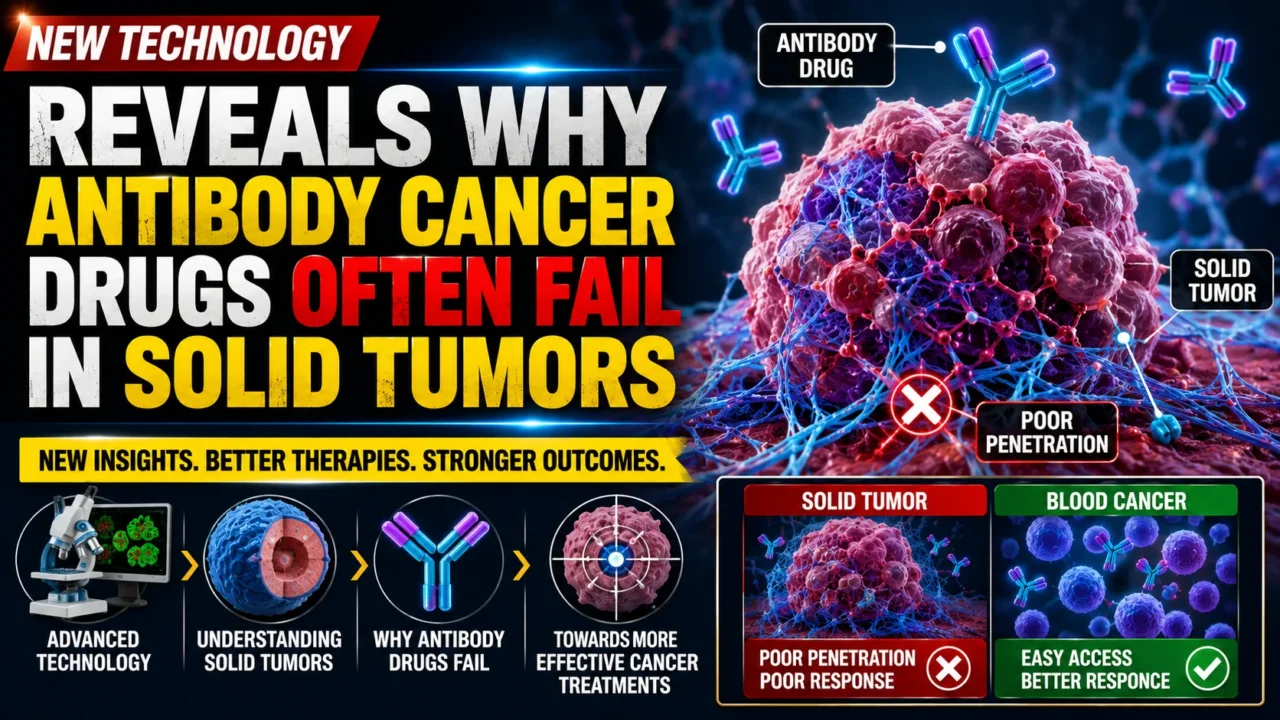

A groundbreaking new technology is helping scientists understand one of the biggest challenges in cancer treatment: why many antibody-based cancer drugs that work well in the laboratory often fail when used against solid tumors in patients.
Researchers have developed an advanced imaging and analysis platform that allows them to track how therapeutic antibodies move through tumor tissues in real time. The findings provide new insights into the barriers that prevent cancer drugs from reaching all tumor cells effectively, potentially paving the way for more successful cancer treatments in the future.
Understanding Antibody Cancer Drugs
Antibody-based therapies are among the most promising tools in modern oncology. These drugs are designed to recognize and attach to specific proteins found on cancer cells, helping the immune system destroy tumors while minimizing damage to healthy tissues.
Several antibody therapies have transformed the treatment of cancers such as breast cancer, lymphoma, and leukemia. However, their success against solid tumors—including lung, pancreatic, liver, and colorectal cancers—has often been limited.
Why Do These Drugs Fail?
The new research reveals that the problem is not always the drug itself but the complex structure of solid tumors.
Scientists found that solid tumors create physical and biological barriers that prevent antibodies from penetrating deep into the cancer mass. While drugs may successfully reach cells near blood vessels, many cancer cells located farther inside the tumor remain untouched.
Key barriers include:
- Dense tumor tissue
- Abnormal blood vessel networks
- High internal tumor pressure
- Limited drug diffusion
- Complex tumor microenvironments
As a result, only a fraction of the administered antibody drug may actually reach its target.
The Role of the New Technology
The newly developed technology enables researchers to visualize how antibody drugs distribute within tumors at an unprecedented level of detail.
Using advanced imaging methods, scientists can:
- Track drug movement in real time
- Measure how deeply antibodies penetrate tumors
- Identify regions receiving insufficient treatment
- Analyze interactions between drugs and cancer cells
This approach helps researchers pinpoint exactly where and why treatment effectiveness is lost.

A Major Step Toward Better Cancer Therapies
The discovery could significantly improve the design of next-generation cancer drugs.
Researchers believe the findings may help:
- Develop antibodies that penetrate tumors more effectively
- Optimize dosing strategies
- Improve combination therapies
- Enhance personalized cancer treatment approaches
- Increase the success rate of antibody-based therapies
Understanding the delivery problem could lead to treatments that are both more effective and less toxic for patients.
Implications for Future Cancer Research
Cancer experts view this breakthrough as an important step toward overcoming one of oncology’s most persistent challenges. By revealing how tumors physically block therapeutic antibodies, the technology provides valuable information that could guide future drug development.
The findings may also benefit emerging treatments such as:
- Antibody-drug conjugates (ADCs)
- Bispecific antibodies
- Immunotherapies
- Targeted biologic therapies
As researchers continue to refine these technologies, patients with difficult-to-treat solid tumors may ultimately gain access to more effective treatment options.
Conclusion
The development of this innovative imaging technology offers a clearer understanding of why antibody cancer drugs frequently struggle against solid tumors. By uncovering the barriers that prevent drugs from reaching their targets, scientists are taking a major step toward creating more effective cancer therapies.
As research advances, this breakthrough could help transform the treatment of solid tumors and improve outcomes for millions of cancer patients worldwide.
Recommended Products