



A New Era in Cancer Therapy
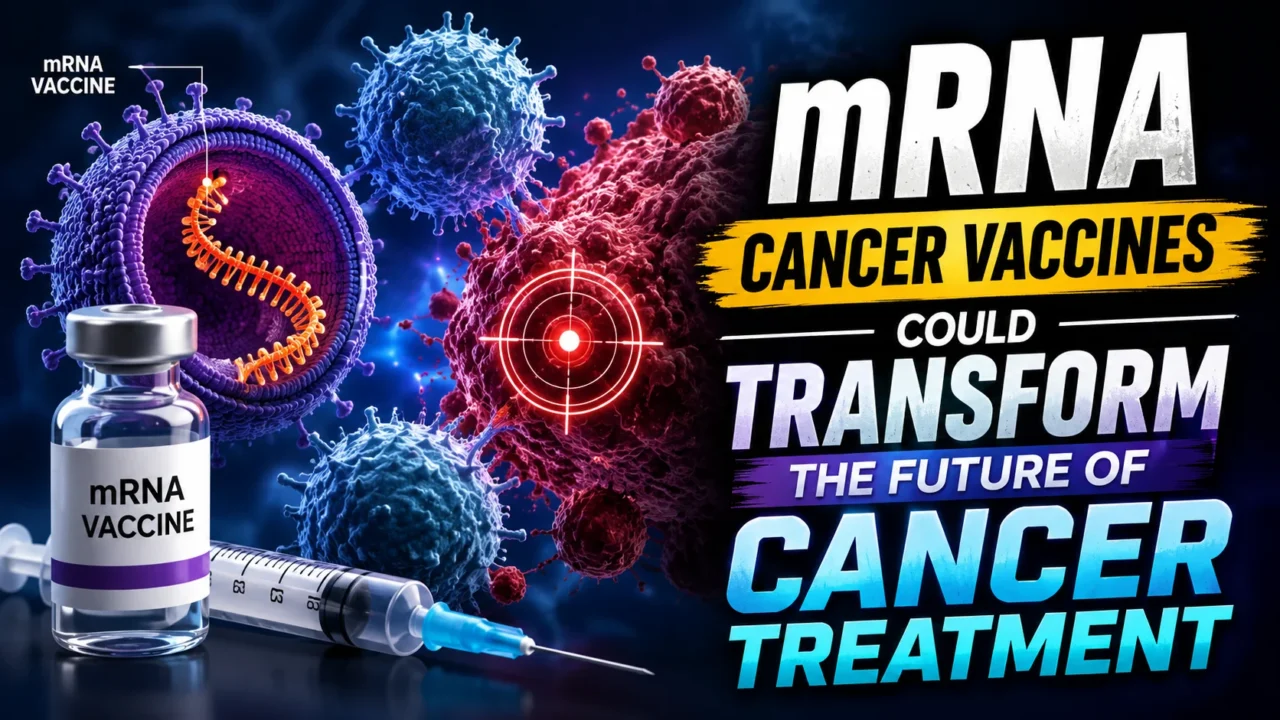
Medical science is entering a revolutionary phase where medicines may function more like biological software than traditional drugs. Among the most promising innovations is mRNA vaccine technology, which has already demonstrated its potential during the COVID-19 pandemic and is now being explored as a powerful tool in the fight against cancer.
Researchers believe that future mRNA-based cancer vaccines could help the body’s immune system identify, target, and destroy cancer cells with unprecedented precision.

What Are mRNA Vaccines?
Messenger RNA (mRNA) vaccines contain genetic instructions that teach cells how to produce specific proteins. These proteins trigger the immune system to recognize and respond to a particular threat.
Unlike conventional vaccines that use weakened or inactive pathogens, mRNA vaccines provide the body with temporary instructions to generate an immune response.
This technology offers several advantages:
- Rapid development and manufacturing
- High precision targeting
- Adaptability to different diseases
- Potential for personalized treatment
How mRNA Vaccines May Help Fight Cancer
Cancer cells often develop ways to hide from the immune system. As a result, the body’s natural defenses may fail to recognize and eliminate them.
Researchers are developing mRNA cancer vaccines that can:
- Teach immune cells to recognize cancer-specific markers
- Strengthen the immune response against tumors
- Help the body distinguish cancer cells from healthy cells
- Reduce damage to normal tissues
The goal is to train the immune system to act as a highly targeted cancer-fighting force.
Why This Approach Is Different
Traditional cancer treatments such as chemotherapy and radiation therapy can affect both cancerous and healthy cells, leading to significant side effects.
mRNA-based cancer vaccines aim to provide:
Precision Treatment
The immune system can be programmed to identify specific cancer targets.
Personalized Medicine
Vaccines may be customized based on the genetic characteristics of an individual’s tumor.
Reduced Side Effects
Healthy tissues may experience less damage compared to conventional therapies.
Long-Term Immune Memory
The immune system could potentially remember cancer markers and help prevent recurrence.
Programmable Biology: The Future of Medicine
Scientists often describe mRNA technology as a form of programmable biology.
Instead of simply treating symptoms, these therapies provide biological instructions that help cells perform specific tasks.
Future applications may include:
- Cancer treatment
- Autoimmune disease management
- Infectious disease prevention
- Genetic disorder therapies
- Regenerative medicine
This shift could fundamentally change how diseases are treated in the coming decades.
Current Research and Clinical Trials
Several biotechnology companies and research institutions worldwide are conducting clinical trials involving mRNA cancer vaccines.
Researchers are investigating their use against:
- Melanoma
- Lung cancer
- Breast cancer
- Colorectal cancer
- Pancreatic cancer
- Prostate cancer
Early trial results have shown encouraging signs, particularly when mRNA vaccines are combined with immunotherapy treatments.
Challenges Still Ahead
Despite promising progress, several challenges remain:
- Identifying the best cancer-specific targets
- Ensuring long-lasting immune responses
- Reducing treatment costs
- Scaling production for widespread use
- Completing large-scale clinical trials
Additional research is needed before these therapies become standard cancer treatments.
Potential Impact on Healthcare
If successful, mRNA cancer vaccines could revolutionize oncology by shifting treatment from broadly attacking cancer cells to intelligently directing the immune system.
Potential benefits include:
- Earlier intervention
- Improved survival rates
- Personalized therapies
- Better patient outcomes
- Reduced treatment-related toxicity
Conclusion
mRNA vaccine technology represents one of the most exciting developments in modern medicine. By teaching the immune system to recognize and attack cancer cells more effectively, researchers hope to create highly targeted treatments that are safer, smarter, and more personalized than many existing therapies.
Although these vaccines are still under development and clinical evaluation, they have the potential to transform cancer from a devastating disease into a more manageable biological challenge. The coming years may mark a significant turning point in the future of cancer treatment.
Recommended Products