


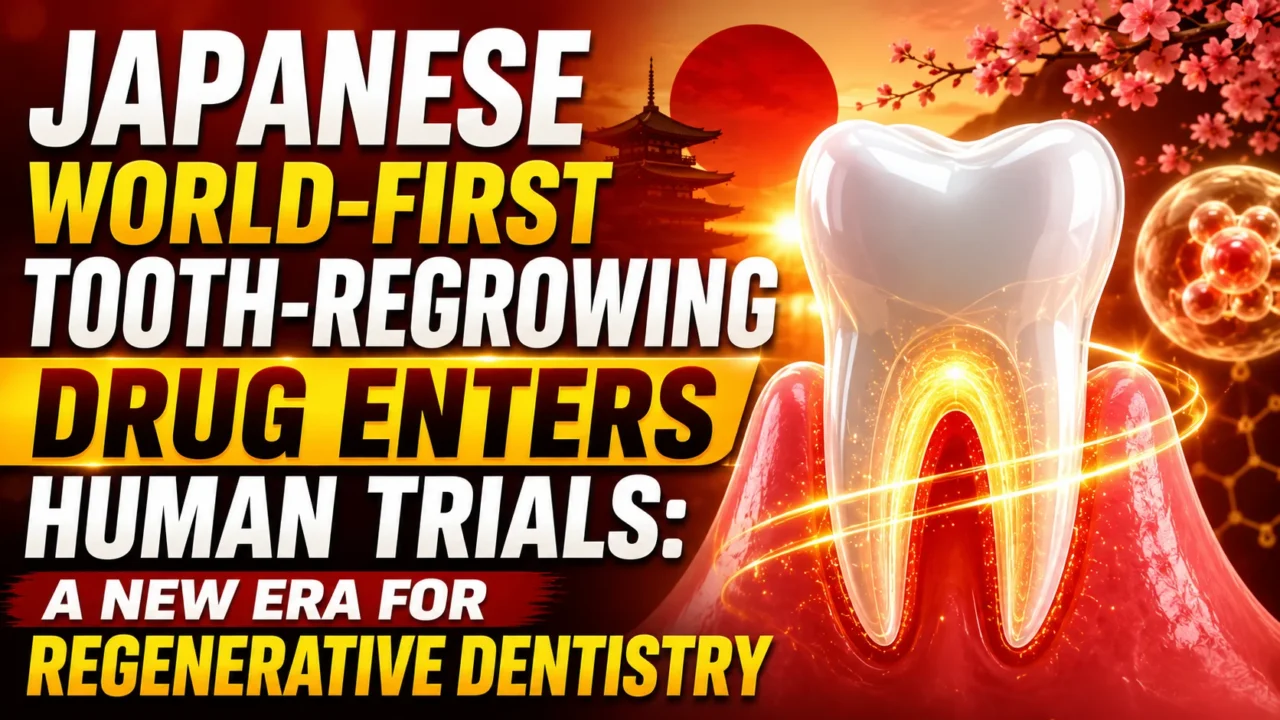

Imagine a future where missing teeth can grow back naturally instead of being replaced with dentures, bridges, or dental implants. What once sounded like science fiction is now moving closer to reality. Japan has launched the world’s first human clinical trial of a tooth-regrowing drug, marking a potentially revolutionary breakthrough in regenerative medicine and dentistry.
This innovative treatment aims to stimulate the body’s natural ability to grow new teeth, offering hope to millions of people worldwide who suffer from tooth loss due to injury, disease, aging, or congenital conditions.

What Is the Tooth-Regrowing Drug?
The experimental drug, known as TRG035, is being tested by researchers at Kyoto University Hospital and Kitano Hospital in Japan. Unlike traditional dental treatments that replace missing teeth with artificial alternatives, this drug seeks to regenerate real, natural teeth.
Researchers believe the treatment works by blocking a protein called USAG-1 (Uterine Sensitization-Associated Gene-1), which plays a key role in suppressing tooth development. By inhibiting this protein, dormant tooth buds may be activated, allowing new teeth to grow naturally.
Why Is This Research Important?
Tooth loss affects billions of people globally and can significantly impact:
- Oral health
- Nutrition
- Speech
- Self-confidence
- Quality of life
Current treatment options such as:
- Dentures
- Dental implants
- Bridges
can be expensive, invasive, and may require ongoing maintenance. A biological solution that allows natural tooth regeneration could completely transform dental care.
Human Clinical Trials Have Begun
Japan has officially initiated Phase I clinical trials to evaluate:
Primary Objectives
- Safety of the drug
- Appropriate dosage levels
- Potential side effects
Trial Participants
The initial study focuses on healthy adult volunteers before expanding to patients with congenital tooth loss and other dental conditions.
Researchers will closely monitor participants to determine whether the treatment is safe enough for larger clinical studies.
How Does Tooth Regeneration Work?
Humans typically develop two sets of teeth:
- Primary (baby) teeth
- Permanent teeth
However, scientific studies suggest that humans may possess dormant tooth-forming tissues that remain inactive throughout life.
The tooth-regrowing drug is designed to:
- Reactivate dormant tooth buds
- Promote natural tooth development
- Encourage biological tooth regeneration
If successful, patients could potentially grow entirely new natural teeth instead of relying on artificial replacements.
Potential Benefits of Tooth Regeneration
Natural Teeth Replacement
Patients may regrow their own teeth rather than receiving prosthetic devices.
Improved Oral Function
Naturally regenerated teeth could offer better chewing efficiency and comfort.
Reduced Dependence on Implants
The need for dental implants and dentures may decrease significantly.
Long-Term Cost Savings
Although the treatment may initially be expensive, it could reduce long-term dental expenses.
Better Quality of Life
Patients with congenital tooth loss or severe dental conditions could benefit immensely.
Who Could Benefit?
The technology may help:
People with Congenital Tooth Loss
Some individuals are born without certain permanent teeth due to genetic conditions.
Accident Victims
Patients who lose teeth because of trauma may be able to regenerate them naturally.
Elderly Individuals
Age-related tooth loss could potentially be reversed.
Patients with Severe Dental Diseases
Those suffering from extensive tooth damage may benefit from regenerative treatment.
Challenges Ahead
While the early results are promising, several challenges remain:
Safety Verification
Researchers must confirm that the drug does not cause unintended tissue growth.
Long-Term Effectiveness
Scientists need to determine whether regenerated teeth remain healthy and functional over time.
Regulatory Approval
The drug must pass multiple clinical trial phases before receiving approval for public use.
Accessibility and Cost
Making the treatment affordable and widely available will be essential.
What Could This Mean for the Future of Dentistry?
If successful, TRG035 could become one of the most significant advancements in dental medicine in decades. The ability to regrow human teeth naturally may lead to:
- A shift from replacement dentistry to regenerative dentistry
- Reduced dependence on artificial dental prosthetics
- Improved treatment outcomes for millions of patients
- New regenerative therapies for other tissues and organs
Experts believe this breakthrough could redefine how dentists approach tooth loss in the future.
Conclusion
Japan’s pioneering human trial of the tooth-regrowing drug TRG035 represents a major milestone in regenerative medicine. By targeting the USAG-1 protein and stimulating natural tooth development, researchers hope to create a treatment capable of regenerating real human teeth.
Although further testing is needed before the therapy becomes commercially available, the launch of human trials marks an exciting step toward a future where lost teeth can be naturally restored rather than artificially replaced.
For millions of people worldwide, the dream of growing new teeth may soon become a reality.
Recommended Products