



Introduction
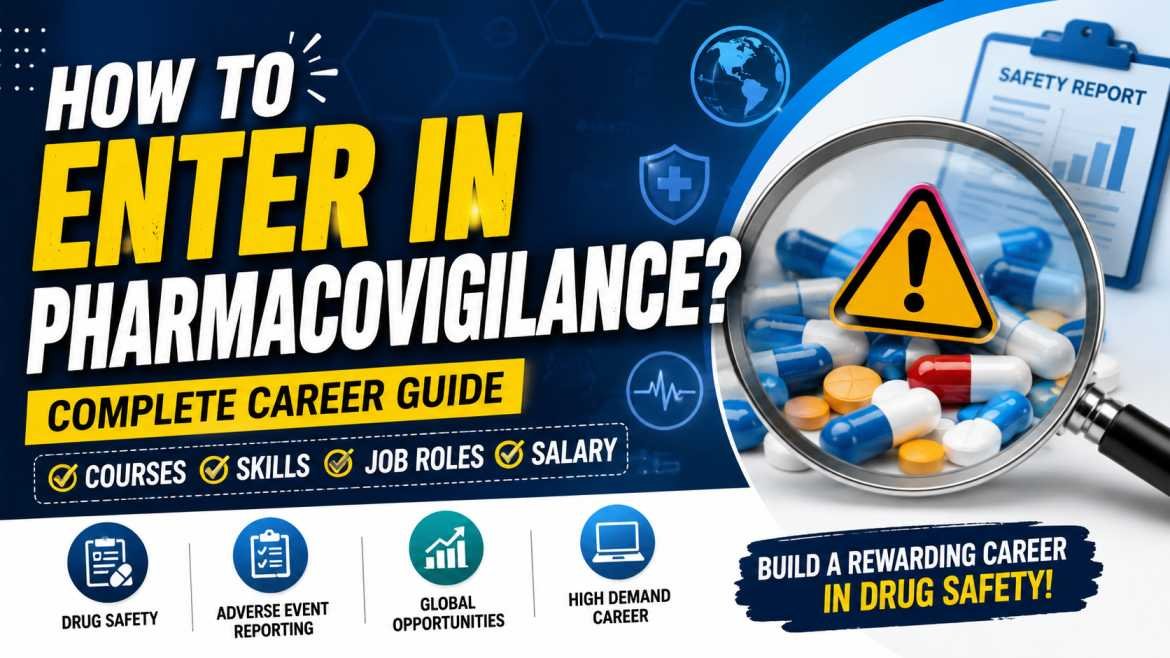
The healthcare and pharmaceutical industries are growing rapidly, and one of the most promising career options today is Pharmacovigilance (PV). Pharmacovigilance plays a vital role in ensuring drug safety and protecting patients from adverse drug reactions (ADRs).
If you are a pharmacy, life science, nursing, or medical graduate and wondering how to build a career in pharmacovigilance, this guide will help you understand the field, required skills, courses, job roles, and career opportunities.
What is Pharmacovigilance?
Pharmacovigilance is the science of monitoring, detecting, assessing, and preventing adverse effects or any drug-related problems.
The main goal of pharmacovigilance is to ensure that medicines available in the market are safe and effective for patients.
Key Responsibilities in Pharmacovigilance
- Monitoring drug safety data
- Reporting adverse drug reactions (ADRs)
- Evaluating side effects of medicines
- Maintaining drug safety databases
- Preparing safety reports
- Ensuring regulatory compliance
Why Choose Pharmacovigilance as a Career?
Pharmacovigilance offers excellent career growth and global opportunities.
Benefits of a Career in Pharmacovigilance
- High demand in pharmaceutical companies
- Good salary packages
- Opportunities to work internationally
- Safer and less physically demanding compared to clinical jobs
- Career growth in drug safety and regulatory affairs
- Work-from-home opportunities in some companies

Eligibility for Pharmacovigilance
Candidates from the following backgrounds can enter pharmacovigilance:
Preferred Educational Qualifications
- B.Pharm
- M.Pharm
- Pharm.D
- BSc / MSc Life Sciences
- Nursing
- MBBS
- Biotechnology graduates
Among these, pharmacy graduates are highly preferred.
Skills Required for Pharmacovigilance
To succeed in pharmacovigilance, you need both technical and soft skills.
Important Skills
- Good knowledge of medicines and side effects
- Medical terminology understanding
- Attention to detail
- Communication skills
- Data analysis ability
- Report writing skills
- Computer proficiency
- Knowledge of global regulations
How to Enter Into Pharmacovigilance
1. Complete Your Graduation
A degree in pharmacy or life sciences is the first step toward entering this field.
2. Learn Pharmacovigilance Basics
Understand concepts like:
- Adverse Drug Reactions (ADR)
- ICSR (Individual Case Safety Report)
- Signal Detection
- Drug Safety Reporting
- Regulatory Guidelines
3. Join a Pharmacovigilance Course
Professional training improves job opportunities.
Topics Covered in PV Courses
- Case processing
- MedDRA coding
- Argus safety database
- Narrative writing
- Signal management
- Clinical research basics
Best Courses for Pharmacovigilance
You can pursue:
- Diploma in Pharmacovigilance
- Certificate Courses in Drug Safety
- Advanced Pharmacovigilance Training Programs
- Online PV Certification Courses
Many institutes also provide internship opportunities.
Pharmacovigilance Job Roles
There are multiple job profiles available in this sector.
Common Pharmacovigilance Positions
| Job Role | Responsibilities |
|---|---|
| Drug Safety Associate | Process adverse event cases |
| PV Associate | Review and manage safety data |
| Medical Reviewer | Analyze clinical safety reports |
| Signal Detection Specialist | Identify safety risks |
| Regulatory Associate | Ensure compliance with regulations |
Top Companies Hiring for Pharmacovigilance
Many multinational companies recruit freshers and experienced professionals.
Popular Companies
- Tata Consultancy Services
- Accenture
- Cognizant
- IQVIA
- Parexel
- Novartis
- Pfizer
Pharmacovigilance Salary in India
Salary depends on qualifications, skills, and experience.
Average Salary
- Freshers: ₹2.5 LPA – ₹4.5 LPA
- 2–5 Years Experience: ₹5 LPA – ₹8 LPA
- Senior Professionals: ₹10 LPA+
International opportunities offer even higher salaries.
Tips to Get a Pharmacovigilance Job
Practical Tips
- Improve medical terminology knowledge
- Learn safety databases like Argus
- Build strong communication skills
- Attend internships and workshops
- Create a professional resume
- Apply through LinkedIn and company portals
Future Scope of Pharmacovigilance
The demand for drug safety professionals is increasing due to:
- Growth of pharmaceutical companies
- Increasing clinical trials
- Strict global drug safety regulations
- Rising awareness about patient safety
Pharmacovigilance is expected to remain one of the fastest-growing healthcare careers.
Conclusion
Pharmacovigilance is an excellent career option for pharmacy and life science graduates who want to work in the pharmaceutical industry. With the right skills, certification, and practical training, you can build a successful career in drug safety and regulatory compliance.
If you are passionate about healthcare, patient safety, and research, pharmacovigilance can offer a stable, rewarding, and globally recognized career path.
Frequently Asked Questions (FAQs)
Is pharmacovigilance good for freshers?
Yes, many companies hire freshers for entry-level drug safety roles.
Can B.Pharm students enter pharmacovigilance?
Absolutely. B.Pharm graduates are among the most preferred candidates.
Is coding required in pharmacovigilance?
No, coding is generally not required.
Which is better: Clinical Research or Pharmacovigilance?
Both are good fields, but pharmacovigilance offers stable growth and strong demand.
Can I work abroad in pharmacovigilance?
Yes, pharmacovigilance has excellent international career opportunities.
Recommended Products