


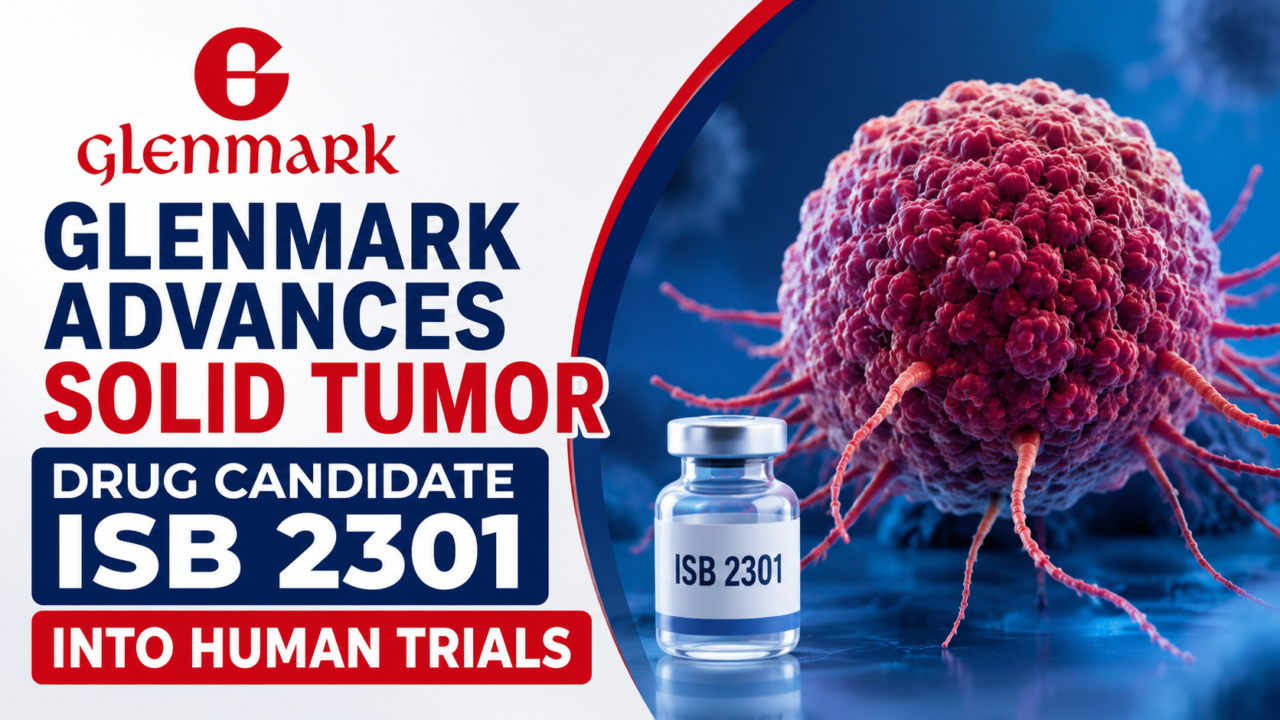

Glenmark Pharmaceuticals has announced a significant milestone in cancer research by successfully completing the pre-clinical development of its innovative solid tumor drug candidate, ISB 2301. The company is now preparing to advance the therapy into human clinical trials, marking an important step in the development of next-generation cancer treatments.
This development highlights Glenmark’s growing focus on oncology innovation and advanced biologic therapies.

What is ISB 2301?
ISB 2301 is an investigational drug candidate being developed for the treatment of solid tumors. Solid tumors are abnormal masses of tissue that occur in organs such as:
- Lungs
- Breast
- Colon
- Liver
- Pancreas
Unlike blood cancers, solid tumors form compact masses and are often more difficult to treat effectively in advanced stages.
The drug is being developed using advanced immunotherapy and targeted treatment approaches aimed at improving cancer treatment outcomes.
What Does Pre-Clinical Development Mean?
Before a new medicine can be tested in humans, it must pass through pre-clinical development. This stage includes:
- Laboratory research
- Safety testing
- Toxicity studies
- Biological activity evaluation
- Animal studies
The successful completion of pre-clinical development suggests that ISB 2301 has shown promising safety and effectiveness results necessary to move into clinical trials involving human participants.
Importance of Human Clinical Trials
Human clinical trials are one of the most important stages in drug development. These trials help researchers determine:
- Drug safety in humans
- Proper dosage levels
- Side effects
- Treatment effectiveness
- Long-term outcomes
Clinical trials are generally conducted in multiple phases before a drug receives regulatory approval for public use.
The advancement of ISB 2301 into human trials is considered a major achievement for Glenmark’s oncology research pipeline.
Glenmark’s Focus on Oncology Innovation
Glenmark Pharmaceuticals has been actively investing in innovative drug discovery and cancer research. The company aims to strengthen its presence in:
- Immuno-oncology
- Targeted therapies
- Biologics
- Advanced cancer treatments
With increasing global demand for effective cancer therapies, pharmaceutical companies are focusing heavily on research and development of novel treatment options.
Why This Development Matters
Cancer remains one of the leading causes of death worldwide. Despite advances in medicine, many solid tumors remain difficult to treat due to:
- Drug resistance
- Late diagnosis
- Tumor complexity
- Side effects of existing therapies
New therapies like ISB 2301 may offer:
- Improved treatment effectiveness
- Better targeting of cancer cells
- Reduced side effects
- Enhanced patient survival outcomes
If successful in clinical trials, the drug could contribute significantly to future cancer care.
Growth of Cancer Research in India
India’s pharmaceutical and biotechnology sectors are rapidly growing in the field of oncology research. Companies like Glenmark Pharmaceuticals are increasingly participating in global drug innovation and advanced biologic development.
This progress reflects India’s expanding role in:
- Pharmaceutical innovation
- Clinical research
- Biotechnology
- Global healthcare solutions
Future of Solid Tumor Treatment
The future of oncology is moving toward:
- Precision medicine
- Personalized therapies
- Immunotherapy
- Cell and gene therapies
- AI-assisted drug discovery
Researchers believe advanced biologic therapies may improve survival rates and quality of life for cancer patients in coming years.
Conclusion
The successful completion of pre-clinical development for ISB 2301 marks an important milestone for Glenmark Pharmaceuticals and the future of cancer research. Advancing the solid tumor candidate into human trials demonstrates the company’s commitment to innovative oncology treatments and scientific advancement.
As clinical studies progress, ISB 2301 could potentially become a promising addition to the next generation of cancer therapies aimed at improving patient outcomes worldwide.
Recommended Products