


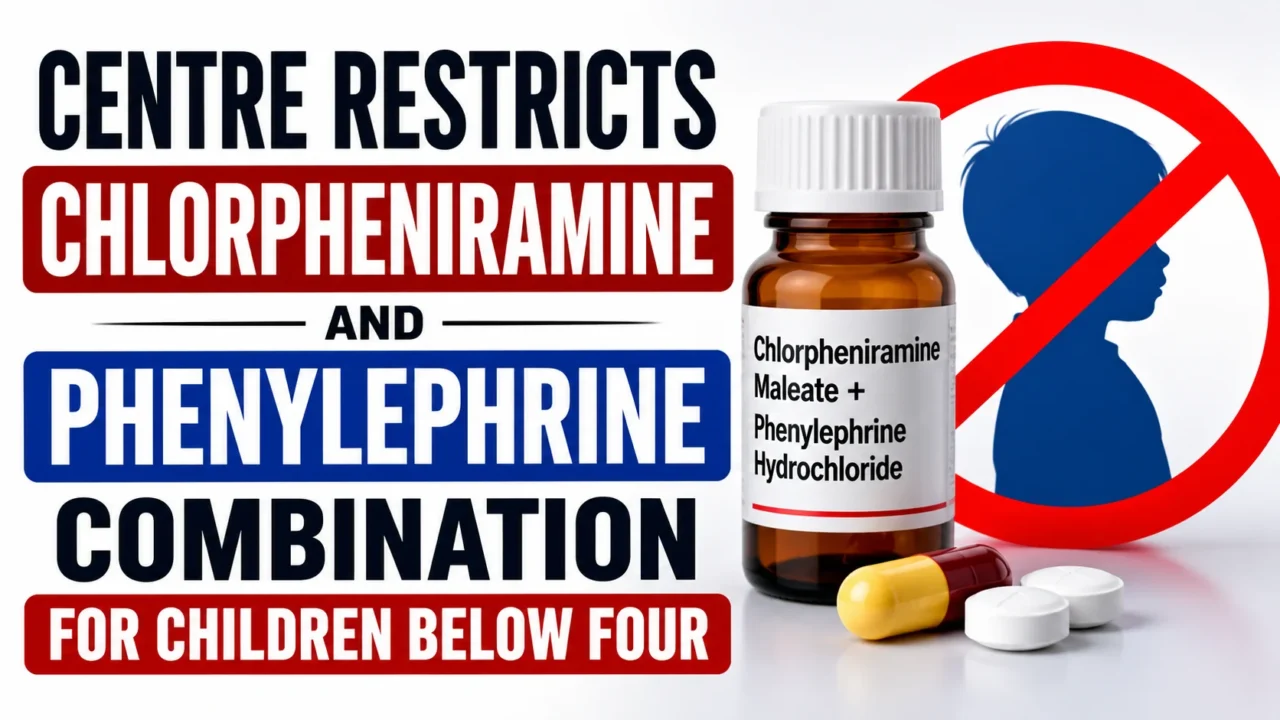

The Chlorpheniramine Phenylephrine FDC has been restricted for use in children below four years of age by the Central Government. The restriction covers fixed-dose combinations containing Chlorpheniramine Maleate and Phenylephrine Hydrochloride, following concerns about potential health risks and the availability of safer alternatives.
The decision is an important pharmaceutical regulatory update for pharmacists, pharmacy students, healthcare professionals and pharmaceutical manufacturers, particularly because these medicines are commonly associated with cold, flu and allergy symptoms.
Quick Summary
The Central Government has restricted Chlorpheniramine Maleate and Phenylephrine Hydrochloride FDCs for children below four years of age. Manufacturers are required to display an age-specific warning on product labels, package inserts and promotional literature stating that these combinations should not be used in children below four years.

Chlorpheniramine Phenylephrine FDC: Overview
| Particular | Details |
|---|---|
| FDC Ingredients | Chlorpheniramine Maleate + Phenylephrine Hydrochloride |
| Restriction | Use in children below 4 years |
| Main Concern | Potential health risks |
| Safer Alternatives | Available |
| Warning Required On | Label, package insert and promotional literature |
| Regulatory Basis | Drugs and Cosmetics Act, 1940 |
| Expert Input | Expert Committee and DTAB |
What Has the Government Restricted?
The government has restricted fixed-dose combinations containing Chlorpheniramine Maleate and Phenylephrine Hydrochloride for use in children below four years of age.
Manufacturers are required to clearly communicate the age restriction through:
- Medicine labels
- Package inserts
- Promotional literature
- Other relevant product information
The required warning states that the fixed-dose combination should not be used in children below four years of age.
Why Has Chlorpheniramine Phenylephrine FDC Been Restricted?
The decision was taken after concerns regarding the potential health risks associated with the combination in children below four years.
The government also considered the availability of safer alternatives.
The regulatory action followed recommendations from an Expert Committee and the Drugs Technical Advisory Board (DTAB).
What Are Chlorpheniramine and Phenylephrine Used For?
The combination of Chlorpheniramine Maleate and Phenylephrine Hydrochloride is used in medicines intended to relieve symptoms associated with common cold, flu and allergies.
These symptoms may include:
- Nasal congestion
- Stuffy or blocked nose
- Sneezing
- Watery eyes
Role of the Two Ingredients
Chlorpheniramine Maleate is an H1 antihistamine commonly used to manage allergy-related symptoms.
Phenylephrine Hydrochloride is a nasal decongestant used to help relieve nasal congestion.
What Is the New Warning for Children Under 4?
The key safety message is that these FDCs should not be used in children below four years of age.
The age-specific warning is intended to be clearly communicated to healthcare professionals, caregivers and consumers through product information.
Regulatory Background
The government action builds on earlier regulatory measures concerning the use of these ingredients in young children.
According to the information provided in the regulatory update, an earlier restriction in 2023 required certain formulations containing the combination to carry a warning against use in children below four years.
The 15 April 2025 notification also addressed the safety concern associated with the FDC in children below four years.
The latest regulatory action extends the requirement to formulations containing the two ingredients, according to the Health Ministry’s statement referenced in the update.
Why Is This Important for Paediatric Drug Safety?
Paediatric patients can respond differently to medicines compared with adults. Therefore, medicines used in young children require careful consideration of age, safety, dose and clinical suitability.
The restriction reinforces the importance of:
- Age-appropriate medicine use
- Rational prescribing
- Clear medicine labelling
- Patient and caregiver awareness
- Considering safer alternatives where appropriate
What Pharmaceutical Companies Need to Know
Pharmaceutical manufacturers marketing these FDCs should comply with the applicable regulatory requirements.
The required age-specific warning should be appropriately reflected in:
- Product labels
- Package inserts
- Promotional literature
- Other relevant product information
The regulatory action is linked to the Drugs and Cosmetics Act, 1940 and its implementation through the applicable government notification and Gazette process.
Impact on Pharmacists and Healthcare Professionals
For pharmacists and healthcare professionals, this update highlights the importance of checking the age restriction before recommending or dispensing medicines containing the specified FDC.
Pharmacy professionals should also ensure that caregivers understand the warning and are directed toward appropriate medical advice when treatment is required for young children.
Why Should Pharmacy Candidates Know This Update?
This regulatory update is relevant for B.Pharm, D.Pharm, M.Pharm and pharmacy exam aspirants because drug regulation and restrictions are important areas of pharmaceutical education and competitive examinations.
Candidates preparing for pharmacy-related examinations should remember:
- The FDC contains Chlorpheniramine Maleate + Phenylephrine Hydrochloride.
- The restriction applies to children below four years.
- The reason cited is potential health risks.
- Safer alternatives are available.
- The warning must be communicated through product information.
- The regulatory action involves the Drugs and Cosmetics Act, 1940.
- DTAB and an Expert Committee were involved in the recommendation process.
Key Takeaways
| Key Point | Information |
| Drug Combination | Chlorpheniramine Maleate + Phenylephrine Hydrochloride |
| Age Restriction | Children below 4 years |
| Reason | Potential health risks |
| Alternative | Safer alternatives are available |
| Warning | Do not use in children below 4 years |
| Warning Locations | Label, package insert and promotional literature |
| Regulatory Framework | Drugs and Cosmetics Act, 1940 |
| Technical Body | Drugs Technical Advisory Board (DTAB) |

Frequently Asked Questions
1. Which FDC has been restricted for children below four years?
The restriction applies to fixed-dose combinations containing Chlorpheniramine Maleate and Phenylephrine Hydrochloride.
2. What is the age restriction for this FDC?
The FDC should not be used in children below four years of age.
3. Why has the Chlorpheniramine Phenylephrine FDC been restricted?
The government cited potential health risks in children below four years and the availability of safer alternatives.
4. What warning must be displayed on these medicines?
The product information must clearly state that the FDC should not be used in children below four years of age.
5. Where should the age-specific warning appear?
The warning is required on the medicine label, package insert and promotional literature.
6. What are Chlorpheniramine and Phenylephrine used for?
The combination is generally used for symptoms associated with common cold, flu and allergies, such as nasal congestion, sneezing and watery eyes.
7. Which regulatory body was involved in the recommendation?
The decision followed recommendations from an Expert Committee and the Drugs Technical Advisory Board (DTAB).
8. Which law provides the regulatory basis for the action?
The regulatory action is associated with the Drugs and Cosmetics Act, 1940.
Important Regulatory Update
The restriction on Chlorpheniramine Phenylephrine FDCs for children below four years is an important development in paediatric medicine safety.
Pharmacists, healthcare professionals and pharmaceutical companies should pay attention to the applicable age-specific warning and product information requirements.
Conclusion
The restriction on Chlorpheniramine Maleate and Phenylephrine Hydrochloride FDCs for children below four years is an important paediatric drug safety and pharmaceutical regulatory update.
The government has emphasized an age-specific warning because of potential health risks and the availability of safer alternatives. Manufacturers are required to communicate the restriction through product labels, package inserts and promotional literature.
For pharmacists and pharmacy students, this update highlights the importance of rational, age-appropriate and safe medicine use and is also relevant for pharmacy regulatory affairs and competitive examination preparation.
Recommended Products