


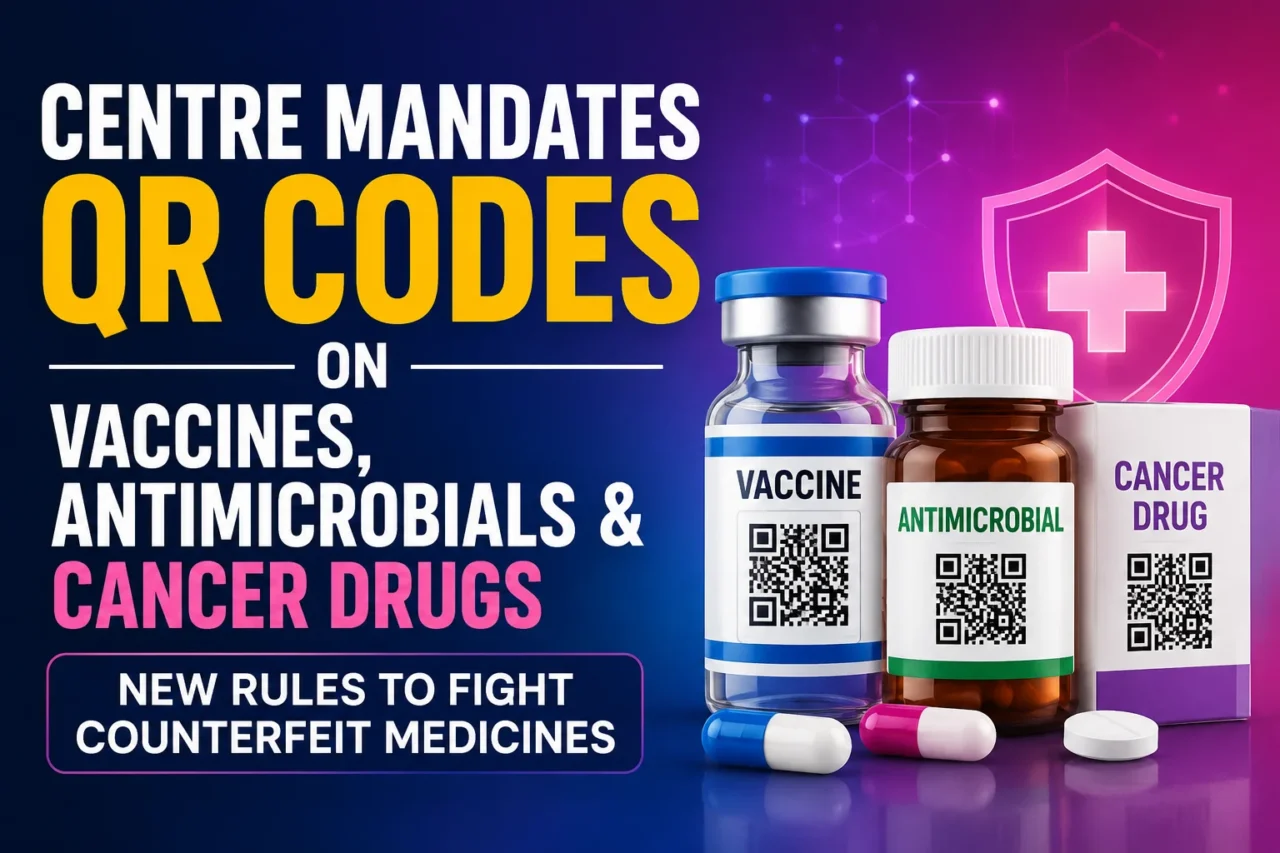

The Government of India has introduced a major regulatory reform to strengthen the pharmaceutical supply chain and curb the circulation of counterfeit medicines. Through a new gazette notification, the Ministry of Health and Family Welfare has made it mandatory for manufacturers to print or affix QR Codes (Quick Response Codes) or Barcodes on the labels of vaccines, cancer medicines, narcotic and psychotropic drugs, and antimicrobial medicines.
This move is expected to improve drug traceability, enhance patient safety, and allow consumers and regulators to verify the authenticity of medicines using smartphones.

What Has Changed?
According to the latest gazette notification:
- QR Codes/Barcodes will become mandatory for vaccines from July 2027.
- The requirement will be extended to antimicrobial medicines from July 2028.
- The regulation also covers:
- Cancer medicines
- Narcotic drugs
- Psychotropic substances
- These medicines are being brought under the Schedule H2 labeling provisions to improve tracking and authentication.
Why Has the Government Introduced QR Codes?
Counterfeit medicines have become a serious concern in India and globally. Fake medicines can:
- Endanger patient lives
- Reduce treatment effectiveness
- Promote antimicrobial resistance
- Damage confidence in healthcare systems
QR Codes will help authorities and consumers verify whether a medicine is genuine and improve traceability throughout the supply chain.
Benefits of QR Code-Based Drug Authentication
1. Prevents Counterfeit Medicines
Every medicine pack will carry a unique digital identity that can be verified instantly.
2. Easy Verification
Patients, pharmacists, hospitals, and distributors can scan the QR Code using a smartphone to verify authenticity.
3. Better Supply Chain Monitoring
Manufacturers and regulators can monitor the movement of medicines from production to retail.
4. Improved Patient Safety
Authentic medicines reduce the risk of treatment failure caused by fake products.
5. Greater Transparency
Digital traceability helps regulators investigate suspicious products quickly.
What Information Will the QR Code Contain?
Although the exact implementation may vary, QR Codes generally provide information such as:
- Product Name
- Brand Name
- Batch Number
- Manufacturing Date
- Expiry Date
- Manufacturer Details
- License Number
- Unique Product Identification Number
This information can be verified using compatible software or mobile applications.
Timeline for Implementation
| Category | Implementation Date |
|---|---|
| Vaccines | July 2027 |
| Antimicrobials | July 2028 |
| Cancer Drugs | As notified under the amended Schedule H2 provisions |
| Narcotic & Psychotropic Drugs | As notified under the amended Schedule H2 provisions |
Impact on Pharmaceutical Companies
Drug manufacturers will need to:
- Upgrade packaging lines.
- Generate unique QR Codes for every medicine pack.
- Maintain digital databases for traceability.
- Ensure regulatory compliance before the implementation dates.
Although this requires investment, it will significantly strengthen product authentication and reduce counterfeit risks.
Benefits for Pharmacists
Pharmacists will be able to:
- Verify medicine authenticity before dispensing.
- Identify suspicious products more easily.
- Improve patient confidence.
- Reduce the risk of dispensing counterfeit medicines.
Benefits for Patients
Patients will gain:
- Greater confidence in medicine authenticity.
- Easy verification using mobile phones.
- Better protection against fake medicines.
- Improved treatment safety.
Why Antimicrobials Need Special Attention
Antimicrobial medicines are widely prescribed across India. Counterfeit or substandard antimicrobials can contribute to:
- Treatment failure
- Antimicrobial resistance (AMR)
- Increased healthcare costs
- Higher mortality rates
Introducing QR Codes for these medicines is expected to improve surveillance and reduce the circulation of fake antimicrobial products.
Previous QR Code Requirements
India had already introduced QR Code requirements for:
- Top 300 drug formulations
- Active Pharmaceutical Ingredients (APIs)
The latest amendment expands the scope to include:
- Vaccines
- Antimicrobials
- Cancer medicines
- Narcotic drugs
- Psychotropic substances
Final Thoughts
The government’s decision to mandate QR Codes on vaccines, antimicrobials, cancer medicines, and other critical drugs marks a significant step toward building a safer and more transparent pharmaceutical supply chain in India. With phased implementation beginning in July 2027 for vaccines and July 2028 for antimicrobials, the initiative is expected to strengthen drug authentication, improve traceability, and protect patients from counterfeit medicines.
Recommended Products