


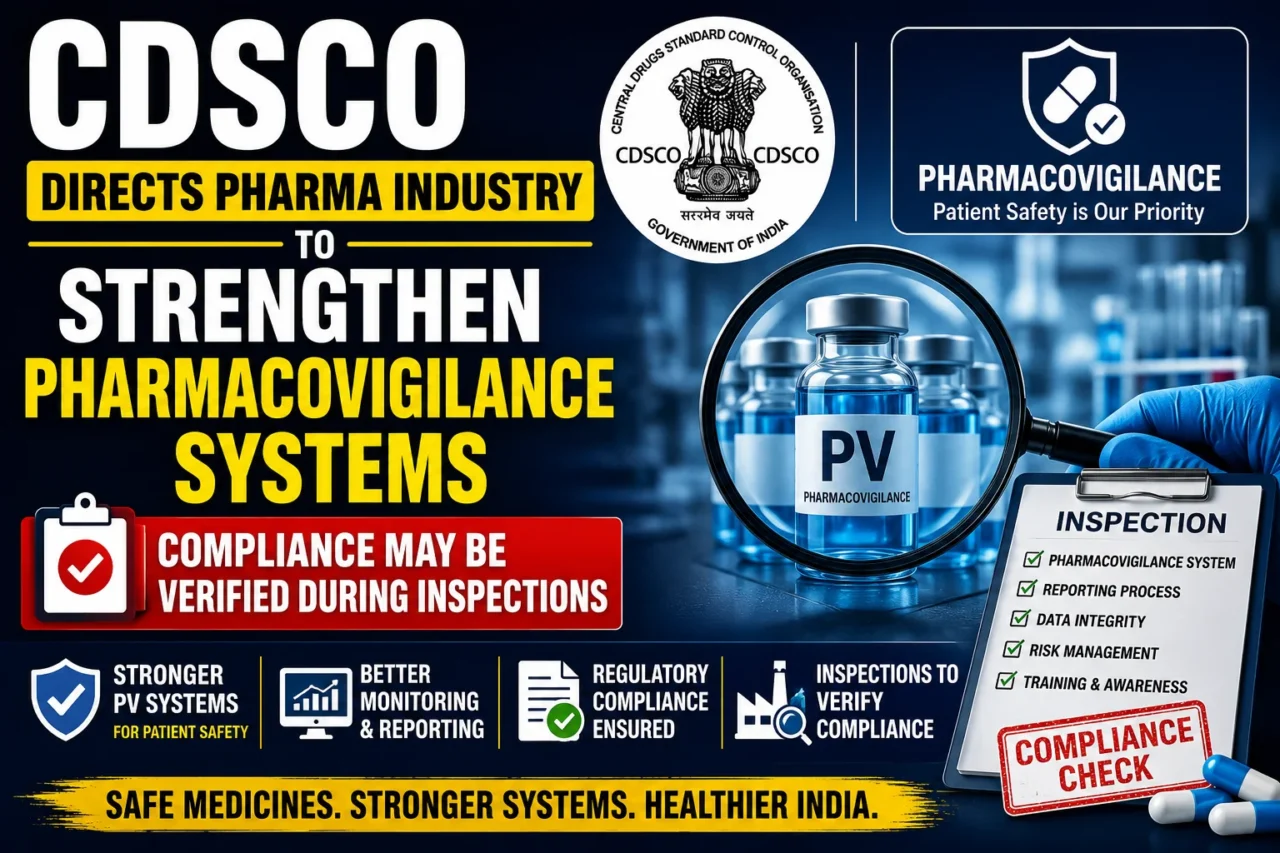

The Central Drugs Standard Control Organization (CDSCO) has issued a fresh directive to pharmaceutical manufacturers and other stakeholders, emphasizing the mandatory implementation of robust pharmacovigilance (PV) systems in accordance with the Drugs and Cosmetics Act, 1940, and related regulatory provisions.
In a recent circular, the national drug regulator reiterated that all pharmaceutical companies must establish and maintain effective mechanisms for monitoring, collecting, evaluating, and reporting adverse drug reactions (ADRs) associated with products manufactured or marketed by them.
The move is aimed at strengthening patient safety, improving post-marketing surveillance, and ensuring regulatory compliance across the pharmaceutical sector.
What CDSCO Has Stated
CDSCO referred specifically to Para 6.11 of Schedule M, which mandates that every license holder must establish a pharmacovigilance system capable of:
- Collecting reports of adverse drug reactions (ADRs)
- Processing and evaluating safety information
- Forwarding relevant reports to regulatory authorities
- Monitoring medicine safety throughout the product lifecycle
The regulator emphasized that these obligations are not optional and form an essential part of Good Manufacturing Practices (GMP) compliance.
Companies are expected to ensure adherence not only to the Drugs and Cosmetics Act, 1940 and its associated Rules but also to the provisions of the New Drugs and Clinical Trials (NDCT) Rules, 2019.
Compliance May Be Reviewed During Regulatory Inspections
One of the most significant points highlighted in the circular is that compliance with pharmacovigilance requirements may be assessed during regulatory inspections.
According to CDSCO, officials from:
- Central Drugs Standard Control Organization (CDSCO)
- State Licensing Authorities (SLAs)
- Union Territory Drug Administrations
may verify the implementation and effectiveness of pharmacovigilance systems during routine inspections and other regulatory activities.
This means pharmaceutical companies should be prepared to demonstrate:
- Established PV procedures
- ADR reporting mechanisms
- Safety monitoring systems
- Documentation and record maintenance
- Compliance with regulatory reporting timelines
Understanding Pharmacovigilance
Pharmacovigilance is the science and activities related to the:
- Detection
- Assessment
- Understanding
- Prevention
of adverse effects and other medicine-related problems.
The primary objective of pharmacovigilance is to ensure that medicines remain safe and effective throughout their use in real-world healthcare settings.
While clinical trials provide important information about a drug’s safety and efficacy, rare or long-term adverse effects may only become evident after the product is widely used by larger populations. Pharmacovigilance plays a crucial role in identifying such risks.

Why Pharmacovigilance Is Important
1. Protecting Patient Safety
A strong pharmacovigilance system helps identify adverse reactions at an early stage, allowing regulators and manufacturers to take appropriate action before significant harm occurs.
2. Monitoring Benefit-Risk Balance
Continuous safety monitoring ensures that the benefits of a medicine continue to outweigh its risks after market authorization.
3. Regulatory Compliance
Failure to maintain an effective pharmacovigilance system may lead to regulatory observations, warning notices, compliance actions, or other enforcement measures.
4. Improving Public Confidence
Robust drug safety monitoring enhances trust among healthcare professionals, patients, and regulatory authorities.
5. Supporting Evidence-Based Decisions
Pharmacovigilance data helps regulators make informed decisions regarding:
- Label changes
- Safety warnings
- Risk minimization measures
- Product recalls, if necessary
Key Responsibilities of Pharmaceutical Companies
Under the current regulatory framework, pharmaceutical companies are expected to:
- Establish dedicated pharmacovigilance systems
- Collect and investigate adverse event reports
- Maintain accurate safety databases
- Submit required reports to regulatory authorities
- Train personnel involved in PV activities
- Ensure timely signal detection and risk assessment
- Maintain proper documentation for inspection purposes
Companies must also ensure that pharmacovigilance activities are integrated into their overall quality management systems.
Growing Focus on Drug Safety in India
India’s pharmaceutical sector continues to expand rapidly, with increasing numbers of generic medicines, biologics, vaccines, and novel therapies entering the market.
As healthcare systems become more complex, regulators worldwide are placing greater emphasis on post-marketing surveillance and risk management. CDSCO’s latest communication reflects India’s commitment to strengthening drug safety oversight and aligning with global pharmacovigilance standards.
The regulator’s focus on inspection-based verification indicates a shift toward more proactive monitoring of compliance rather than relying solely on voluntary reporting.
Industry Implications
The latest CDSCO directive serves as a reminder that pharmacovigilance is no longer viewed merely as a regulatory formality but as a critical component of pharmaceutical quality and patient safety.
Companies that fail to establish adequate PV systems may face challenges during inspections, while organizations with mature pharmacovigilance frameworks will be better positioned to demonstrate compliance and maintain regulatory confidence.
Manufacturers, marketing authorization holders, and other stakeholders should review their existing pharmacovigilance practices and ensure that systems remain fully compliant with current regulatory expectations.
Conclusion
CDSCO’s latest circular reinforces the importance of maintaining effective pharmacovigilance systems across the pharmaceutical industry. By emphasizing compliance with Schedule M, the Drugs and Cosmetics Act, and the NDCT Rules, 2019, the regulator aims to strengthen post-marketing drug safety surveillance and enhance patient protection.
With regulatory authorities likely to review pharmacovigilance compliance during inspections, pharmaceutical companies should proactively assess and strengthen their safety monitoring frameworks to ensure continued compliance and safeguard public health.
Recommended Products