



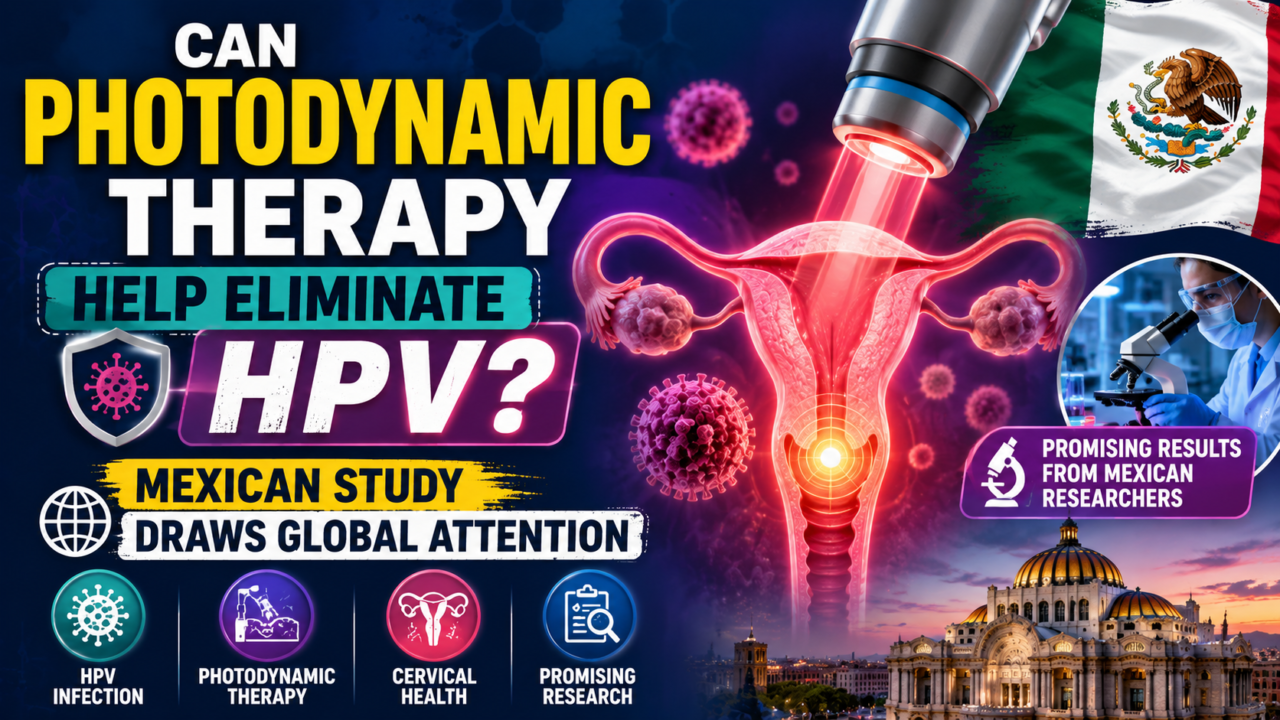

Human Papillomavirus (HPV) is one of the most common sexually transmitted infections worldwide and is recognized as the leading cause of cervical cancer. While HPV vaccination has significantly reduced infection rates and cancer risk, finding effective treatments for existing HPV infections remains a major focus of medical research.
Recently, a study conducted in Mexico has attracted international attention after reporting encouraging results from Photodynamic Therapy (PDT) in eliminating HPV infections and improving cervical health. The findings have sparked discussions among researchers and healthcare professionals about whether PDT could become a future treatment option for HPV-related conditions.
Understanding HPV and Its Risks
HPV is a group of more than 200 related viruses, some of which are classified as high-risk strains because they can lead to cervical, anal, throat, and other cancers.
Most HPV infections clear naturally within a few years. However, persistent infections with high-risk HPV types can cause abnormal cell changes in the cervix, known as Cervical Intraepithelial Neoplasia (CIN), which may eventually progress to cervical cancer if left untreated.
What Is Photodynamic Therapy (PDT)?
Photodynamic Therapy is a minimally invasive medical treatment that combines three essential elements:
| Component | Function |
|---|---|
| Photosensitizing Drug | Makes abnormal cells sensitive to light |
| Specific Light Source | Activates the drug |
| Oxygen in Tissue | Produces reactive oxygen species that destroy targeted cells |
When the photosensitizer is exposed to a specific wavelength of light, it generates highly reactive molecules that can damage abnormal cells and certain infectious microorganisms.
Unlike surgery, PDT aims to preserve healthy cervical tissue, making it an attractive option for women who wish to maintain fertility.
The Mexican Study That Sparked Interest
Researchers in Mexico City investigated whether PDT could help eliminate HPV infections and improve cervical lesions in women diagnosed with HPV infection and Cervical Intraepithelial Neoplasia Grade I (CIN I).
Study Details
| Parameter | Information |
|---|---|
| Study Location | Mexico City |
| Participants | 29 Women |
| Condition Studied | HPV Infection and CIN I |
| Published In | Photochemistry and Photobiology (2023) |
| Main Objective | Evaluate HPV clearance and lesion regression after PDT |
The study assessed HPV elimination, cervical lesion improvement, and changes in cervical microbiota after treatment.

Key Findings of the Study
The results were particularly noteworthy.
HPV Clearance Results
| Patient Group | Outcome |
|---|---|
| HPV Infection Without CIN I | 100% HPV elimination |
| HPV + CIN I | 64.3% HPV elimination and lesion improvement |
| CIN I Alone | 57.2% lesion remission |
Researchers also observed reductions in harmful microorganisms such as:
- Chlamydia trachomatis
- Candida albicans
Importantly, normal cervical microbial flora remained largely preserved.
These findings suggest that PDT may provide both antiviral and antimicrobial benefits.
Why Researchers Are Excited About PDT
Scientists see several potential advantages of PDT for HPV-related conditions:
Potential Benefits
✅ Non-invasive treatment
✅ Preservation of cervical tissue
✅ Potential HPV elimination
✅ Regression of precancerous lesions
✅ Reduced need for surgical procedures
✅ Fertility preservation
These benefits make PDT a promising area of research for women diagnosed with HPV-associated cervical abnormalities.
Evidence Beyond the Mexican Study
The Mexican research is not the only study exploring PDT for HPV treatment.
Other Notable Research
| Year | Findings |
|---|---|
| 2018 | Meta-analysis suggested PDT may improve outcomes in HPV infection and cervical lesions |
| 2021 | Study reported approximately 77.8% complete remission in women with HSIL/CIN2 after PDT |
| 2026 | Research involving 811 women reported HPV clearance rates exceeding 90% |
These studies indicate growing scientific interest in PDT as a potential treatment strategy for HPV-related diseases.
Important Limitations to Consider
While the results appear encouraging, experts caution against viewing PDT as a proven cure for HPV.
1. Small Sample Size
The Mexican study included only 29 participants, making it difficult to apply the findings to larger populations.
2. Need for Larger Clinical Trials
Researchers emphasize the need for large-scale randomized controlled trials before PDT can be recommended as a standard treatment.
3. Not a Confirmed HPV Cure
Some online discussions have described PDT as a cure for HPV. However, current evidence is not strong enough to support such claims. The treatment remains investigational in many settings.
4. Long-Term Results Remain Unclear
Scientists are still studying:
- How long HPV clearance lasts after PDT
- Whether recurrence rates remain low
- Whether PDT significantly reduces cervical cancer risk over time
More long-term data are required.
What Does This Mean for Patients?
The emerging evidence suggests that Photodynamic Therapy could become an important treatment option for selected patients with HPV-related cervical abnormalities in the future. However, it is not yet considered a replacement for established medical practices.
Healthcare experts continue to recommend:
| Recommended Prevention Measures |
|---|
| HPV Vaccination |
| Regular Pap Smear Screening |
| HPV Testing |
| Timely Medical Follow-Up |
| Treatment of Precancerous Lesions When Needed |
These strategies remain the most effective methods for preventing cervical cancer today.
Conclusion
The Mexican study has brought renewed attention to Photodynamic Therapy (PDT) as a possible tool for managing HPV infections and early cervical lesions. With reported HPV clearance rates ranging from 64% to 100% in certain patient groups, the findings are undoubtedly promising.
However, the research is still in its early stages, and larger clinical trials are needed before PDT can be considered a standard treatment for HPV. While it may represent an exciting future direction in cervical health management, vaccination, routine screening, and proper medical care remain the cornerstone of cervical cancer prevention.
As scientists continue to investigate PDT’s long-term effectiveness and safety, the global medical community will be watching closely to see whether this innovative therapy can fulfill its promise in the fight against HPV.
Recommended Products