



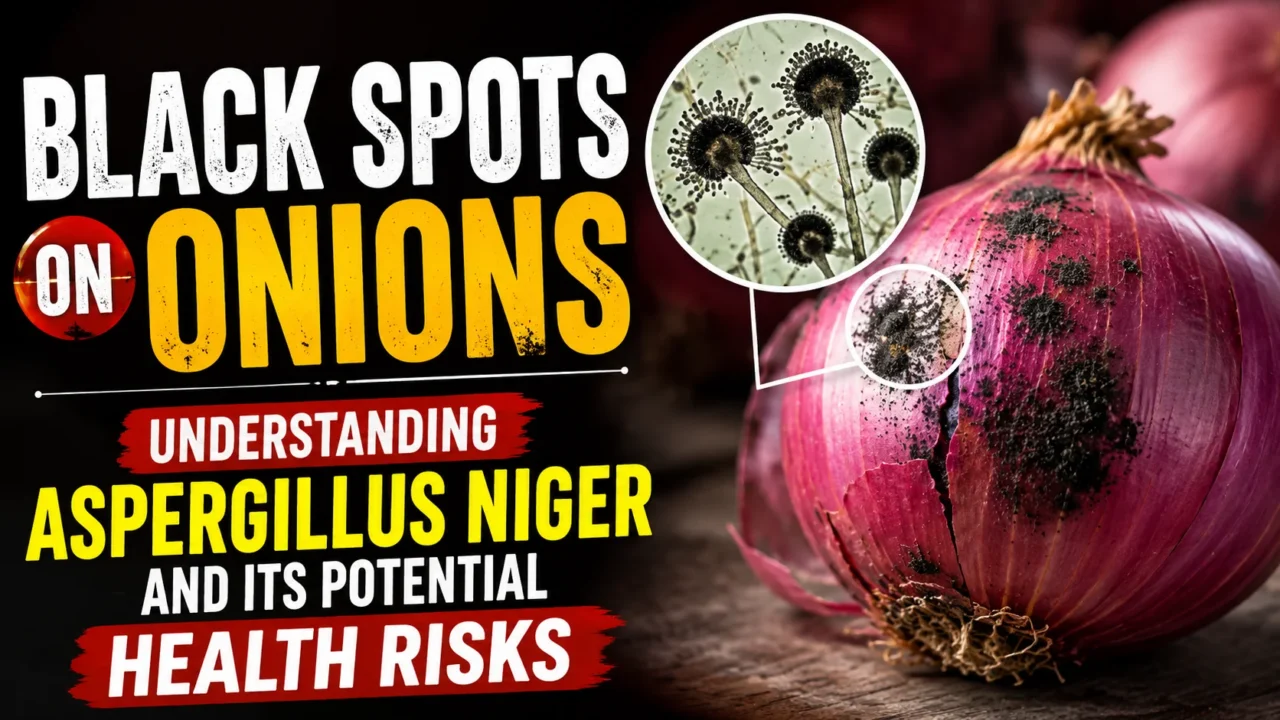

Have you ever noticed black powdery spots on the surface of an onion and wondered what they are? Many people assume it is simply dirt or harmless discoloration. However, in many cases, these black patches are caused by Aspergillus niger, a common fungus that can grow on onions during storage.
While Aspergillus niger is usually harmless to healthy individuals, it can pose health risks under certain conditions, especially for people with weakened immune systems. Understanding this fungus can help consumers make informed decisions about food safety and storage.

What Is Aspergillus niger?
Aspergillus niger is a species of filamentous fungus commonly found in soil, decaying vegetation, organic matter, and stored agricultural products.
It thrives in:
- Warm temperatures
- Humid environments
- Poorly ventilated storage areas
- Decaying plant material
Because onions are often stored for extended periods, they can become an ideal environment for fungal growth if storage conditions are not optimal.
Why Do Black Spots Appear on Onions?
The black discoloration seen on onions is usually caused by fungal spores produced by Aspergillus niger.
Common factors that promote fungal growth include:
High Humidity
Excess moisture encourages fungal colonization.
Poor Air Circulation
Inadequate ventilation creates favorable conditions for mold growth.
Mechanical Damage
Cuts, bruises, or cracks on onions allow fungi to enter and multiply.
Long Storage Periods
Older onions are more susceptible to fungal contamination.
The fungus generally appears as black powdery patches on the outer layers of the onion.
Is Aspergillus niger Dangerous?
For most healthy individuals, occasional exposure to Aspergillus niger spores is not considered dangerous.
However, certain groups may be at risk:
Immunocompromised Individuals
People undergoing chemotherapy, organ transplant recipients, HIV/AIDS patients, or individuals taking immunosuppressive medications may be more susceptible to infection.
Individuals with Respiratory Conditions
People with asthma or chronic lung diseases may experience allergic reactions or respiratory symptoms after inhaling fungal spores.
Occupational Exposure
Workers frequently exposed to moldy agricultural products may face higher levels of fungal exposure.
What Is Aspergillosis?
In rare cases, exposure to Aspergillus species can lead to a condition known as aspergillosis.
Types include:
Allergic Aspergillosis
Causes allergic reactions affecting the respiratory system.
Chronic Pulmonary Aspergillosis
A long-term lung infection that can occur in individuals with existing lung disease.
Invasive Aspergillosis
A serious infection that can spread through the bloodstream, primarily affecting severely immunocompromised individuals.
Does Cooking Kill the Risk?
Cooking may destroy fungal cells, but it does not always eliminate all fungal toxins that may have been produced.
Important considerations:
- Heat can reduce fungal contamination.
- Some fungal metabolites may remain stable.
- Severely moldy onions should not be consumed.
Food safety experts generally recommend discarding onions that show significant mold growth.
How to Identify Contaminated Onions
Signs that an onion may be affected by fungal contamination include:
✅ Black powdery spots
✅ Soft or mushy texture
✅ Unpleasant odor
✅ Visible mold growth
✅ Excessive moisture around the onion
If multiple signs are present, the onion should be discarded.
How to Prevent Fungal Growth on Onions
Store in a Cool, Dry Place
Avoid warm and humid storage conditions.
Ensure Proper Ventilation
Keep onions in breathable containers rather than sealed plastic bags.
Separate Damaged Onions
Remove bruised or spoiled onions to prevent contamination of healthy ones.
Avoid Moisture Accumulation
Keep onions dry during storage.
Regular Inspection
Check stored onions periodically and remove spoiled ones immediately.
Benefits and Industrial Uses of Aspergillus niger
Interestingly, Aspergillus niger is not always harmful. It is widely used in biotechnology and industrial microbiology.
Applications include:
- Citric acid production
- Enzyme manufacturing
- Pharmaceutical processing
- Food industry applications
- Biotechnology research
In controlled industrial settings, this fungus plays an important role in commercial production processes.
When Should You Throw an Onion Away?
Discard the onion if:
❌ Mold extends beyond the outer skin
❌ The onion becomes soft or rotten
❌ There is a strong foul smell
❌ Extensive black fungal growth is present
If contamination is limited to a small area on the dry outer skin, some people remove the affected layers. However, from a food safety perspective, replacing heavily contaminated onions is the safest option.
Conclusion
Black spots on onions are often caused by Aspergillus niger, a common fungus that grows under warm, humid, and poorly ventilated storage conditions. While healthy individuals are generally at low risk, exposure can be problematic for immunocompromised people and those with respiratory conditions.
Proper storage, regular inspection, and timely disposal of moldy onions can help reduce the risk of fungal contamination and maintain food safety.
Recommended Products