


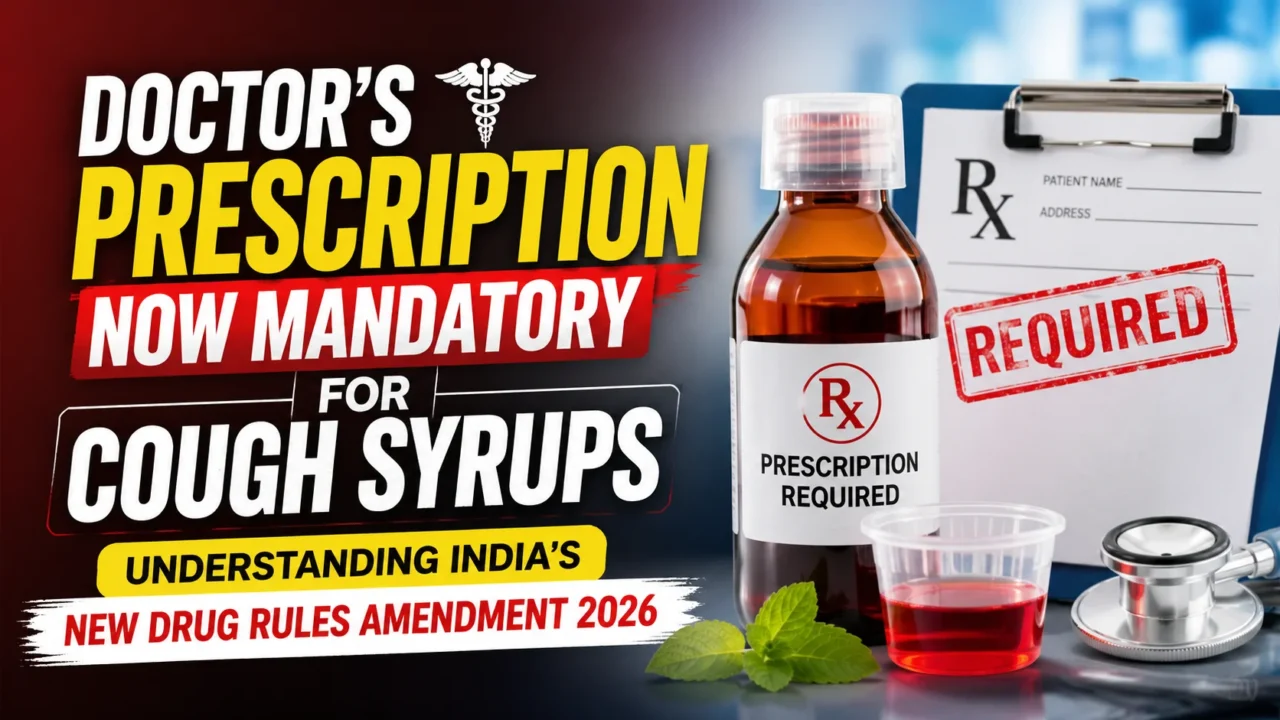

The Government of India has introduced a significant regulatory change affecting the sale of cough syrups and certain medicines across the country. Under the latest amendment to the Drugs Rules, 1945, consumers will now be required to obtain a valid doctor’s prescription before purchasing specified cough syrups from pharmacies.
This move aims to promote the rational use of medicines, prevent misuse, and strengthen patient safety.

What Is the New Rule?
The Union Ministry of Health and Family Welfare has notified the Drugs (Fifth Amendment) Rules, 2026, introducing stricter controls over the sale of certain cough syrups and prescription medicines.
Under the amended rules:
- Selected cough syrups can no longer be sold freely over the counter.
- A valid prescription from a registered medical practitioner will be required.
- Pharmacists must verify prescriptions before dispensing such medicines.
- The amendment has been incorporated into the Drugs Rules, 1945.
The change came into effect following the notification issued by the Ministry of Health and Family Welfare on June 9, 2026.
Why Has the Government Introduced This Rule?
The primary objective is to curb the misuse and overuse of cough syrups, particularly those containing potentially habit-forming or centrally acting ingredients.
Key Reasons Behind the Amendment
1. Preventing Drug Misuse
Certain cough syrups have been misused for recreational purposes due to the presence of ingredients such as:
- Codeine
- Dextromethorphan
- Antihistamines with sedative properties
Excessive consumption can lead to dependence, intoxication, and serious health risks.
2. Promoting Rational Drug Use
Self-medication remains a major concern in India. Many individuals purchase cough syrups without consulting healthcare professionals, which can result in:
- Incorrect diagnosis
- Delayed treatment
- Adverse drug reactions
- Drug interactions
Prescription control encourages appropriate medical evaluation before treatment.
3. Strengthening Patient Safety
Persistent cough may indicate underlying conditions such as:
- Respiratory infections
- Tuberculosis
- Asthma
- Allergies
- Chronic obstructive pulmonary disease (COPD)
Medical consultation ensures proper diagnosis and treatment.
Which Cough Syrups Will Be Affected?
The amendment primarily targets cough syrups and medicines that require medical supervision.
Products containing ingredients such as:
- Codeine phosphate
- Certain antihistamines
- Other regulated cough suppressants
may now fall under stricter prescription requirements.
Consumers should check with pharmacists or healthcare providers regarding specific products.
Impact on Patients
Positive Effects
✔ Better patient safety
✔ Reduced self-medication
✔ Improved diagnosis and treatment
✔ Lower risk of drug abuse
✔ Enhanced monitoring of medicine use
Challenges for Consumers
Some patients may face:
- Additional doctor consultation requirements
- Increased time before obtaining medication
- Reduced convenience for minor ailments
However, healthcare authorities believe the benefits outweigh the inconvenience.
Impact on Pharmacists
Pharmacists will play a crucial role in implementing the new regulations.
They must:
- Verify prescriptions before dispensing affected medicines
- Maintain appropriate records where required
- Ensure compliance with the Drugs and Cosmetics Act and Rules
- Educate patients regarding prescription requirements
Failure to comply may result in regulatory action.
What Does This Mean for the Pharmaceutical Industry?
Manufacturers and distributors may need to:
- Update labeling and compliance procedures
- Train sales and distribution teams
- Coordinate with regulatory authorities
- Ensure products are marketed according to revised legal requirements
The amendment may also improve pharmacovigilance and regulatory oversight.
Expert Opinion
Healthcare experts have welcomed the amendment as an important step toward responsible medication use.
Many countries already regulate cough syrups containing codeine and other controlled ingredients through prescription-only mechanisms. India’s updated rules align with global efforts to reduce medicine misuse while promoting safer healthcare practices.
Frequently Asked Questions (FAQs)
Do I need a prescription for all cough syrups?
No. The requirement applies to specific cough syrups and medicines covered under the amended rules. Consult your pharmacist or doctor for clarification.
Why are cough syrups being regulated?
To prevent misuse, self-medication, and potential health risks associated with inappropriate use.
Can pharmacists still sell affected cough syrups without a prescription?
No. Once the amendment is applicable to a product, a valid prescription is required.
Will this improve patient safety?
Yes. Medical supervision helps ensure proper diagnosis, treatment, and monitoring.
Conclusion
The Drugs (Fifth Amendment) Rules, 2026 represent a significant step toward safer medicine use in India. By making doctor’s prescriptions mandatory for certain cough syrups, the government aims to reduce misuse, improve patient safety, and encourage responsible healthcare practices.
Patients should consult qualified healthcare professionals before using cough medications, while pharmacists and healthcare providers must ensure strict compliance with the updated regulations.
As India’s pharmaceutical regulatory framework continues to evolve, such measures are expected to strengthen public health and promote rational drug use nationwide.
Recommended Products