



Introduction
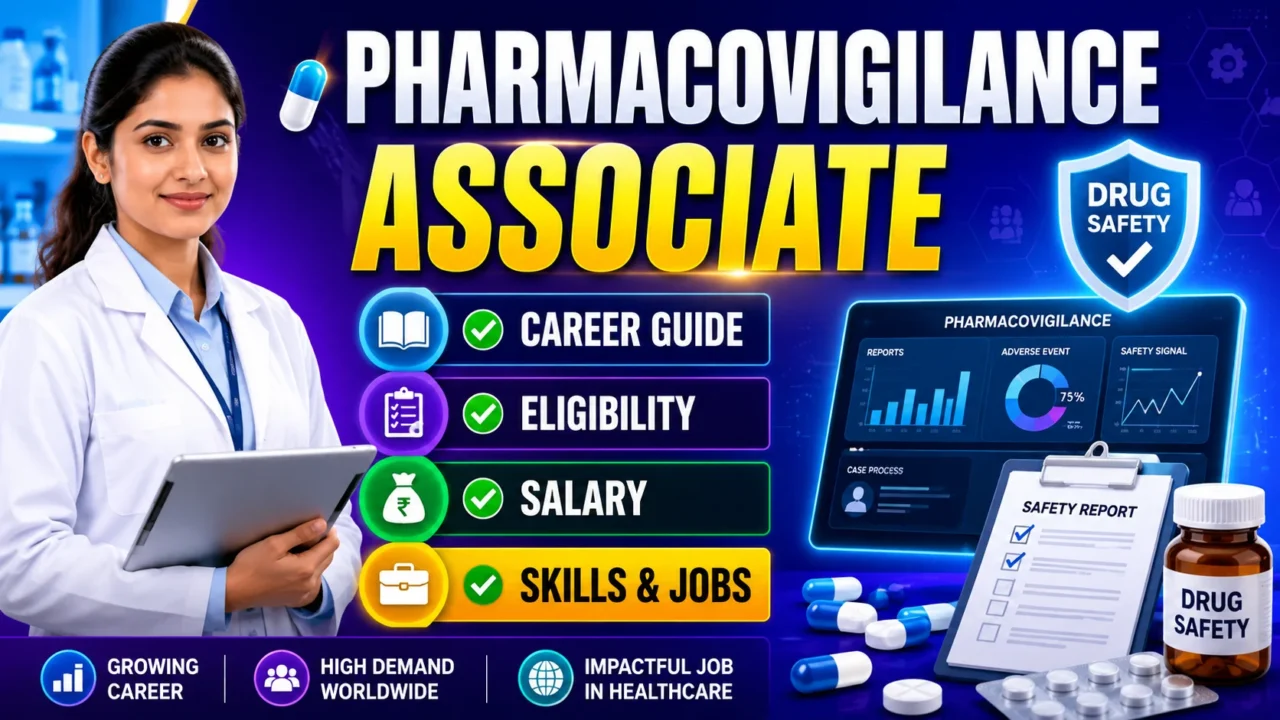
The pharmaceutical industry is not only involved in developing medicines but also in ensuring their safety after they reach the market. This important responsibility is handled through Pharmacovigilance (PV). A Pharmacovigilance Associate plays a crucial role in monitoring, assessing, and reporting adverse drug reactions (ADRs) to ensure patient safety.
With the rapid growth of the pharmaceutical and healthcare sectors, Pharmacovigilance has become one of the most promising career options for pharmacy and life science graduates.
What is Pharmacovigilance?
According to the World Health Organization (WHO), Pharmacovigilance is the science and activities related to the detection, assessment, understanding, and prevention of adverse effects or any other medicine-related problems.
The primary objective of Pharmacovigilance is to improve patient safety and ensure the safe use of medicines worldwide.
Who is a Pharmacovigilance Associate?
A Pharmacovigilance Associate is a healthcare professional responsible for collecting, reviewing, analyzing, and reporting adverse drug reactions and safety information related to pharmaceutical products.
They work closely with pharmaceutical companies, clinical research organizations (CROs), hospitals, and regulatory authorities.
Key Responsibilities of a Pharmacovigilance Associate
1. Adverse Event Case Processing
- Collect adverse event reports from healthcare professionals and patients.
- Verify the accuracy and completeness of safety data.
- Enter case information into safety databases.
2. Medical Coding
- Use standard coding systems such as MedDRA and WHO Drug Dictionary.
- Classify adverse events and medications correctly.
3. Safety Data Review
- Analyze reported adverse drug reactions.
- Identify potential safety signals.
4. Regulatory Reporting
- Prepare safety reports for regulatory authorities.
- Ensure compliance with national and international guidelines.
5. Signal Detection
- Monitor trends in adverse event reports.
- Detect emerging drug safety concerns.
6. Documentation and Compliance
- Maintain accurate safety records.
- Follow Good Pharmacovigilance Practices (GVP).
Eligibility for Pharmacovigilance Associate
Candidates from the following backgrounds are generally eligible:
Pharmacy Courses
- D.Pharm
- B.Pharm
- M.Pharm
- Pharm.D
Life Science Courses
- B.Sc Life Sciences
- M.Sc Biotechnology
- Microbiology
- Biochemistry
- Zoology
- Molecular Biology
Medical Background
- MBBS
- BDS
- BAMS
- BHMS
- Nursing Graduates
However, pharmacy graduates are often preferred because of their strong understanding of medicines and drug safety.
Essential Skills Required
Drug Safety Knowledge
Understanding adverse drug reactions and medication safety.
Medical Terminology
Knowledge of disease conditions, symptoms, and clinical terms.
Attention to Detail
Accurate case processing requires careful review of data.
Communication Skills
Effective interaction with healthcare professionals and team members.
Database Management
Working with safety databases and reporting systems.
Regulatory Knowledge
Understanding global guidelines such as:
- ICH Guidelines
- FDA Regulations
- EMA Guidelines
- Good Pharmacovigilance Practices (GVP)
Pharmacovigilance Associate Salary in India
Salary depends on qualification, company, and experience.
| Experience | Average Annual Salary |
|---|---|
| Fresher | ₹3 – ₹5 LPA |
| 1–3 Years | ₹5 – ₹8 LPA |
| 3–5 Years | ₹8 – ₹12 LPA |
| Senior Professional | ₹12 – ₹20+ LPA |
Professionals working with multinational pharmaceutical companies often receive higher salary packages.
Top Companies Hiring Pharmacovigilance Associates
Some leading organizations offering Pharmacovigilance careers include:
- IQVIA
- Accenture
- Cognizant
- Tata Consultancy Services
- Wipro
- Parexel
- ICON plc
- Syneos Health
- Dr. Reddy’s Laboratories
- Sun Pharmaceutical Industries
Career Growth in Pharmacovigilance
A typical career progression may look like:
- Pharmacovigilance Associate
- Drug Safety Associate
- Senior PV Associate
- Safety Specialist
- Pharmacovigilance Scientist
- Team Lead
- Manager – Pharmacovigilance
- Senior Manager
- Director – Drug Safety
With experience, professionals can move into regulatory affairs, medical writing, clinical research, and quality assurance roles.
How to Become a Pharmacovigilance Associate?
Step 1: Complete Your Qualification
Earn a degree in Pharmacy, Life Sciences, or a related healthcare field.
Step 2: Learn Pharmacovigilance Basics
Understand:
- ADR Reporting
- ICSR Processing
- MedDRA Coding
- Signal Detection
- Regulatory Guidelines
Step 3: Gain Practical Training
Join internships, workshops, or certification programs.
Step 4: Build Technical Skills
Learn:
- Argus Safety
- ARISg
- MedDRA
- WHO Drug Dictionary
Step 5: Apply for Entry-Level Positions
Search for:
- Pharmacovigilance Associate
- Drug Safety Associate
- Safety Data Associate
- PV Executive
Advantages of a Career in Pharmacovigilance
- Growing global demand
- Excellent work-life balance
- Opportunities in multinational companies
- Competitive salaries
- Remote and hybrid job opportunities
- Strong career growth prospects
- Contribution to patient safety
Challenges in Pharmacovigilance
- Strict regulatory compliance
- High attention to detail required
- Continuous learning of safety regulations
- Handling large volumes of safety data
- Meeting reporting deadlines
However, these challenges also help professionals develop valuable expertise and advance their careers.
Conclusion
Pharmacovigilance is one of the fastest-growing career fields for pharmacy and life science graduates. A Pharmacovigilance Associate plays a vital role in ensuring medicine safety, protecting patients, and supporting global healthcare systems. With increasing pharmaceutical research, clinical trials, and regulatory requirements, the demand for skilled Pharmacovigilance professionals is expected to continue growing.
For pharmacy students looking for a stable, rewarding, and future-oriented career, Pharmacovigilance can be an excellent choice with strong growth potential and international opportunities.
Recommended Products