

Introduction
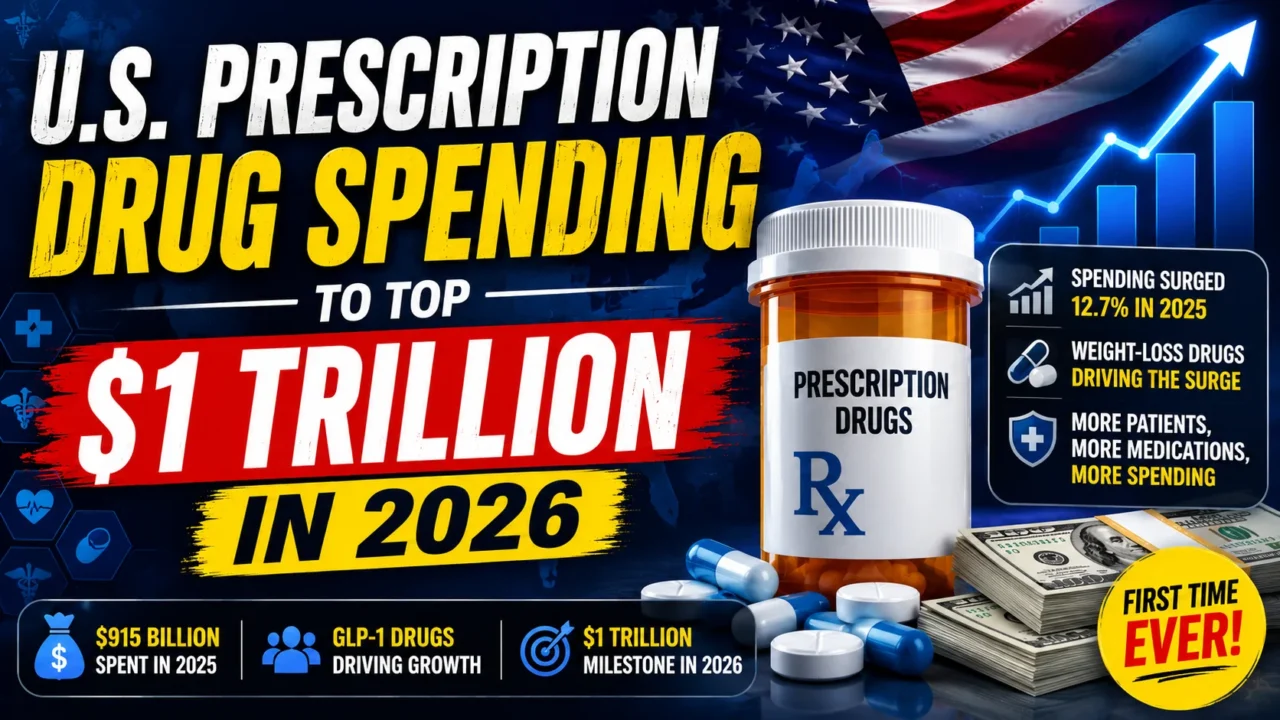
The United States is on track to reach a historic healthcare milestone. According to the latest annual Drug Expenditures Report released by the American Society of Health-System Pharmacists (ASHP), prescription drug spending is projected to exceed $1 trillion in 2026 for the first time in history.
The primary driver behind this unprecedented growth is the explosive demand for GLP-1 weight-loss medications, particularly semaglutide and tirzepatide, which have transformed both obesity treatment and the pharmaceutical market.
This report highlights major trends in healthcare spending, oncology treatments, specialty medicines, biosimilars, and future challenges for healthcare systems.
U.S. Drug Spending Reached $915 Billion in 2025
Prescription drug expenditures in the United States increased by 12.7% in 2025, reaching approximately $915 billion. This represents one of the fastest annual growth rates observed over the last two decades.
Notably, drug spending grew faster than both overall healthcare expenditures and the broader U.S. economy, signaling a major shift in healthcare resource allocation.
Several factors contributed to this increase:
- Greater utilization of prescription medications
- Increased adoption of specialty therapies
- Expansion of obesity treatment programs
- Rising use of cancer biologics
- Growing demand for rare disease treatments
Importantly, the growth is being driven more by increased medication use than by rising drug prices.

Weight-Loss Drugs Dominate the Market
One of the most significant findings of the report is the extraordinary impact of GLP-1 receptor agonists.
Top Spending Drugs in 2025
Semaglutide
Approximate Spending: $60 Billion
Semaglutide, marketed under brands such as Ozempic and Wegovy, continues to experience strong demand for both diabetes management and weight loss.
Tirzepatide
Approximate Spending: $60 Billion
Tirzepatide, sold as Mounjaro and Zepbound, has rapidly become one of the most prescribed and discussed weight-loss medications globally.
Apixaban
Approximate Spending: $29 Billion
Used to prevent strokes and blood clots, apixaban ranked third among the highest-spending medications.
The report notes that GLP-1 drugs alone generated approximately $132 billion in spending and accounted for nearly one-third of all prescription drug spending growth in 2025.
How GLP-1 Drugs Are Reshaping Healthcare
GLP-1 medications have evolved from diabetes treatments into powerful tools for obesity management.
Healthcare experts believe these therapies are reshaping:
- Obesity treatment
- Diabetes management
- Cardiovascular risk reduction
- Long-term preventive healthcare
The report estimates that GLP-1 drugs represented approximately 14% of total U.S. prescription drug spending in 2025. Since direct-to-consumer sales were not included in the analysis, the actual market impact is likely even higher.
As more insurers expand coverage and additional clinical benefits are demonstrated, demand is expected to continue growing rapidly.
Drug Spending Expected to Exceed $1 Trillion in 2026
ASHP forecasts overall prescription drug spending growth of 10–12% in 2026, pushing total expenditures beyond the $1 trillion mark.
Forecasted Growth by Healthcare Setting
Clinics
Expected Growth: 14–16%
Hospitals
Expected Growth: 4–6%
The report suggests that increased patient access to innovative therapies, rather than price inflation, will remain the primary driver of spending growth.
Cancer Drugs Continue to Lead Specialty Medicine
While obesity medications attracted significant attention, oncology therapies remained the largest category across hospitals and clinics.
Key growth areas include:
Precision Oncology
Targeted treatments designed around specific genetic mutations continue to improve treatment outcomes.
Immune Checkpoint Inhibitors
These immunotherapies help the body’s immune system recognize and attack cancer cells more effectively.
Antibody-Drug Conjugates (ADCs)
ADCs combine targeted antibodies with potent anticancer drugs, delivering treatment directly to tumor cells.
As cancer treatment becomes increasingly personalized, spending on oncology medications is expected to continue rising.
Specialty Drugs and Rare Disease Treatments Drive Clinic Growth
Clinics experienced the fastest spending growth in 2025, with expenditures increasing by approximately 19%.
This growth was largely driven by:
- Specialty injectable medications
- Cancer biologics
- Treatments for rare diseases
- Advanced genetic therapies
Particularly notable were newly available therapies for conditions such as:
- Amyotrophic Lateral Sclerosis (ALS)
- Amyloidosis
Many of these diseases previously had limited or no effective treatment options.
Biosimilars Are Helping Control Costs
One encouraging trend highlighted in the report is the growing adoption of biosimilars.
Biosimilars are highly similar versions of existing biologic drugs that offer comparable effectiveness at lower costs.
Benefits include:
- Reduced healthcare spending
- Improved patient access
- Increased market competition
Biosimilar adoption expanded significantly in oncology and immunology during 2025, although usage varied depending on contracting agreements and healthcare settings.
Healthcare leaders expect biosimilars to play a larger role in controlling future drug expenditures.
Impact of Medicare Policy Changes
Federal healthcare reforms are expected to influence drug utilization in the coming years.
Two major developments include:
Medicare Drug Price Negotiations
Negotiations may lower costs for selected high-spending medications.
Medicare Part D Redesign
Changes to patient cost-sharing structures could reduce out-of-pocket expenses and improve medication adherence.
As patients gain better financial access to treatment, overall medication utilization may increase further.
Challenges for Healthcare Systems
Although innovative therapies are improving patient outcomes, healthcare organizations face several challenges:
Budget Management
Rising expenditures place pressure on healthcare budgets and reimbursement systems.
Access Inequality
Patients in different geographic regions or insurance plans may have varying levels of access to advanced therapies.
Specialty Drug Costs
Cancer treatments and rare disease therapies continue to carry extremely high price tags.
Healthcare leaders will need to balance innovation with affordability while ensuring equitable access to life-saving medications.
What This Means for Pharmacists
Pharmacists are becoming increasingly important in managing medication utilization and healthcare spending.
Their responsibilities now extend beyond dispensing medications and include:
- Medication therapy management
- Cost optimization
- Patient counseling
- Specialty pharmacy services
- Formulary management
- Biosimilar adoption strategies
As drug spending grows, pharmacists will play a critical role in ensuring safe, effective, and cost-conscious medication use.
Conclusion
The projected rise of U.S. prescription drug spending beyond $1 trillion in 2026 marks a significant milestone in healthcare history. Driven largely by the rapid adoption of GLP-1 weight-loss medications, oncology therapies, and specialty treatments, the pharmaceutical landscape is evolving at an unprecedented pace.
While these innovations offer tremendous benefits for patients, they also create new challenges related to affordability, access, and healthcare sustainability. For healthcare providers, policymakers, and pharmacists, understanding these trends will be essential for navigating the future of medicine.
As the demand for advanced therapies continues to grow, one thing is clear: prescription drugs are becoming an increasingly central component of modern healthcare delivery.
Recommended Products