

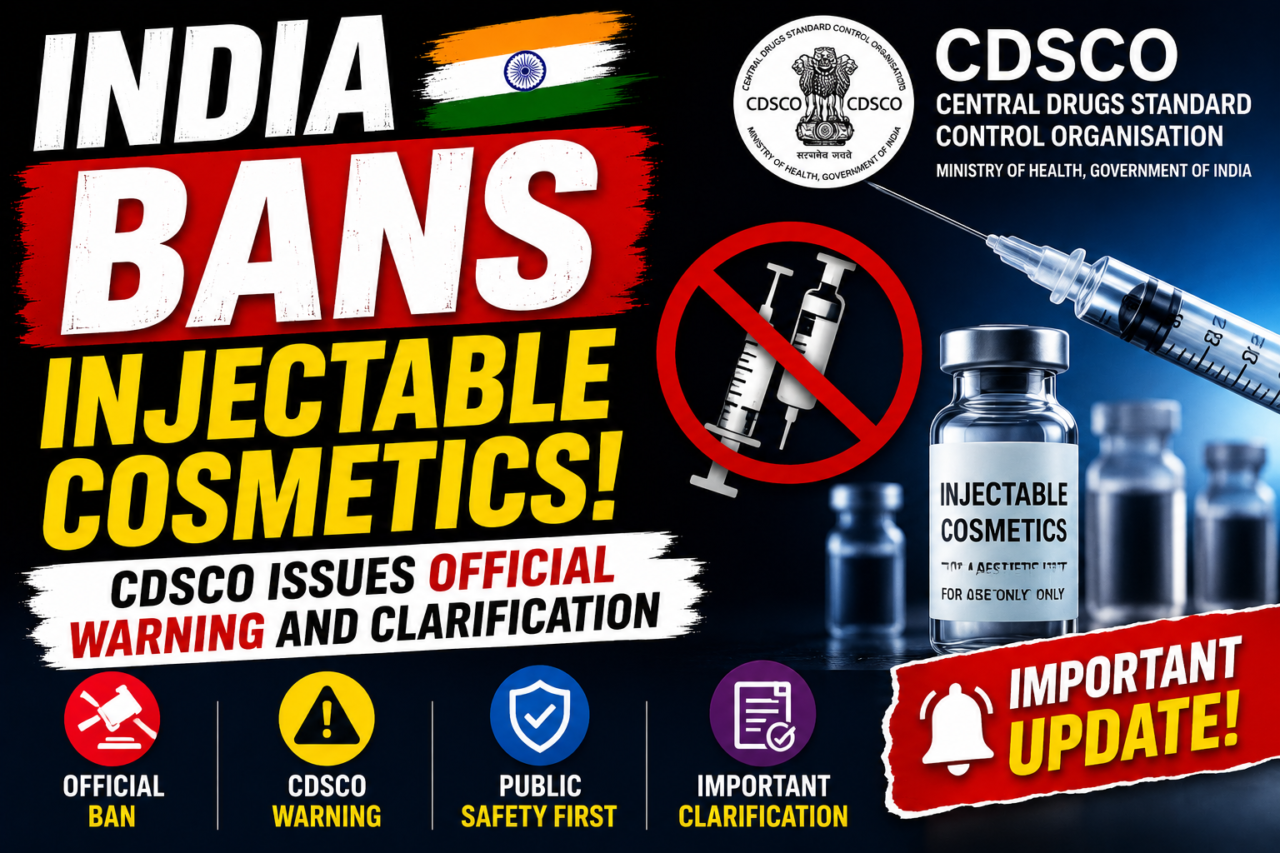

The Central Drugs Standard Control Organisation (CDSCO), India’s national drug regulatory authority, has clarified that injectable cosmetic products are not permitted under Indian law. The clarification comes amid the rising popularity of aesthetic injections and beauty enhancement procedures being promoted by wellness centres, beauty clinics, and social media influencers across the country.
According to the regulator, cosmetic products supplied in injectable form do not fall under the legal definition of cosmetics under the Drugs and Cosmetics Act and Cosmetics Rules, 2020. CDSCO clearly stated that no cosmetic product is allowed to be administered through injections by consumers, professionals, or aesthetic clinics.
What CDSCO Said
In its official public notice, CDSCO stated:
“Products supplied in form of injectable preparation do not fall under the definition of cosmetics.”
The regulator further emphasized that cosmetics are intended only for external application such as:
- Rubbing
- Pouring
- Sprinkling
- Spraying
- Applying on the body surface
They are not permitted for injection or treatment purposes.
Why the Clarification Was Issued
The advisory comes at a time when non-surgical aesthetic treatments are becoming increasingly popular in India. Many clinics have been promoting injectable beauty products for:
- Skin whitening
- Anti-aging
- Fat reduction
- Glowing skin
- Hair growth
- Weight loss enhancement
Products like glutathione injections, vitamin drips, anti-aging shots, and certain injectable aesthetic therapies have gained popularity through aggressive marketing and social media trends.
CDSCO’s clarification aims to prevent misuse of cosmetic products and protect consumer safety.
Concerns Over Consumer Safety
Health experts have raised concerns about the unregulated use of injectable cosmetic products, especially when administered outside proper medical supervision.
Possible risks associated with unsafe injectable procedures include:
- Allergic reactions
- Infections
- Organ damage
- Blood-related complications
- Side effects from unapproved ingredients
- Long-term health risks
The regulator warned that misleading claims and use of prohibited ingredients may attract legal action under the Drugs and Cosmetics Act and Cosmetics Rules, 2020.

Impact on Aesthetic Clinics and Beauty Industry
The clarification may significantly impact India’s rapidly growing aesthetic clinic and wellness industry. Clinics offering injectable cosmetic procedures may now face stricter regulatory scrutiny.
Industry experts believe the move could lead to:
- Stronger monitoring of aesthetic clinics
- Increased compliance checks
- Crackdown on misleading advertisements
- Better patient safety standards
- More awareness regarding approved cosmetic practices
The government has also encouraged the public to report violations or suspicious cosmetic practices to authorities.
Difference Between Cosmetics and Drugs
Under Indian law, cosmetics and drugs are regulated differently.
Cosmetics
Cosmetics are products intended for:
- Cleansing
- Beautifying
- Improving appearance
- Promoting attractiveness
Drugs
Products intended for:
- Treatment
- Diagnosis
- Prevention of disease
- Altering body functions
are classified as drugs and require separate regulatory approvals.
This distinction is important because many injectable beauty products may effectively fall under the drug category rather than cosmetics.
Growing Regulation of Beauty and Wellness Sector
India’s beauty and wellness market has expanded rapidly in recent years due to rising demand for non-invasive cosmetic procedures. However, regulators are now focusing more on safety, scientific evidence, and legal compliance.
CDSCO’s latest clarification indicates stricter oversight of products marketed through aesthetic clinics and wellness centres.
Official Source
The official CDSCO public notice can be accessed here:
CDSCO Public Notice on Injectable Cosmetic Products
Conclusion
The CDSCO has made it clear that injectable cosmetic products are not legally permitted under India’s cosmetic regulations. The advisory serves as an important step toward protecting public health and preventing misuse of unapproved aesthetic treatments.
As cosmetic procedures continue to grow in popularity, experts advise consumers to verify product approvals, consult qualified healthcare professionals, and avoid unsafe or misleading beauty treatments marketed online or through unauthorized clinics.
Recommended Products





























Who is eligible for it. General physician doctors are eligible or not